
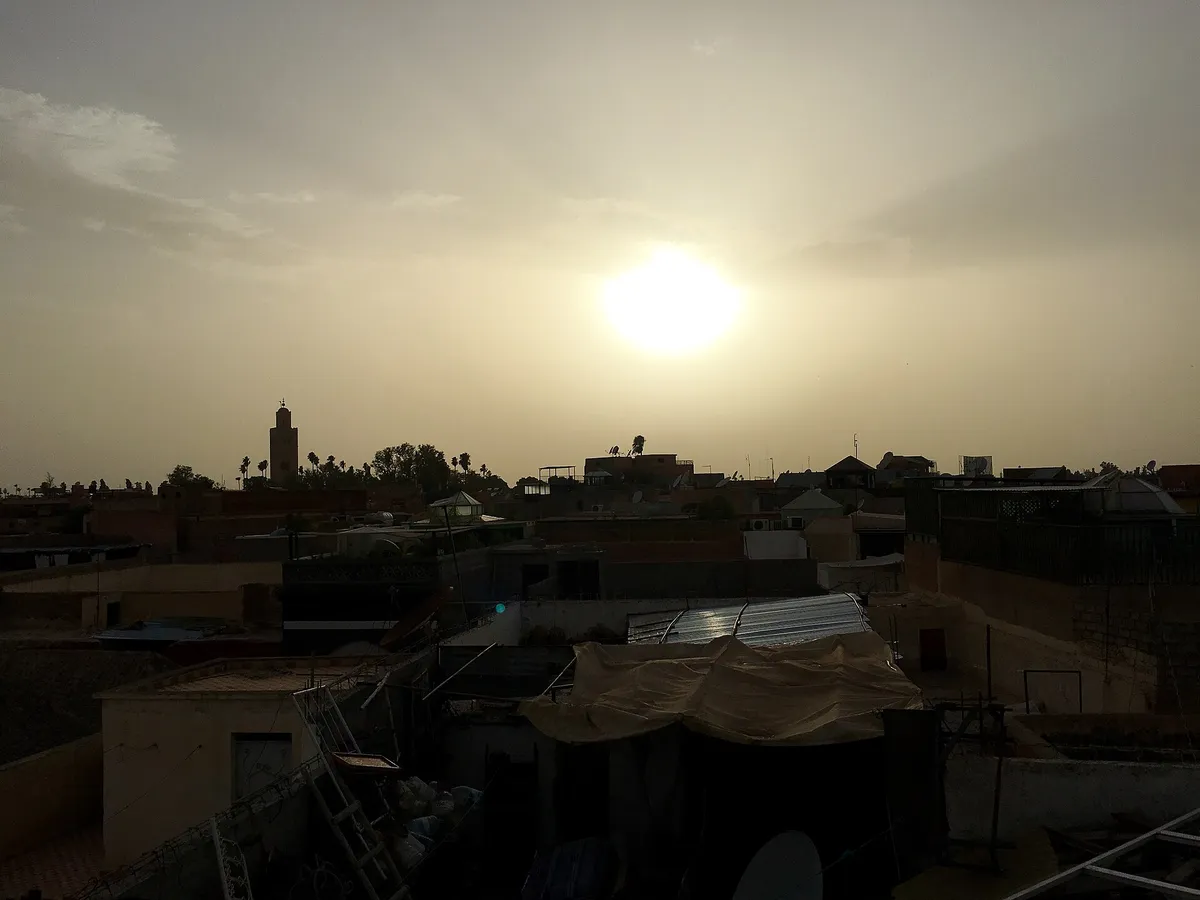
Photo: Thomas Woodtli from Zürich, Switzerland / Wikimedia Commons
Where to Stay in Morocco: Marrakech, Fes & the Desert (2026)
Marrakech's riad courtyards, Fes's ancient medina guesthouses, and the Sahara desert camps — the best Morocco neighborhoods and hotels for every budget in 2026.
Morocco in Brief
Morocco is one of the most compelling travel destinations in the world — a country where medieval city culture survives largely intact (the medinas of Fes and Marrakech are UNESCO-listed living cities, not museum pieces), with the Saharan landscape 10 hours south, the Atlas Mountains between, and a hotel culture built around the riad (the traditional Moroccan courtyard house, now the primary vehicle for boutique accommodation in the medinas).
Morocco is also genuinely affordable — a mid-range riad in Marrakech costs €80–200/night; luxury riads run €200–500/night.
Marrakech
The Medina — Essential Atmosphere
Best for: First-time visitors; immersive medina experience; riad culture
The Medina is the medieval walled city — the famous Djemaa el-Fna square (the largest market square in Africa, a nightly street theater of snake charmers, musicians, acrobats, storytellers, and food stalls, most intense at dusk), the souks (the labyrinthine markets of each craft — leather, spice, metalwork, textiles), the Madrasa Ben Youssef (14th-century Islamic college, one of the most beautifully ornamented buildings in North Africa), and the narrow streets of every residential quarter.
Staying in the medina means staying in a riad — the courtyard hotels vary from 5-room family-run guesthouses to 20-room luxury properties with rooftop pools. They’re all navigated by the same logic: a narrow alley entrance, an ornate wooden door, then the reveal of the central courtyard with fountain, orange trees, and zellige tile walls.
Practical: Navigate the medina on foot; the streets are too narrow for vehicles. The first rule is to get lost; the second rule is to accept that being found again requires asking locals for directions.
Guéliz and Hivernage — French Quarter
Best for: Those who want air conditioning, familiar restaurants, and a modern hotel rather than a riad; business travelers
Guéliz is Marrakech’s French-era new city — wide boulevards, café terraces, and modern hotels. It lacks the atmosphere of the medina but provides familiarity and ease of orientation. Several international hotel brands operate here; prices are typically lower than equivalent-quality medina riads.
Best Marrakech Hotels
La Mamounia — The Legendary Grand Hotel
Price: €600–3,000/night | Location: Avenue Bab Jdid, Medina edge
La Mamounia is one of the world’s great hotels — opened in 1923 within the palace gardens of an 18th-century gift from a Moroccan king to his son, with 3 hectares of gardens (olive trees, roses, the largest private garden in Marrakech), a hammam spread across multiple treatment rooms, several pools, and the most famous hotel bar in North Africa (the Churchill Bar, named for Winston Churchill, who painted at the hotel regularly). Completely renovated in 2009 by Jacques Garcia, the interiors push Moorish ornamentation to its most opulent extreme.
Amanjena — Zen Moroccan
Price: €800–3,000/night | Location: Route de Ouarzazate, Marrakech
Amanjena is the only Aman resort in Africa — 40 pavilions and maisons built around a central reflecting pool, each with private courtyard, in a Moroccan-Andalusian architectural language that draws on both local tradition and Aman’s minimalist design philosophy. 12 km from the medina; a completely different experience from the riad culture of the city center.
El Fenn — Boutique Medina Excellence
Price: €300–700/night | Location: Mouassine, Marrakech Medina
El Fenn is the most praised boutique riad in Marrakech — 28 rooms and suites in a former 18th-century palace compound, with three pools (including the remarkable rooftop pool with Atlas Mountain views), an art collection that fills every corridor and lounge, and a social atmosphere that makes it feel more like a private members club than a hotel.
Riad BE Marrakech — Mid-Range Excellence
Price: €120–250/night | Location: Mouassine, Marrakech Medina
One of Marrakech’s best mid-range riads — 12 rooms in a beautifully restored 17th-century house, with a central fountain, orange tree courtyard, rooftop terrace, and the personal service of a small property without the price of a premium boutique.
Fes
The Fes Medina — The World’s Oldest Living City
Fes el-Bali (Old Fes) is the world’s largest medieval city still in active use — 150,000 people living in the original Merinid-era street plan from the 9th century. There are no cars; the streets are 1–2 meters wide; donkeys and handcarts are the transport system. The tanneries (the Chouara Tannery, visible from rooftop terraces of adjacent leather shops) are the most distinctive sight in Morocco — enormous stone vats of natural dyes in terracotta, ochre, green, and white.
Staying in the Fes medina: More authentic and more disorienting than Marrakech. The streets are less tourist-oriented (local life hasn’t reorganized around tourism to the same degree). It’s genuinely possible to get completely lost for hours — this is the point.
Best Fes Hotels
Riad Fes (€150–350/night): Riad Fes occupies a beautifully restored 18th-century palace in the medina, with a dramatic tiled courtyard, hammam, and the most comprehensive experience of Fes riad culture available in the city.
Palais Amani (€200–400/night): The most overtly luxurious property in Fes — a former royal palace with large pool, extensive garden, and a position near the Andalusian quarter.
Sahara Desert — Merzouga
The Sahara desert camps near Merzouga (south of the Atlas Mountains, 10 hours from Marrakech) offer one of the most memorable accommodation experiences anywhere — sleeping in a luxury tent in the Erg Chebbi dunes (an ocean of orange sand), arriving by camel at sunset, with the complete silence of the desert and a sky full of stars at night.
Luxury camps: Sahara Luxury Camp, Azalai Desert Camp (€150–400/night per couple, including dinner and camel trek). Genuinely worth the logistics.
Budget camps: €40–80/night per person in basic camp tents — the landscape is identical; only the amenities differ.
Practical Tips
Haggling: Expected in the souks, not in restaurants or riads. The opening price is generally 3–4 times the price the seller expects to receive; a reasonable first counter-offer is 30–40% of the opening price, walking towards agreement at 50–60% of original.
Safety: Morocco is broadly safe for tourists. Harassment (particularly of solo women) from unofficial “guides” who attach themselves to tourists in the medina is an issue — a firm, polite refusal (“la shukran” — “no thank you” in Arabic) repeated twice usually works.
Atlas Mountain day trips: From Marrakech: Ourika Valley (30 km, traditional Berber villages, waterfalls, Atlas views, €15–25 organized tour or €12 shared taxi), and the Oukaïmeden ski resort (70 km, the highest ski resort in Africa, operational December–March, €10 lift passes) both make excellent day trips.
FAQ
When is the best time to visit Morocco? March–May and September–November — spring and autumn are ideal (20–28°C in Marrakech, comfortable for exploring the medinas). July–August is very hot (35–42°C in Marrakech, 40–45°C in the Sahara). Winter (December–February) is mild (10–18°C) and the Atlas Mountains have reliable snow. The Sahara is actually most comfortable October–February when daytime temperatures are 15–22°C rather than 40°C+.
Do I need a guide for the Fes medina? A good guide for the first day in Fes is genuinely recommended — the medina’s layout is impossible to understand from a map, and a local guide explains the history, the crafts, and the social structure in ways that transform the experience. The official guides (Guides Officiels) available through your riad or the Fes tourism office are preferable to the unofficial street guides. For subsequent days, getting lost independently is the right approach.
Are riads suitable for families? Many riads are not child-friendly — the central courtyard pools and the elaborate tile work make small children a practical concern. Larger riads (El Fenn, Dar Rhizlane) specifically accommodate families; smaller riads may prefer adults.