
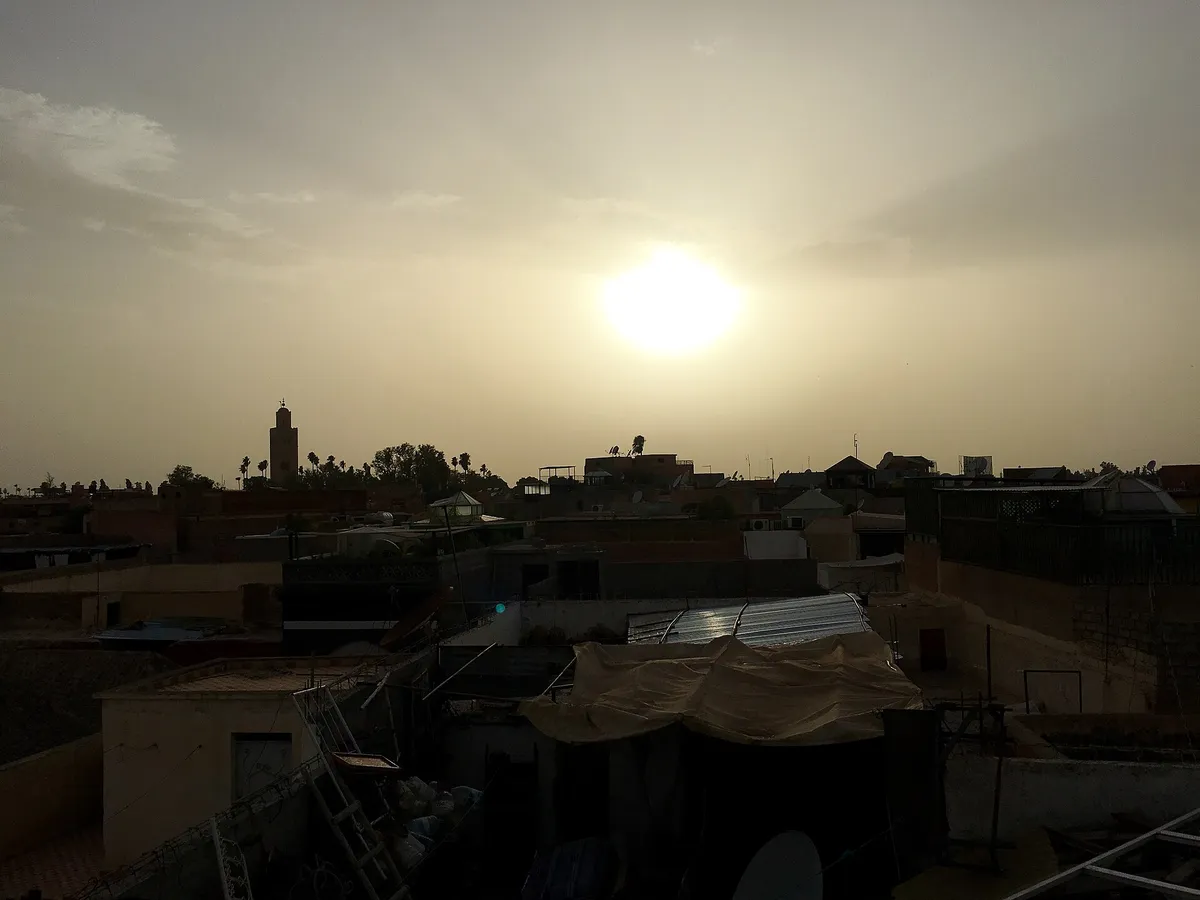
Photo: Thomas Woodtli from Zürich, Switzerland / Wikimedia Commons
Best Hotels in Fes (Fez), Morocco: Riad Palais Amani & the Medieval Medina (2026)
Riad Fes's rooftop view over the 1,200-year-old medina, Palais Amani's 15th-century palace gardens, and the Sofitel Fes's contemporary comfort at the medina gates — a hotel guide to Morocco's most historically layered city for 2026.
Fes: The Most Intact Medieval City in the World
Fes (also written Fez) is widely considered the most intact medieval city in the world. Fes el-Bali, its walled old town, is a UNESCO World Heritage Site and the largest living medieval city on Earth: roughly 9,000 streets and lanes, many under a meter wide and impassable to cars, laid out in a pattern that has barely changed since the 9th-century founding by the Idrisid dynasty. Within its walls sits Al-Qarawiyyin University, founded in 859 AD — the oldest continuously operating university in the world, predating Oxford by some 300 years. Nearby, the Chouara Tannery remains one of the oldest working tanneries anywhere, and one of the most visited: from the leather-shop terraces above it, visitors look down on circular stone vats of natural dye — henna for red-orange, mint for green, indigo for blue, saffron for yellow — where workers still tread cowhides by hand, much as they have for centuries.
The Best Fes Hotels
Riad Fes — The Landmark Riad
Price: $300–2,000/night | Location: Derb Ben Slimane, Zerbtana, Fes el-Bali
Riad Fes is the best-known riad hotel in the Fes medina, built around a 17th-century structure comprising two interconnected riads joined into a single complex of three terraces and three courtyards. The woodwork is a highlight: carved cedar ceilings, moucharabieh screens, geometric zellij tilework, and hand-painted stucco panels throughout. The rooftop delivers a 360-degree panorama over Fes el-Bali — one of the few vantage points from which the medina’s tangled layout makes visual sense.
The in-house restaurant serves a Moroccan tasting menu built on traditional Fes recipes, including bastilla — pigeon (traditionally) or chicken wrapped in paper-thin warka pastry with almonds and a spiced egg mixture, dusted with powdered sugar and cinnamon, a sweet-savory combination that surprises first-time visitors — and mechoui, slow-roasted lamb served at celebrations across Morocco. The spa offers a traditional hammam with black soap (beldi saboun) and a kessa scrub mitt.
Palais Amani — 15th-Century Palace
Price: $400–3,000/night | Location: Oued Zhoun Street, Fes el-Bali
Palais Amani occupies a 15th-century Alaouite-era palace originally commissioned by a regional caïd, and it reads as one of the more historically grounded luxury stays in Fes. The private interior gardens — citrus trees, roses, and a marble fountain whose sound provides both a cooling effect and a sense of privacy from the street — are among the loveliest in the medina. Twelve suites are individually decorated; the Zouaoua Suite has a carved cedar ceiling, and the Andalusi Suite features an Andalusian mosaic floor.
Ville Nouvelle — Contemporary Comfort
Sofitel Fes Palais Jamaï — Medina Gates
Price: $150–600/night | Location: Bab Guissa, Fes
Sofitel Fes Palais Jamaï sits just outside Bab Guissa, the 14th-century Merinid gateway that forms the medina’s northern entrance. Its Andalusian gardens run along the old city wall, with terrace views back over the medina, and — a genuine practical advantage in Fes’s hot summers — full air conditioning. It’s the easiest luxury base for travelers who want medina access without giving up modern comfort.
Fes Medina Navigation
Getting Around the Labyrinth
Fes el-Bali has one of the most complex street layouts of any inhabited city: roughly 9,000 named streets and lanes, many too narrow for anything but foot or animal traffic. Donkeys and mules remain the primary means of moving heavy goods through the oldest quarters — the world’s largest car-free urban zone. Getting lost here is close to unavoidable, and often the point: wandering leads to hidden foundouks, the old merchant inns with ground-floor warehouses and upper-floor lodging once used by caravan traders, and to chance encounters with working craftspeople.
Essential Fes navigation tips:
- Hire an official guide through the Fes Guide Association. A good guide (6–8 hours) knows the street layout, can get you into buildings otherwise closed to visitors, and keeps unofficial “guides” from latching on.
- Don’t rely on GPS. Mapping data for the 9,000-lane medina is unreliable at best.
- Use landmarks instead: the Al-Qarawiyyin minaret is visible from high points around the medina, and the smell of the Chouara Tannery signals you’re getting close.
Moroccan Craft Culture
The Essential Fes Craft Purchases
Fes is arguably Morocco’s most important craft city, home to long-standing guilds in leatherwork, textiles, and pottery.
Leather: Chouara Tannery leather is produced by a vegetable-tanning process using the same natural dyes visible in the tannery vats, then hand-stitched into goods sold throughout the surrounding leather district — one of the most concentrated leather-production quarters of any city outside the major fashion capitals.
Pottery: Fes blue pottery is instantly recognizable: cobalt-blue decoration over a white ceramic base, used both for zellij mosaic tilework and for hand-painted plates and the classic conical-lidded tagine.
Textiles: Fes is known for tbouri embroidery worked onto the kaftan, Morocco’s principal formal garment, using fine geometric patterns and silk thread that remains among the more expensive materials in the local textile market.
FAQ
Is Fes worth visiting over Marrakech? They offer different experiences. Marrakech is more photogenic, better known internationally, and has more developed tourist infrastructure — a natural choice for a first visit to Morocco. Fes is more historically layered, arguably more culturally significant, and has a denser, more complicated medina — better suited to travelers seeking a deeper dive. Fes rewards patience: crafts here typically run 30–50% cheaper than equivalent items in the Marrakech medina, tourist density is lower, and neither Al-Qarawiyyin University nor the Chouara Tannery has a real equivalent elsewhere in Morocco.
When is the best time to visit Fes? March–May and September–November. Spring brings 18–25°C days, wildflowers on the surrounding hills, and good light for medina photography, especially the golden late-afternoon glow on zellij tilework in April. Autumn brings 20–27°C days, the regional harvest, and thinner crowds. Avoid July–August, when temperatures reach 38–42°C — among the most intense heat of any Moroccan imperial city — making medina exploration genuinely difficult.