
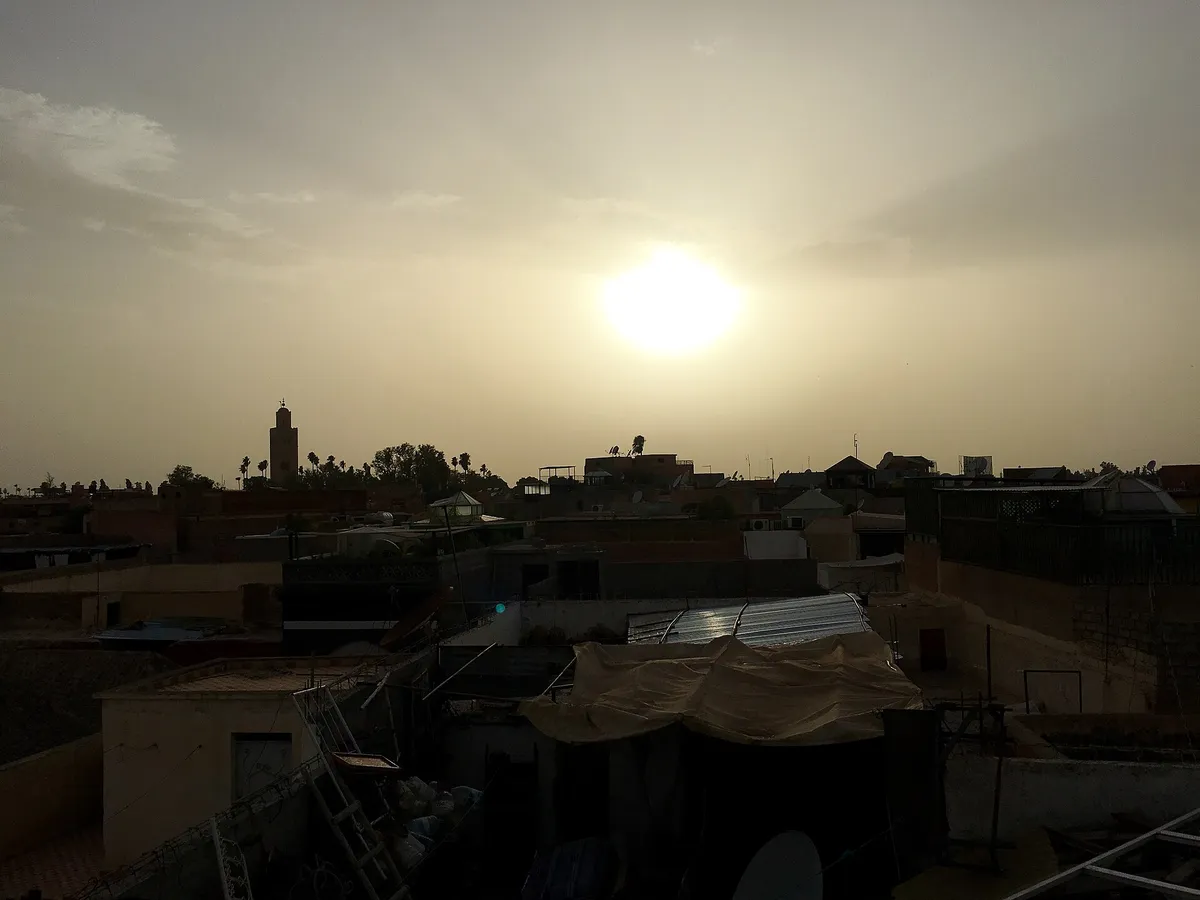
Photo: Thomas Woodtli from Zürich, Switzerland / Wikimedia Commons
Best Time to Visit Morocco: Marrakech, Fes & the Sahara (2026)
Marrakech in spring with Atlas Mountain snow, the Sahara desert camps in October, and the Ramadan travel question — month-by-month guide for Morocco travel in 2026.
Morocco’s Seasonal Calendar
Morocco’s geographic diversity — from the Mediterranean north to the Sahara south, from the Atlantic coast to the Atlas Mountains — creates significantly different climatic zones within a single country. The best time to visit depends substantially on which part of Morocco and what type of experience.
The Key Seasons
The Best Time: March–May (Spring)
Spring is Morocco’s best travel season — the Atlas Mountains still have snow on the peaks (visible from Marrakech’s medina on clear days, a striking backdrop), the desert temperatures are comfortable (25–30°C, before the summer heat), the Moroccan countryside is green and wildflower-carpeted (the Ourika Valley above Marrakech; the Middle Atlas cedar forest near Azrou), and the tourist crowds haven’t reached peak summer levels.
March specifically:
- Atlas snow still covering the peaks (skiing at Oukaimeden, 70km from Marrakech, operational through March in good years)
- Wildflowers in the Ourika Valley
- Comfortable daytime temperatures (20–25°C in Marrakech)
- Almond blossom in the Draa Valley (February–March: the almond trees flowering against the desert oasis landscape is a striking sight)
April–May:
- Increasingly warm (25–32°C Marrakech) but still manageable
- Rose harvest season: the Kelaat M’Gouna Valley (the “Valley of Roses” in the Dadès) holds its rose harvest festival in May — the most fragrant valley in Africa, with millions of rose bushes used for rosewater distillation
- Peak booking season (March–May): hotels at Marrakech riads should be booked 4–8 weeks ahead
Second Best: September–November (Autumn)
September–October:
- The summer heat has broken (30–35°C in September, 22–28°C in October) — significantly more manageable than July–August
- Sahara desert temperatures drop to excellent levels (28–33°C during the day, 12–18°C at night) — optimal for desert camping
- Date harvest in the Draa Valley oasis (September–October: the date palms harvested, the oasis markets full of fresh dates)
- Fewer tourists than spring or summer at the major sights
November:
- Cool and pleasant (18–24°C Marrakech) — excellent for the medinas and mountain hiking
- Atlas hiking season in full swing (the Toubkal trekking season September–November is optimal)
- Some of the best light of the year for photography
The Challenge: July–August (Peak Heat)
July and August in Morocco:
- Marrakech: 38–44°C regularly; the Djemaa el-Fna square at noon is genuinely punishing
- The Sahara: 45–50°C+ at Merzouga in July–August; the desert experience is limited to dawn and dusk
Is it impossible in summer? Not impossible — locals live in it, and the heat is most intense from 12:00–17:00. Morning medina sightseeing (09:00–11:30), siesta, afternoon souks (17:00–19:00), and evening Djemaa el-Fna is a workable strategy. The Atlantic coast (Essaouira, Agadir) is significantly cooler in summer thanks to the Canary Current (25–28°C, breeze, blue-flag beaches) — an excellent summer Morocco option.
Hotel prices in summer: High in the international luxury riads; surprisingly negotiable at mid-range riads where the local occupancy drops significantly.
The Ramadan Question
Ramadan 2026: (Approximately February–March; the exact dates shift annually with the lunar calendar)
Ramadan is Morocco’s most complex travel season:
- Many restaurants and cafés are closed during daylight hours (including some tourist restaurants; check before planning daytime food)
- The medina atmosphere transforms dramatically at iftar (the sunset meal ending the daily fast) — one of the most remarkable collective meals in the world, with entire neighborhoods eating together at sunset
- Many businesses keep reduced hours during the day
- Local cultural activities (music, festivals) increase significantly in the evenings
Is Ramadan good or bad for tourism? The honest answer: complex. The daytime experience is reduced (limited food options, many businesses closed or reduced). The evening experience (iftar, the vibrant animation of the medinas after sunset, the special Ramadan food traditions — the harira soup, the msemen flatbread, the sfenj donuts) is genuinely unique to this period.
For travelers who specifically want to understand Moroccan culture: Ramadan provides the deepest cultural immersion. For travelers who want convenient tourism: choose a different month.
Region-by-Region Calendar
Marrakech
| Month | Temperature | Crowds | Recommendation |
|---|---|---|---|
| January–February | 18–24°C | Low | Good (cool, Atlas snow) |
| March–April | 22–30°C | Medium | Excellent |
| May | 28–33°C | Medium | Good |
| June | 33–38°C | Medium-High | Acceptable |
| July–August | 38–44°C | High | Challenging |
| September–October | 28–35°C | Medium | Excellent |
| November–December | 18–25°C | Low | Good |
The Sahara (Merzouga/Zagora)
Best: October–April. The combination of comfortable temperatures, cool nights (essential for sleeping in a desert camp tent), and the remarkable visibility of the Milky Way from zero light pollution in October–February.
Avoid: June–September (extreme heat makes desert camping dangerous except for specialist operators; the dunes are visitable only at dawn and dusk).
Special event: November’s Taragalte Festival (Nomad Music Festival, M’Hamid el-Ghizlane) — rich desert music (traditional Gnawa, Touareg, Berber music) in the most authentic desert setting in Morocco.
The Atlantic Coast (Essaouira, Agadir)
The Atlantic coast is Morocco’s year-round option — the Canary Current keeps temperatures moderate (22–28°C) in summer, avoiding the interior heat, while the wind (Essaouira is the “windy city of Africa”) creates consistent conditions for kitesurfing and surfing.
Best for wind sports: June–September (consistent Atlantic wind; Essaouira Mogador Festival in June draws world music acts to the medina).
Practical Notes
What to wear: Morocco is an Islamic country with conservative standards, particularly in the medinas and religious sites. For women: covering shoulders and knees is respectful and practical; a lightweight scarf is useful for mosques (non-Muslims cannot enter most Moroccan mosques except the Hassan II in Casablanca). Riad rooftops and tourist restaurants are more relaxed in dress code.
Photography: The medinas and souks are extraordinarily photogenic; photographing people requires respectful permission (many locals, particularly in the souks, prefer not to be photographed for commercial-seeming images). The Marrakech and Fes tanneries are best photographed from the leather shop rooftop terraces (the shop owners provide a complimentary sprig of mint against the smell; going on a tour with a leather purchase is the appropriate exchange).
FAQ
Is Morocco safe for tourists in 2026? Morocco is one of Africa’s safest tourist destinations — political stability, well-established tourist infrastructure, and genuine Moroccan hospitality tradition. The primary risk is petty theft in busy medina areas (pickpockets in the Marrakech souks and Djemaa el-Fna) and persistent guides (faux guides offering to show you around, then expecting payment — politely decline and be firm). Violent crime against tourists is rare.
How long should I spend in Morocco? 7 days minimum to cover Marrakech, the Atlas, and the Sahara. 10 days adds Fes (the best-preserved medieval medina in the world — more complex and more authentic than Marrakech, but harder to navigate independently). 14 days adds Essaouira (the atmospheric Atlantic port town) and the opportunity for a genuine Fes–Chefchaouen–Tangier northern circuit.
Is it possible to visit Morocco in 5 days? Yes, but limited to Marrakech (3 days) and one day trip (Atlas Mountains or the Ourika Valley or the Ait Benhaddou fortified village 2 hours south). The Sahara is not practical in 5 days (2-day drive each way from Marrakech; fly to/from Errachidia instead for a compressed Sahara experience).