
Photo: Ivar Leidus / Wikimedia Commons
Europe Month by Month: Where to Go and What to Do in 2026
January Northern Lights, April cherry blossoms in Bonn, June midnight sun in Tromsø, October Vienna concert season — the best European experiences for each month of 2026.
January — Northern Lights and Winter Cities
Best destination: Northern Norway (Tromsø, Lofoten) for aurora borealis. The northern lights season runs October through March; January offers good dark hours (near-continuous darkness at high latitude) and reasonable weather for viewing.
Other January highlights:
- Vienna: The Vienna Philharmonic’s New Year Concert is followed by the Vienna Opera Ball (late January/February) — the social season begins
- Ski resorts: The Alps (Verbier, Courchevel, St Moritz, Innsbruck), the Tatras (Zakopane, Jasná), and the Dolomites are all fully operational; January is peak ski season
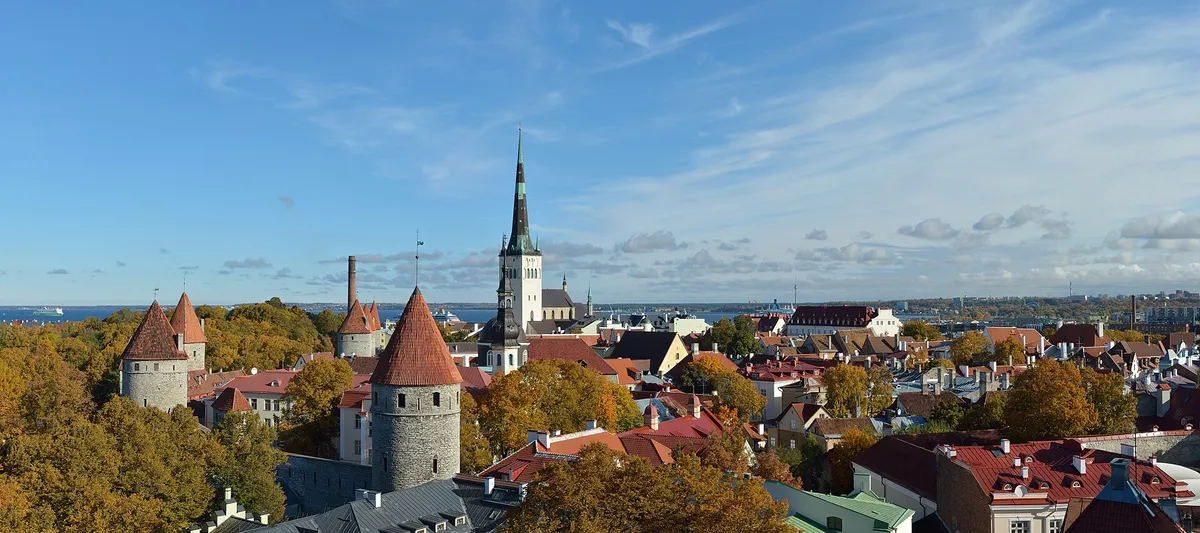
- Tallinn: The Christmas Market extends into early January; the Old Town is remarkably beautiful under snow with very few tourists
Avoid: Beach Mediterranean destinations in January (10–12°C, many beach businesses closed) unless your purpose is specifically the quietest possible version of the Riviera.
February — Carnival Season
Best destination: Venice Carnival (mid-February, exact dates vary — 10 days before Ash Wednesday). The famous Venetian masks, the costume parades in St Mark’s Square, and the masked balls at the Palazzo Pisani Moretta. The most expensive two weeks in Venice (€300+/night for mid-range rooms) but also the city’s most dazzling visual spectacle.
Other February highlights:
- Cologne, Germany: Cologne Carnival (Kölner Karneval) — the most exuberant street carnival in Germany, centered on Rose Monday (Rosenmontag) when 1.5 million people parade through the city in costume. Substantially cheaper and more authentic-feeling than Venice.
- Reykjavik, Iceland: February is within the aurora season and the city’s small size and manageable crowds (before the summer tourist peak) make it one of the best winter city breaks in Europe.
- Barcelona: February is one of Barcelona’s best months — mild weather (10–15°C), no queues at the Sagrada Família, half the summer hotel rates.
March — Pre-Season Sweet Spot
Best destination: Lisbon and Porto (Portugal). March in Portugal is glorious — 14–18°C, the mimosas and flowering trees of the Douro Valley begin their spring bloom, and hotel rates are 30–40% below summer peak. The two best Portuguese cities at their quietest and most photogenic.
Other March highlights:
- Amsterdam: The Keukenhof tulip garden (late March to mid-May) is one of Europe’s most spectacular seasonal spectacles — 7 million bulbs in 32 hectares. Book timed entry in advance.
- Edinburgh: March is Scotland’s pre-peak — the Highlands are quiet, accommodation is cheap, and snow occasionally remains on Ben Nevis
- Seville and Andalusia: March–April is the best season — Semana Santa (Holy Week) processions are deeply moving if the dates align; the orange blossom of the city creates a heady scent
April — Cherry Blossoms and Spring
Best destination: The Rhine Valley and Bonn, Germany for cherry blossoms. Bonn’s Heerstrasse (“Cherry Blossom Avenue”) is Japan-quality sakura — 300+ Japanese cherry trees lining a residential street, photographed by thousands of visitors who don’t yet know about it. Bonn cherry blossom typically peaks in early-to-mid April.
Other April highlights:
- Seville: Feria de Abril (two weeks after Easter Sunday) — the most joyful festival in Europe; flamenco, sherry, and horses in the fairground
- Oslo and Copenhagen: Spring arrives; the Oslofjord and the Danish coast become accessible
- Coastal Croatia: Pre-peak, dry weather, Adriatic water still cold but the Plitvice Lakes are at maximum volume
May — The Month Europe Is Best
The argument for May: Lower crowds than summer, weather comparable to June–July in most of Europe (18–25°C), and the spring cultural season fully operational (music, theater, festivals). May is the month that experienced European travelers consider the best overall.
Top May experiences:
- France: Cannes Film Festival (mid-May) — the Croisette is open to the public; watching celebrities and directors at the Palais steps is free; the Côte d’Azur beaches are perfect
- Tuscany: Late May, the temperatures are perfect (22–26°C), sunflowers are still weeks away but the cypress-lined roads and spring wine are sublime
- Andalusia: Córdoba’s Courtyards Festival (Festival de los Patios, first two weeks of May) — 50+ private house courtyards compete for the most beautiful flowering display, all open to the public for free
- Northern Scotland: May is the best month for the NC500 (the North Coast 500, Scotland’s most dramatic coastal road route) — midges haven’t arrived yet, light lasts until 10 PM
June — Long Days and Festivals
Best destination: Scandinavia in late June — the midnight sun is at its most dramatic, Stockholm and Copenhagen are at their best (outdoor culture, café terraces, archipelago islands), and the midsommar celebration (June 21–25) is the most distinctly Nordic cultural event in the year.
Other June highlights:
- Portugal: Porto’s Festas de São João (June 24, St John’s Festival) — the entire city takes to the streets, beating strangers on the head with plastic hammers and releasing lanterns; one of the great street festivals of Europe
- Prague: Summer opera in Rudolfinum’s courtyard; the State Opera at 30% off peak prices
- Slovenia: Fly-fishing season opens on the Soča River (a strikingly emerald Alpine river, one of Europe’s top fly-fishing destinations)
July–August — Peak Season
Honest advice: July and August are the most expensive months in almost every European destination and, at major sites (Dubrovnik, Santorini, Venice, Barcelona), crowding genuinely degrades the experience.
Where July–August is actually good:
- The Scottish Highlands: The only busy months are July–August; the rest of the year is significantly quieter. But summer is when the long days (18+ hours of daylight) and warm(ish) temperatures make the mountains accessible
- Iceland: Midnight sun, all tours operational, road F35 (central highland crossing) open to 4WD
- Baltic States: August is Estonia, Latvia, and Lithuania at their warmest (20–24°C); the Song Festival (alternate years) is unforgettable
September — Europe’s Best-Kept Secret Month
September is objectively the best month in Southern Europe — summer temperatures (25–30°C in the Mediterranean), dramatically fewer tourists than July–August, and the harvest season across wine regions. Accommodation prices drop significantly from August peak.
Top September destinations:
- Douro Valley, Portugal: September–October harvest season — quinta (winery) visits, treading grapes, new wine tastings
- Tuscany and Umbria: The vendemmia (harvest), white truffle season beginning, the Palio di Siena (if you missed July)
- Croatia: September is Dubrovnik’s best month — walls without cruise ship crowds, Adriatic still warm (24°C water), festival season
- Greece and the Aegean: Santorini, Crete, and the Cyclades at their best — summer heat reduced, crowds gone, waters still warm
October — Autumn and Cultural Season
Best destination: The Alsace Wine Route (France/Germany) in mid-to-late October — autumn foliage on the Vosges mountains, the harvest festivals of Colmar and Strasbourg, and the storybook fortified villages (Riquewihr, Ribeauvillé, Eguisheim) at their most beautiful.
Other October highlights:
- Munich: Oktoberfest runs into the first weekend of October — see the January entry for booking advice
- Vienna: Concert and opera season begins; the Staatsoper, Konzerthaus, and Musikverein are all fully programmed
- Poland: Kraków and Wrocław in October are quiet, cold, and wonderfully atmospheric — the medieval architecture looks best in grey light
- Istanbul: October is Istanbul’s loveliest month — lower humidity (summer’s oppressive heat breaks by late September), 20–24°C, autumn light
November — Transition Month
Best destination: Kyoto (Japan) and Autumn Foliage — but within Europe, November marks the beginning of Christmas market season.
Christmas market season:
- Vienna’s Rathausmarkt: Starts late November, running through December 26 — the benchmark European Christmas market
- Strasbourg: France’s “Capital of Christmas” — the oldest Christmas market in France (1570), sprawling across the city’s historic center
- Tallinn’s Town Hall Square: A stunning Old Town setting; consistently rated among Europe’s most atmospheric
December — Christmas Markets and Ski Season
Best destination: Prague in early December — the Old Town Square Christmas market (one of Europe’s most photogenic), reasonable hotel prices (before Christmas week), and the medieval architecture at its most magical under early snow.
Ski season opening: Late November–December in most Alpine resorts (Verbier, Courchevel, Kitzbühel, St Anton, Ischgl). Ischgl (Austria) opens with a famous “Top of the Mountain” outdoor concert every late November.
Winter solstice experiences:
- Stonehenge: Winter Solstice dawn open access (December 21) — the only morning of the year when the public can stand inside the stone circle for the sunrise
- Newgrange, Ireland: The midwinter sunrise lights the inner passage at the 5,200-year-old megalithic tomb — admission is by lottery (thousands apply for 100 places)