
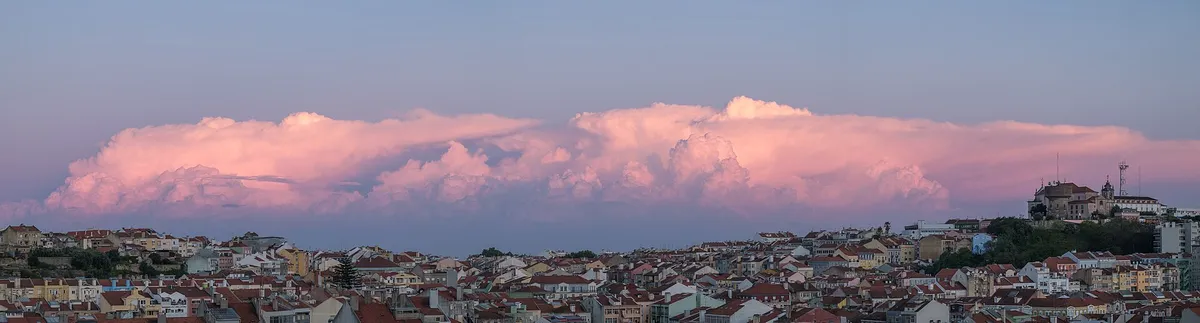
Photo: Jules Verne Times Two / Wikimedia Commons
The Best European City Breaks: 20 Cities Ranked for 2026
Lisbon's tram rides and pastéis de nata, Porto's wine lodges, Ghent's medieval canals — the 20 best European city breaks ranked by atmosphere, value, and crowd level for 2026.
The 20 Best European City Breaks in 2026
Ranked by the combination of atmosphere, walkability, uniqueness, value for money, and crowd levels — not simply by Instagram popularity.
Tier 1: The Unmissable
1. Porto, Portugal
Porto is Europe’s most charming city for a city break — smaller and more manageable than Lisbon, with the postcard-perfect Ribeira waterfront, the port wine lodges of Vila Nova de Gaia (free tours and tastings), the São Bento railway station (walls covered floor-to-ceiling in blue-and-white azulejo tile murals), the Livraria Lello bookshop (said to have inspired Harry Potter’s Diagon Alley), and food and coffee at prices that feel anachronistic by Western European standards.
Stay: 3 nights | Best area: Ribeira / Baixa | Best month: May–October
2. Ljubljana, Slovenia
Ljubljana is one of Europe’s most underrated capitals — a student city of 280,000 with a perfectly preserved baroque Old Town, a striking hilltop castle (accessible by funicular for €4 return, café and restaurant at the top), the Plečnik-designed Triple Bridge and covered market, and café culture as good as Vienna’s at a fraction of the price.
Stay: 2–3 nights | Best area: Old Town (Staro Mestno Jedro) | Best month: May–September
3. Tbilisi, Georgia
Tbilisi is 2026’s most talked-about city break — a wildly eclectic architectural mix (Art Nouveau, Soviet modernism, Persian-influenced Old Town, Rem Koolhaas’s Bridge of Peace), an ancient wine culture (Georgia claims to have invented wine 8,000 years ago), the best value restaurant scene in Europe (a superb dinner with natural wine costs €15–20), and a music scene of genuine international significance.
Stay: 4 nights | Best area: Old Tbilisi (Abanotubani / Metekhi) | Best month: May–June, September–October
4. Ghent, Belgium
Ghent is what Bruges wishes it were — a medieval Flemish canal city without the tour bus crowds, with a world-class altarpiece (the Van Eyck brothers’ Ghent Altarpiece in St. Bavo’s Cathedral, returned to its full 12-panel form after a century of separation), a food and beer culture that rewards slow exploration, and a lively university city atmosphere.
Stay: 2–3 nights | Best area: Graslei / Patershol | Best month: April–October
5. San Sebastián, Spain
San Sebastián (Donostia in Basque) has the highest concentration of Michelin stars per capita of any city in the world after Tokyo and Kyoto — a food culture built entirely around pintxos (Basque tapas, €2–3 each at standing bars), a beautiful Belle Époque beach resort architecture, and the Parte Vieja (Old Town) that is one of Europe’s great eating neighborhoods.
Stay: 3 nights | Best area: Parte Vieja / Gros | Best month: June–September
Tier 2: Excellent and Still Discoverable
6. Tallinn, Estonia
Tallinn has one of the world’s best-preserved medieval Old Towns (UNESCO, 99% intact walls) combined with a startup tech culture that has produced Skype, TransferWise (now Wise), and Bolt. The Old Town atmosphere (a functioning medieval town within the walls, not a museum piece) is unlike anywhere else in the Baltics; the Digital Nomad Visa makes it popular with long-stay visitors.
Stay: 3 nights | Best month: May–September (long daylight hours)
7. Riga, Latvia
Riga has the largest collection of Art Nouveau architecture in the world — block after block of early-20th-century façades built during the Latvian economic boom. The central market (five converted Zeppelin hangars, one of Europe’s great food markets) and the medieval Old Town (UNESCO) alongside the Art Nouveau Alberta iela street create an exceptional combination.
Stay: 2–3 nights | Best month: May–September
8. Plovdiv, Bulgaria
Plovdiv is Europe’s oldest continuously inhabited city (6,000+ years) and a genuinely overlooked cultural gem — the Kapana Creative Quarter (cobblestone streets, workshops, galleries), the Roman Amphitheatre (still used for concerts), the Old Town hill’s painted merchant houses, and prices lower than anywhere in Western or Central Europe.
Stay: 2–3 nights | Best month: April–June, September–October
9. Bologna, Italy
Bologna is Italy’s food capital (the ragu alla bolognese, mortadella, and tortellini all originated here) and a university city of 100,000 students — buzzing with energy, with a 40 km network of porticoes (UNESCO-listed arcaded walkways that cover the entire city center), excellent restaurants, and a relaxed pace compared to Rome or Florence.
Stay: 3 nights | Best month: April–June, September–November
10. Nantes, France
Nantes is France’s most dynamic city outside Paris — the Machines de l’île (a steampunk mechanical art installation unlike anything else in France: a 12-meter mechanical elephant that walks through the city, a carousel, a heron), an excellent restaurant scene (Loire Valley wines, Atlantic seafood), and a rapidly developing cultural identity that has made it France’s most interesting city break of the past decade.
Stay: 3 nights | Best month: May–September
Tier 3: Worth Knowing
11–20: Further Discoveries
Mostar, Bosnia: The Stari Most bridge, Ottoman bazaar, and a riverside setting straight out of a postcard — 2–3 nights on any Balkans road trip.
Valletta, Malta: Europe’s smallest capital, entirely built by the Knights of St John — 2 nights, combine with Mdina and the Blue Lagoon.
Matera, Italy: Cave city in Basilicata (UNESCO), one of the strangest urban landscapes anywhere in the world — overnight stay essential.
Colmar, France: The original fairy-tale Alsatian town (the Petite Venise district) — 2 nights in the wine route.
Bergen, Norway: Gateway to the fjords — the Bryggen wharf (UNESCO), the fish market, and day trips to Hardangerfjord.
Vilnius, Lithuania: The Baroque Old Town, the bohemian Užupis Republic (declared itself an independent republic in 1997), and excellent cafés.
Graz, Austria: Austria’s second city, with a Renaissance Old Town and the boldly futuristic Kunsthaus (Graz Art Museum, nicknamed “the Friendly Alien” for its biomorphic facade).
Palermo, Sicily: Arab-Norman architecture, the Vucciria market, street food (arancini, panelle, sfincione), and one of Europe’s most atmospheric cities.
Sarajevo, Bosnia: The Baščaršija bazaar quarter, the assassination of Franz Ferdinand site, and the rare layering of Ottoman, Austro-Hungarian, and Yugoslav architecture.
Ohrid, North Macedonia: One of Europe’s oldest lakes and a UNESCO-listed medieval town — still largely off the tourist radar.
FAQ
What is the best European city break for value? Porto, Ljubljana, and Tbilisi offer the best combination of atmosphere and Western European accessibility at Southeast European prices. Porto and Ljubljana remain in the Eurozone (€) but are significantly cheaper than Paris, Amsterdam, or Barcelona for accommodation and food.
What is the best time of year for European city breaks? May–June and September–October — pleasant weather (15–25°C in most cities), no extreme heat, and significantly lower crowds than July–August. The exception is Christmas market season (November–December) for cities like Vienna, Munich, Strasbourg, and Edinburgh.
How long should a city break be? 3 nights (Thursday–Sunday or Friday–Monday) is the sweet spot — enough to genuinely settle into a city, discover a neighborhood beyond the main sights, and eat at more than just the tourist recommendations. 2 nights is the minimum; 4–5 nights is worth it for larger cities (Lisbon, Porto, Tallinn) where day trips are excellent.