
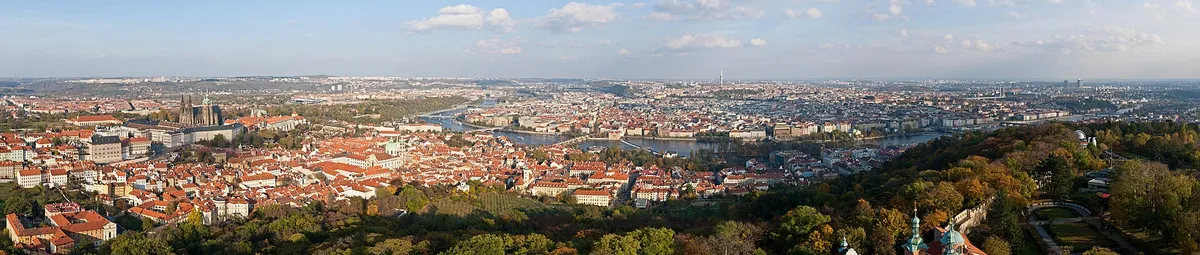
Photo: Diliff / Wikimedia Commons
Best Time to Visit Europe: Monthly Guide for Every Destination (2026)
When to avoid Dubrovnik's cruise crowds, when Tuscany's harvest makes it magical, and the months that offer the best of European travel with the fewest tradeoffs — the 2026 Europe timing guide.
When Is the Best Time to Visit Europe?
The honest answer varies by destination and what you’re seeking. The broadest recommendation: May–June and September–October offer the best balance of good weather, manageable crowds, and reasonable prices for most European destinations.
But European travel is highly destination-specific — the best time for Dubrovnik, Norway, Iceland, Tuscany, and the Scottish Highlands are all different. This guide covers the key factors.
The Core Trade-offs
Weather vs. Crowds
The fundamental tension: the best weather months (July–August) are the most crowded and expensive. The quietest months (November–March) have unpredictable weather and some seasonal businesses closed.
The sweet spot for most destinations: May–June (pre-peak, warming weather, most attractions open, lower hotel prices than summer) and September–October (post-peak, still warm in southern Europe, harvest season in wine regions, significantly lower crowds).
Which Regions Are Best When
| Region | Best Months | Avoid | Notes |
|---|---|---|---|
| Mediterranean coast (Croatia, Greece, Italy, Spain) | May–Jun, Sep–Oct | Jul–Aug (crowded/hot) | Shoulder seasons are clearly best |
| Northern Europe (Scandinavia, Baltic States) | Jun–Aug | Nov–Feb (dark/cold) | Summer is the primary season |
| Central Europe (Czech, Poland, Hungary) | Apr–Jun, Sep–Oct | Jan–Feb (very cold) | Year-round city sightseeing possible |
| Portugal and Spain (non-Mediterranean) | Mar–Jun, Sep–Nov | Jul–Aug (very hot inland) | Year-round mild in coastal areas |
| Balkans interior (Serbia, N. Macedonia) | Apr–Jun, Sep–Oct | Jul–Aug (hot) | Often overlooked, shoulder excellent |
| UK and Ireland | May–Sep | Oct–Mar (grey/cold) | Summer school hols crowded Aug |
| Iceland | Jun–Aug (Green), Oct–Mar (Aurora) | No bad time, different experiences | Two distinct visitor profiles |
The Mediterranean in Detail
Croatia (Dubrovnik, Split, Hvar)
Best: May–June and September–October
The Mediterranean overtourism problem is most acute in Croatia — Dubrovnik in July–August is genuinely overrun. The City Walls (the best activity in Croatia) have a two-hour queue by 10 AM in August; the narrow Old Town streets are barely passable; the Adriatic beaches at popular spots have no space.
May: Water is cold for swimming (16–18°C) but weather is warm (20–25°C); the walls at 8 AM are nearly empty; hotel prices are 40–50% below August peak. This is the connoisseur’s month for Croatia.
September: Water is warm (24–26°C, warmest of the year), crowds have retreated, some restaurants offer autumn menus. The best month for the beach-and-culture combination.
October: Still mild in Dalmatia (18–22°C), the tourist infrastructure begins closing (many boat services reduce frequency), but the city is genuinely quiet and atmospheric.
Greece (Athens, Santorini, Crete)
Best: May–June and September–October
The logic is identical to Croatia — Greek islands in July–August suffer from heat (32–38°C), massive crowds (Santorini’s Oia viewpoint for sunset requires arriving 2–3 hours early to secure a position in August), and significantly inflated prices.
October: Arguably the best month — Santorini’s caldera in October light is extraordinarily beautiful, the island has reverted to its normal 2,500 residents, and accommodation is 30–50% below August peak.
Athens: Best visited in spring (April–May) for comfortable temperatures (18–24°C). The Acropolis in July’s 36°C heat is genuinely grueling.
Italy (Tuscany, Amalfi Coast, Sicily)
Tuscany: April–May and September–October. The famous sunflowers bloom June–July (beautiful but coincides with peak heat and crowds); the harvest (vendemmia) is September–October, the best month for agriturismo stays, wine experiences, and truffle hunting.
Amalfi Coast: May–June — the coastal road is already congested in peak season; September is excellent but many boat services reduce frequency. Avoid driving the SS163 coastal road in July–August (traffic jams of 30–45 minutes for short sections are common).
Sicily: March–May is superb (wild flowers, Easter celebrations, comfortable temperatures 18–24°C); October is also excellent for harvest, less crowded but some infrastructure closing.
Northern Europe
Scandinavia (Norway, Sweden, Denmark, Finland)
Sweden and Denmark: June–August is the primary tourism season — long days (18–20 hours of daylight), warm temperatures (20–25°C in coastal areas), outdoor culture at its peak. The midsommar weekend (around June 21) is the social high point of the Scandinavian year.
Norway: June–August for the fjords and hiking (the Trolltunga, Preikestolen, and Besseggen trails are only fully accessible in summer); September–October for quieter fjord cruises and the beginning of Northern Lights season; December–March for aurora borealis above the Arctic Circle.
The midnight sun (Northern Norway, northern Sweden and Finland above the Arctic Circle): June, when the sun doesn’t set for weeks. Tromsø at the summer solstice has continuous daylight from May 20 to July 22.
Baltic States (Estonia, Latvia, Lithuania)
Best: June–August (long days, warmest temperatures 18–24°C, outdoor events at peak)
Avoid: November–February (cold, very dark — Tallinn at the winter solstice has fewer than 6 hours of daylight)
The Song Festival year: The Baltic Song and Dance Celebration occurs every 5 years in each country on a rotating schedule — a rare mass outdoor choral event of enormous cultural significance. Check 2026 dates.
Central and Eastern Europe
Czech Republic (Prague)
Prague is a year-round destination — the city’s cultural infrastructure (opera, concerts, museums, the Old Town) functions in every season. The practical question is crowd level:
- December: Christmas markets are magical (Old Town Square, Wenceslas Square, and the Náměstí Republiky); very cold (-2 to 5°C) but atmospheric
- January–February: Quietest and cheapest; cold but no queues at tourist sites
- March–May: Spring arrives; crowds begin building from late April; excellent weather window
- July–August: Very crowded at Charles Bridge and Old Town (peak German, Austrian, and Italian holiday tourism); hot (25–32°C); accommodation expensive
- September–October: Post-peak, still pleasant weather, much lower crowds, reasonable prices
Optimal: Early May or late September.
Poland (Kraków, Warsaw, Wrocław, Gdańsk)
The same pattern as Czech Republic but with a shorter peak season. Polish beach tourism (the Baltic coast, particularly Sopot near Gdańsk) peaks July–August; the major cities are manageable year-round.
Gdańsk: The Baltic Sea is cold (water reaches maximum 18°C in August) — beach tourism requires July–August; the historic city (one of Europe’s most beautiful, heavily damaged in WWII and rebuilt) is excellent year-round.
Zakopane: The Tatra Mountains ski season is January–March; summer (July–August) for hiking; spring and autumn are quieter for mountain access.
FAQ
Is July–August ever the best time for European travel? Yes — specifically for:
- Scandinavia (the only practical outdoor season in Norway and northern Sweden)
- The Scottish Highlands (the only reliably warm and dry weeks)
- Iceland (midnight sun, all roads open, maximum daylight for sightseeing)
- Baltic States (peak warmth and long days)
- High-altitude Alpine areas (Chamonix, Grindelwald, Zermatt)
For Mediterranean and Central European city breaks, July–August is objectively the worst-value month.
What is the absolute quietest time for Europe? January and February, excluding ski resorts — accommodation prices are at their annual minimum (often 50–70% below August peak), there are no queues at major attractions, and the winter atmosphere of Prague, Vienna, Paris, and Amsterdam has its own distinctive beauty. The trade-off is grey weather and limited daylight hours in Northern Europe.
When are European flights cheapest? January–February (post-Christmas) and November (pre-Christmas) typically have the lowest airfares within and to Europe. The exceptions are school holiday periods (late July through August, and the two weeks around Christmas/New Year), which are always expensive.