
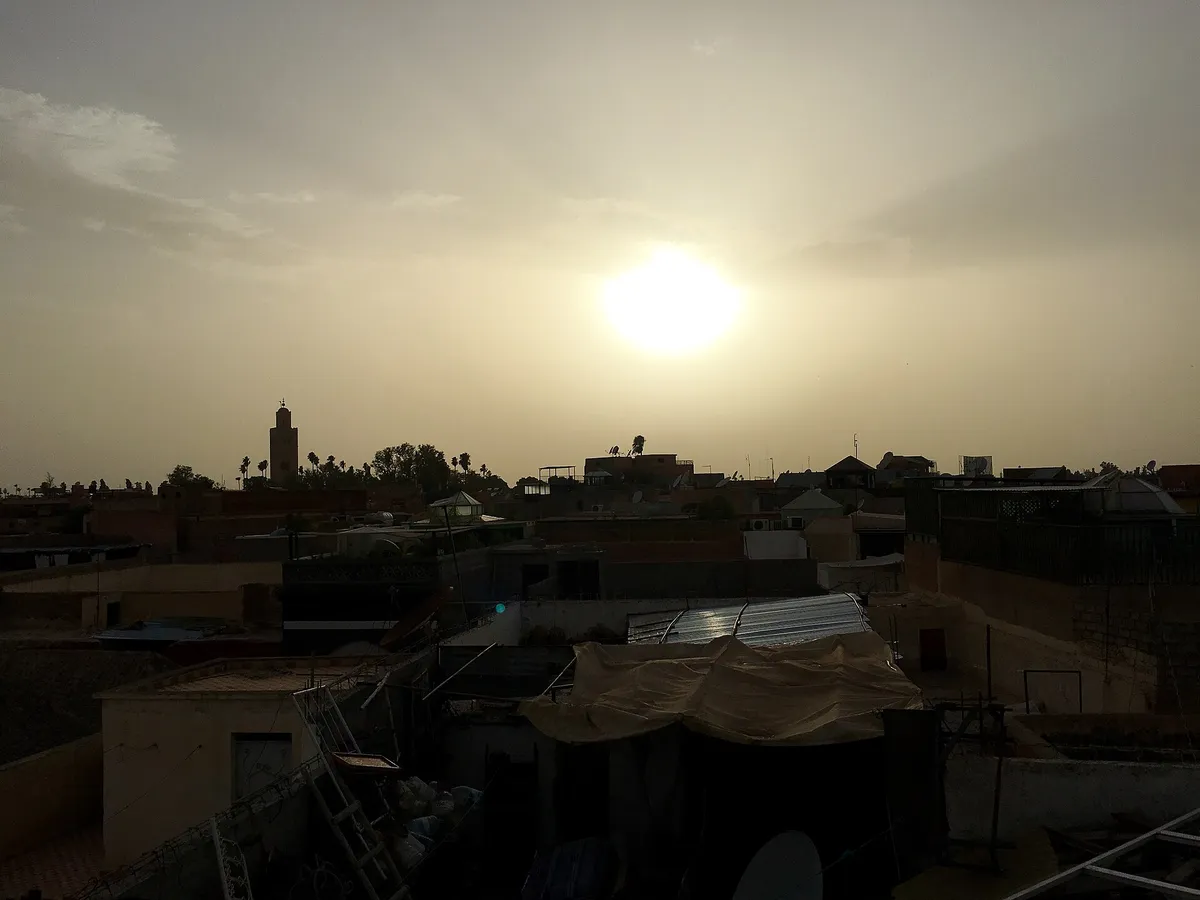
Photo: Thomas Woodtli from Zürich, Switzerland / Wikimedia Commons
Marrakech Travel Guide 2026: Medina, Souks, Riads & Essential Tips
Complete Marrakech travel guide — exploring the medina, best souks, top riads, day trips to the Atlas Mountains, when to visit, and how to navigate Morocco's most vibrant city.
Marrakech is a city that assaults your senses in the best possible way. The scent of spices mingles with leather and argan oil, merchants call out from shadowy archways, and the call to prayer echoes across ancient rooftops. It is chaotic, colourful, and utterly captivating. This guide will help you navigate the Red City like a seasoned traveller in 2026.
Best Time to Visit Marrakech
March through May and September through November are ideal — temperatures hover between 20–28°C, perfect for exploring on foot. Spring brings almond blossoms and rose harvests in the valleys outside the city.
June through August can be brutally hot (40°C+). If you visit in summer, plan outdoor activities for early morning and late evening, and spend midday in shaded riads or museums.
December through February is cooler (10–18°C) and relatively uncrowded. Snow is visible on the Atlas Mountains — a striking backdrop for the city.
Getting to Marrakech
Marrakech Menara Airport (RAK) is well-connected to European cities. Budget airlines Ryanair, easyJet, and Transavia offer frequent cheap flights from UK, France, Spain, Germany, and the Netherlands.
From the airport to the medina, options include:
- Bus 19 — cheapest option, runs to Jemaa el-Fna (15 MAD, ~30 minutes)
- Grand taxi — fixed price, negotiate before getting in (~150 MAD)
- Uber/Careem — reliable app-based option from the arrivals area
Staying in Marrakech: Riads and Hotels
A riad (traditional Moroccan house with an interior courtyard) is the quintessential Marrakech experience. Many have been lovingly restored with plunge pools, rooftop terraces, and beautiful tilework.
Budget riads and guesthouses: $40–80/night; plenty of clean, atmospheric options in the medina Mid-range riads: $80–200/night; beautiful courtyard pools, excellent service Luxury riads and hotels: $200–500+/night; Royal Mansour, La Mamounia, and Amanjena set the standard
Book riads deep in the medina for atmosphere, but make sure to get clear directions — addresses can be cryptic and alleys unlabelled.
Exploring the Medina
The medina of Marrakech is a UNESCO World Heritage Site and still very much a living city. It divides roughly into:
Jemaa el-Fna — the main square. During the day it hosts juice vendors and snake charmers; at dusk it transforms into one of the world’s greatest street theatre spectacles, with food stalls, storytellers, and musicians filling the space.
The Souks — north of the square, an interconnected labyrinth of market streets. Each area specialises: spice souk, leather souk, lamp souk, textile souk. Bargaining is expected and part of the fun — start at 40% of the asking price.
Mouassine Quarter — slightly less touristy, with artisan workshops and the atmospheric Mouassine Fountain.
Mellah (Jewish Quarter) — near the royal palace; quieter streets and fascinating synagogues.
Top Attractions
Bahia Palace — a 19th-century palace of extraordinary craftsmanship. Arrive early to beat the crowds. Free entry for Moroccan students, small fee for visitors.
Saadian Tombs — royal tombs dating to 1578, hidden for centuries and rediscovered in 1917. The intricate stucco work is breathtaking.
Ben Youssef Madrasa — a former Islamic school with one of Morocco’s most beautiful courtyards. A masterpiece of Moroccan architecture.
Jardin Majorelle — the electric blue garden designed by Jacques Majorelle and later owned by Yves Saint Laurent. Arrive at opening (8am) to avoid queues.
Musée Yves Saint Laurent — next to Majorelle; elegant exhibitions on the designer’s life and work.
Tanneries — watch leather being dyed in ancient vats. Best viewed from the surrounding leather shops (free if you step in briefly; bring mint to counter the smell).
Day Trips from Marrakech
Ourika Valley (30 km) — rushing river, Berber villages, and a series of waterfalls. Great for a half-day escape from the city heat.
Atlas Mountains (60 km) — the village of Imlil is the base for trekking and camel rides, with Jebel Toubkal (4,167m) for serious hikers.
Ouzoud Waterfalls (150 km) — Morocco’s most spectacular waterfalls, with Barbary macaques in the surrounding trees. Best as a full-day trip.
Essaouira (2.5 hours) — a breezy Atlantic port city with blue-and-white medina, great seafood, and a completely different vibe. Ideal for 2 nights.
Food and Drink
Moroccan cuisine is spectacular. Must-eat dishes:
- Tagine — slow-cooked lamb, chicken, or vegetable stew; order from street-level restaurants, not Jemaa el-Fna (overpriced)
- Couscous — traditionally served on Fridays
- Pastilla — a flaky pie filled with pigeon or chicken, almonds, and cinnamon
- Harira — thick chickpea and lentil soup, particularly good in winter
- Msemen — flaky flatbread with argan oil and honey
Mint tea is served everywhere, usually very sweet. Alcohol is available in tourist restaurants and some riads, but Morocco is mostly a dry country for locals.
Practical Tips
- Currency: Moroccan Dirham (MAD); ATMs plentiful near Jemaa el-Fna
- Bargaining: Always for souks; fixed prices in labelled shops
- Dress: Cover shoulders and knees in the medina; this is especially important for women
- Scams: Common — unofficial “guides” who lead you to a shop and expect commission. Politely decline guidance you didn’t ask for
- Safety: Marrakech is generally safe; be aware in very crowded areas
- Getting around: Walking is best in the medina; petit taxis for the new city (Guéliz)
Budget Breakdown (per person, 5 nights)
| Category | Budget | Mid-Range | Luxury |
|---|---|---|---|
| Accommodation | $200 | $500 | $1,500+ |
| Food | $75 | $200 | $400+ |
| Attractions | $30 | $80 | $150 |
| Transport | $30 | $80 | $200 |
| Total | ~$335 | ~$860 | $2,250+ |
Marrakech rewards curious, open-minded travellers. Embrace the chaos, learn a few words of Darija (Moroccan Arabic), and let yourself get pleasantly lost — the best discoveries are always down an alley you weren’t planning to take.