
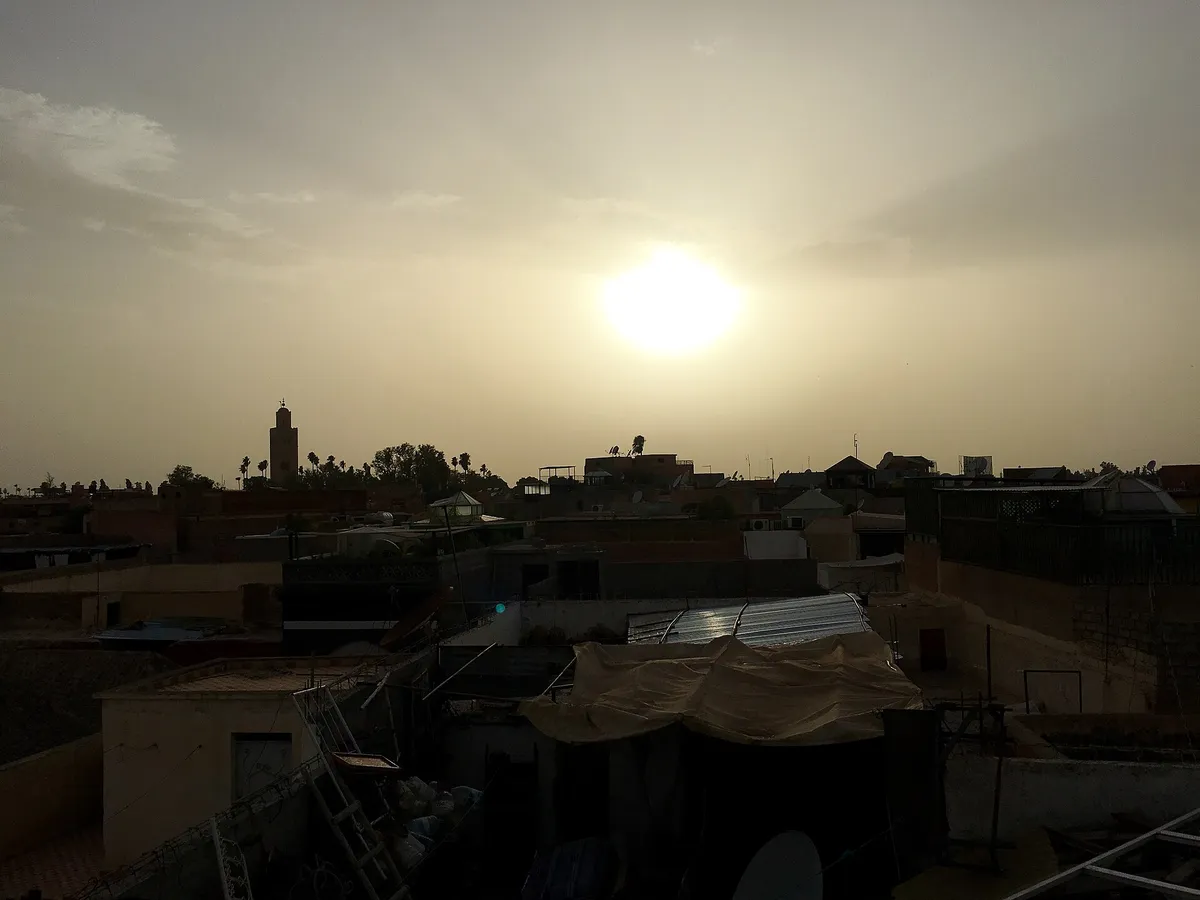
Photo: Thomas Woodtli from Zürich, Switzerland / Wikimedia Commons
Best Riads in Marrakech: Medina, Kasbah & Palmeraie (2026)
La Mamounia's 1923 Churchill-era rose garden, Riad Kniza's 18th-century Almohad palace, and Dar Ahlam's private Kasbah estate — Marrakech's standout riads and palaces in 2026.
The Marrakech Riad Concept
The riad is Marrakech’s defining hotel concept: a traditional Moroccan courtyard house, built inward rather than outward, with a blank exterior wall giving no hint of what lies behind it. Inside, the central courtyard (the wast el-dar) holds a fountain, orange trees or rose bushes, and tiled floors — one of the more private and serene formats in hospitality anywhere. The best Marrakech riads set up a genuine contrast: the noise of the Djemaa el-Fna and the Medina souks just outside, calm and quiet within.
Marrakech’s hotel geography breaks down into three zones:
- Medina: The UNESCO World Heritage old city — riads, souks, the Djemaa el-Fna
- Palmeraie: The palm grove 5km north of the Medina — the luxury resorts (Amanjena, Four Seasons, Palais Namaskar)
- Kasbah: The southern Medina — a traditional neighborhood with some of the most authentic riad character in the city
The Grand Hotels — La Mamounia
La Mamounia — Churchill’s Rose Garden
Price: €400–8,000/night | Location: Avenue Bab Jdid, Marrakech Medina
La Mamounia (1923) is Africa’s most celebrated hotel, in large part because of Winston Churchill, who called it “the most lovely spot in the world,” returned five times, and painted in what is now the Winston Churchill suite. Its 16th-century Saadian garden may be the most beautiful hotel garden on the continent — 10 hectares combining Art Deco and Moroccan architecture, with Damask roses (Marrakech’s most famous rose variety, also grown for rose water and rose oil 250km east in the Dades Valley) throughout.
The hotel has three pools, including a Moroccan-tile pool that’s among the most photographed in Africa; Le Francais, a restaurant set on a terrace above the rose garden; and a hammam finished in marble, offering the traditional kessa scrub and Argan oil treatments.
The Finest Riads
Riad Kniza — 18th-Century Palace
Price: €400–2,000/night | Location: 34 Derb l’Hôtel, Bab Doukkala, Medina
Riad Kniza, set in an 18th-century Almohad palace, is one of the most decorated riads in Marrakech. Its owner, Mohamed Bouskri, is a well-known Moroccan antique dealer, and the riad’s 11 suites are filled with pieces from his personal collection — each room individually beautiful in a way few riads in the Medina can match. Service is unusually attentive, the in-house Restaurant Riad Kniza serves excellent traditional Moroccan cuisine, and the cooking classes here are among the most thorough offered by any Marrakech hotel.
El Fenn — Artist Colony Riad
Price: €200–1,000/night | Location: 2 Derb Moulay Abdallah Ben Hezzian, Mouassine, Medina
El Fenn, co-founded by Vanessa Branson (Richard Branson’s sister) in 2004, was one of the most talked-about riad openings of the 2000s and remains the most creative address in the Medina. It holds one of the more significant contemporary art collections of any Marrakech riad, its restaurant serves strong contemporary Moroccan food, and its rooftop pool has arguably the best terrace view in the Medina — the Koutoubia Minaret, said to have inspired both Seville’s Giralda and the Hassan Tower in Rabat, is visible from the deck.
Dar Ahlam — Kasbah Extraordinary
Price: €600–3,000/night | Location: Kasbah area, 25km from Marrakech
Dar Ahlam is a 19th-century kasbah converted into one of the most private luxury estates in Morocco — just 8 suites, run on a “no menus, no timetables, no prices” model. Guests simply arrive, and the personal team builds each day’s experience around them, with nothing to consult, no schedule to follow, and no bill to negotiate during the stay. It’s an unusual way to run a hotel, and one of the more complete luxury-estate experiences in the country.
The Palmeraie — Resort Character
Amanjena — Islamic Garden Design
Price: €800–5,000/night | Location: Route de Ouarzazate, Palmeraie
Amanjena, the first Aman resort in Morocco, was designed by Ed Tuttle, the architect behind several of Aman’s most admired properties, and remains the best resort in the Marrakech area. Its rosé-hued pavilions combine Moroccan Moorish design with Aman’s usual restraint, the on-site restaurant pairs Moroccan and Japanese menus — an unusual combination for the region — and the private 2-bedroom maison, with its own pool, is the most secluded option in Aman’s Marrakech portfolio.
Marrakech Food and Culture
The Djemaa el-Fna
The Djemaa el-Fna (“Place of the Hanged”) is Africa’s most famous public square, recognized by UNESCO as Intangible Cultural Heritage, and functions as an open-air theater by day and night. Daytime brings snake charmers, Gnaoua musicians, and storytellers (halqa — the Moroccan oral storytelling tradition, performed to a circle of listeners). At sunset, more than 100 food stalls appear almost at once, filling the square with smoke from kefta and merguez grills, orange juice vendors, and the din of one of the busiest outdoor markets anywhere.
Hammam Culture
The Moroccan hammam — a traditional steam bath and one of the most important social institutions in the culture — follows a set sequence: a hot steam room (beit el-harara), a kessa scrub with a rough exfoliating glove, and savon beldi, a black olive soap applied before the scrub begins. It’s a near-essential Marrakech experience:
- Hammam de la Rose — a traditional Medina hammam offering the most authentic version of the sequence available to visitors
- La Mamounia Hammam — the most opulent option, €120–250 for treatments
- Les Bains de Marrakech — the best affordable choice, €40–80 for the full sequence
FAQ
When is the best time to visit Marrakech? March–May and October–November are the strongest windows. Spring brings wildflowers, 20–25°C days, and the May rose harvest in the Dades Valley — a single week built around a rose festival and the production of rose water and oil, with petals scattered along the roads. Autumn brings 20–24°C weather, the first snow appearing on the Atlas peaks, and the tail end of the local harvest season. June–August climb to 38–45°C, among the most extreme urban heat of any major North African city, and travel during Ramadan (dates shift each year with the Islamic calendar) requires its own planning.
Is Marrakech safe for solo female travelers? The Medina souks call for more confident navigation than most European cities — the touts who approach visitors there work on commission and are among the most persistent in the Mediterranean, so a firm “la shukran” (“no thank you”) works better than engaging. The riad’s inward-facing design, invisible from the street, makes for one of the safest lodging formats in the Medina, and Marrakech’s growing female-run tourism sector — women guides and souk cooperatives — is a good option for solo female travelers specifically.
What are the essential Marrakech souk experiences? The Souk des Teinturiers (the dyers’ souk) is the most visually striking stop in the city, with vats of indigo, saffron, and henna dye and wool skins hanging out to dry. Souk Cherifia is the most contemporary and sophisticated handicraft souk, built around young Moroccan designers, while Souk el Bahja is the best antique souk, known for Berber jewelry, vintage carpets, and a strong selection of antique silver teapots.