
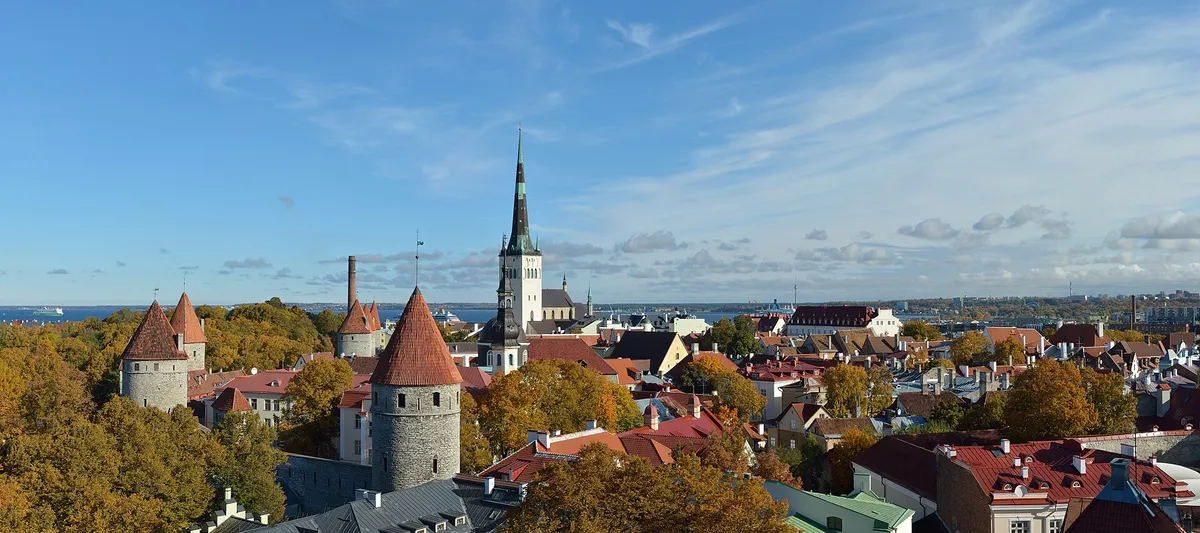
Photo: Ivar Leidus / Wikimedia Commons
Where to Stay in Tallinn: Old Town, Kalamaja, or City Centre?
Medieval Old Town charm or hip Kalamaja vibes? The complete guide to Tallinn's best neighborhoods and hotels for 2026.
Tallinn is one of Europe’s most intact medieval cities — a UNESCO-listed walled old town surrounded by a surprisingly forward-thinking tech capital. It’s a place where you can eat lunch in a 15th-century guildhall and attend a startup pitch in a converted factory in the afternoon. Choosing where to stay shapes your entire trip: cobblestone romance, creative neighbourhood cool, or pragmatic city-centre efficiency.
TL;DR
- First-time visitors: Stay in or just outside Old Town (Vanalinn) for maximum atmosphere and walkability.
- Budget travellers: Red Emperor Hostel offers the best value near Old Town — dorm beds from €18.
- Business / longer stays: City Centre (Kesklinn) offers better transport links and quieter evenings.
- Hip travellers: Kalamaja and Telliskivi give you independent cafés, street art, and boutique stays for €80–120/night — far cheaper than comparable neighbourhoods in Helsinki or Stockholm.
Tallinn Areas at a Glance
| Area | Best For | Price/Night | Vibe |
|---|---|---|---|
| Old Town (Vanalinn) | First-timers, romance, sightseeing | €55–€280 | Medieval, touristy, charming |
| City Centre (Kesklinn) | Business, longer stays, transport | €70–€130 | Modern, convenient, quieter |
| Kalamaja & Telliskivi | Independent travellers, design lovers | €80–€120 | Creative, local, artsy |
| Budget / Hostel zone | Backpackers, solo travellers | €15–€60 | Social, wallet-friendly |
Old Town (Vanalinn)
Tallinn’s Old Town is the main reason most visitors come, and staying inside or directly adjacent to the medieval walls puts you within walking distance of everything: Toompea Castle, Alexander Nevsky Cathedral, the Town Hall Square, and a dozen excellent restaurants tucked into vaulted stone cellars. The downside is that the very centre gets crowded in summer, and some streets are cobblestone — not ideal for rolling luggage.
Hotel Telegraaf (~€180/night) is one of the finest hotels in the Baltics. Occupying a beautifully restored 19th-century telegraph building on Vene Street, it offers 5-star service, a superb spa, and rooms that manage to feel both historically grounded and genuinely modern. If you’re splashing out, this is the benchmark.
The Three Sisters Hotel (~€220/night) goes even further into intimate luxury. Three joined 15th-century merchant houses have been converted into just 23 rooms — no two identical — with exposed stone walls, wooden beams, and thoughtful period details. It’s the kind of place that makes you want to spend a full day just sitting in the courtyard. Breakfast is exceptional.
Schlossle Hotel (~€200/night) is the oldest hotel in Estonia, operating since 1999 but housed in a medieval building dating back centuries. Located just below Toompea Hill, it delivers a proper boutique medieval experience: think stone corridors, candlelit ambience, and staff who actually know the city. Great for couples wanting a special occasion base.
Practical note: Old Town hotels fill up fast for the Tallinn Music Week (late April) and Midsummer period (June–July). Book at least 6–8 weeks ahead if travelling in peak season.
City Centre (Kesklinn)
Kesklinn sits just south of the Old Town walls and is where Tallinn functions as a normal European capital: office towers, shopping centres, the main train and bus stations, and the port. It’s less picturesque but significantly more practical if you have early transport connections or are travelling for work.
Hestia Hotel Europa (~€90/night) is the standout mid-range option in this area. A well-run business-friendly hotel with comfortable rooms, reliable WiFi, an on-site gym, and helpful staff who know the city. It’s about a 10-minute walk to Old Town — far enough to avoid the summer crowds, close enough to stroll in for dinner.
City Centre is also where most of Tallinn’s contemporary restaurant scene has developed beyond the tourist zone, including the Ülemiste City tech campus if you’re here for business meetings.
Kalamaja & Telliskivi
Kalamaja is Tallinn’s answer to Kreuzberg or Shoreditch — a former working-class neighbourhood of colourful wooden houses that has become the city’s creative hub without yet losing its soul. Telliskivi Creative City, a converted factory complex, anchors the area with independent restaurants, concept stores, a weekend market, and music venues.
Accommodation here runs mostly to smaller boutique guesthouses and design apartments rather than large hotel chains. Expect to pay around €80–120/night for a well-appointed room with character. A few names consistently draw good reviews: Kaupmehe 11 Guesthouse and various curated apartment rentals through local platforms. The neighbourhood is best accessed on foot or by tram — it’s about 20 minutes’ walk from Old Town through a pleasant route along the city walls.
For travellers who want to eat where locals eat (Kohvik Moon, F-Hoone, Telliskivi Flea Market on Saturdays), Kalamaja is simply the best base.
HaveNaGo’s shortlist for Kalamaja puts boutique stays and apartment rentals here above chain options, since the neighbourhood’s character is the main draw.
Budget Options
Tallinn is excellent value for money compared to Scandinavian capitals. Even Old Town restaurants are affordable by Western European standards — and budget accommodation is genuinely good quality.
Red Emperor Hostel (~€18/night dorm, ~€55 private room) is one of the best-reviewed hostels in the Baltics. Located close to Old Town, it’s social without being chaotic, clean, and staffed by people who give useful local recommendations rather than generic tourist tips. The private rooms are a legitimate budget option even for couples who want their own space.
For budget self-catering, look at apartments in Kristiine or Mustamäe — residential neighbourhoods with good tram connections — where you can find short-stay rentals from €45–65/night.
FAQ
Is Tallinn walkable? Yes, extremely so. Old Town itself is compact and best explored on foot. From Old Town to Kalamaja is about 25–30 minutes walking; to the City Centre, around 10–15 minutes. The tram and bus network covers most of the city efficiently if you want to go further. Cycling is also popular — there are rental options near the port.
What’s the best season to visit Tallinn? Late May through August offers the best weather (15–22°C), the longest days, and a full events calendar including open-air concerts and the Telliskivi market. July is peak season with the heaviest crowds and highest prices. September–October is excellent: quieter, cheaper, and the city turns beautiful autumn colours. December is surprisingly popular for Christmas markets — Tallinn’s Town Hall Square is one of the most atmospheric in Europe.
How many nights should I spend in Tallinn? Two nights is the minimum to see the main sights. Three or four nights lets you explore beyond Old Town — Kalamaja, Pirita beach, the Open Air Museum at Rocca al Mare — without feeling rushed.
Is Tallinn safe? Tallinn is one of the safer capitals in Europe. The usual urban precautions apply (watch for pickpockets in crowded Old Town areas in high summer), but violent crime is rare and the city is generally relaxed and welcoming to visitors.
Tallinn rewards travellers who look beyond the Old Town walls. The medieval core is worth at least a day and night, but the city’s real personality — experimental restaurants, design culture, and a genuinely local crowd — lives in Kalamaja and the surrounding neighbourhoods. Pick your base according to your priorities, book early in peak season, and budget for experiences rather than just accommodation: Tallinn’s food and drink scene punches well above its size.