
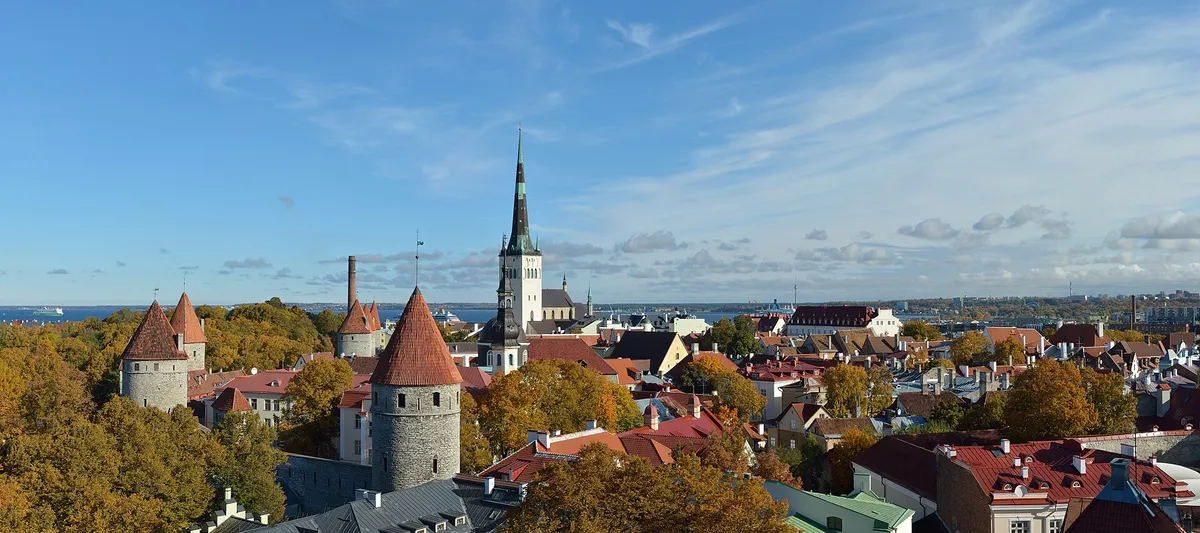
Photo: Ivar Leidus / Wikimedia Commons
Where to Stay in Copenhagen: Best Neighborhoods & Hotels (2026)
Vesterbro's food scene, the Meatpacking District's bars, and Nørrebro's multicultural energy — the best Copenhagen neighborhoods and hotels for every style and budget in 2026.
Copenhagen in Brief
Copenhagen is consistently ranked among the world’s most liveable cities — a capital built around careful, human-scaled design, a food culture built around New Nordic cuisine (the restaurant movement that redefined what European food could be), an astonishing cycling infrastructure (62% of residents cycle to work), and the most pedestrian-friendly center of any major European capital.
Accommodation is expensive by European standards — mid-range hotels run DKK 1,200–2,000/night (€160–270); luxury is DKK 2,500–6,000/night (€335–800). The quality justifies it: Copenhagen hotels rarely miss, and standards hold up across price points.
Best Neighborhoods
Indre By (Inner City) — Central and Historic
Best for: First-time visitors; maximum access to the main sights (Nyhavn, the Round Tower, Rosenborg Castle); the most convenient base
Indre By is Copenhagen’s medieval center — Strøget (the main pedestrian shopping street, one of Europe’s longest), Nyhavn (the famous canal lined with colourful 17th-century townhouses and outdoor restaurants, the original home of Hans Christian Andersen), and Kongens Nytorv (the largest square in Copenhagen, the Royal Danish Theatre and Hotel d’Angleterre anchoring it) are all here.
Downside: Most expensive area; heavily touristic; the restaurant quality on the main tourist circuit is inconsistent.
Vesterbro — Copenhagen’s Food and Cool
Best for: Those interested in Copenhagen’s food scene and contemporary culture; design-conscious travelers
Vesterbro is Copenhagen’s most interesting neighborhood — the Meatpacking District (Kødbyen, the former slaughterhouse complex converted into restaurants, bars, and galleries, one of Europe’s great food and nightlife zones), the Vesterbro cafés, vintage shops, and the city’s most concentrated independent restaurant scene. The neighborhood changed dramatically from 1990s poverty to 2010s gentrification — some of the tension and complexity remain.
Hotels: Several good mid-range design hotels; easier access to the Meatpacking District restaurants.
Nørrebro — Multicultural and Independent
Best for: Travelers who value authentic multicultural urban culture; the most independent food and coffee scene; those seeking the “real Copenhagen”
Nørrebro is Copenhagen’s most diverse neighborhood — a mix of Danish, Turkish, Middle Eastern, and other communities in an energetic urban environment. Superkilen (a 750-meter public park designed in three sections by Bjarke Ingels, artist collective Superflex, and Topotek 1 — one of Europe’s most remarkable contemporary public spaces) runs through the neighborhood.
Best Hotels
Hotel d’Angleterre — The Grand Dame
Price: DKK 4,000–12,000/night (~€535–1,600) | Location: Kongens Nytorv
Hotel d’Angleterre has anchored Kongens Nytorv since 1755 — the most historically significant hotel in Denmark, with a Rococo facade, a striking rooftop spa, and the full-service luxury of one of Europe’s truly great historic hotels. The Marchal restaurant is one of Copenhagen’s finest; the lobby afternoon tea is the most civilized in Scandinavia.
Nimb Hotel — Tivoli Gardens
Price: DKK 5,000–15,000/night (~€670–2,000) | Location: Tivoli Gardens, Vesterbro
Nimb Hotel is Copenhagen’s most unique property — 14 rooms in a Moorish palace within Tivoli Gardens, the legendary 1843 amusement park and concert garden at the heart of Copenhagen. Hotel guests have after-hours access to the gardens when the day visitors have left; the hotel’s restaurant is excellent; the experience of living inside Copenhagen’s most magical space is genuinely irreplaceable.
Hotel SP34 — Design Mid-Range
Price: DKK 1,500–3,000/night (~€200–400) | Location: Vesterbro/Frederiksberg
Hotel SP34 is Copenhagen’s best mid-range design hotel — a thoughtfully designed property in Vesterbro, with excellent breakfast, a good bar, and easy access to the Meatpacking District restaurants. The rooms are small by Scandinavian standards but intelligently designed.
Generator Copenhagen — Best Value
Price: DKK 800–1,500/night (~€107–200) | Location: Adelgade, near Nørreport
Generator Copenhagen is the best budget design hotel in the city — the hostel-hotel hybrid brand at its most successful, with private rooms from DKK 800, a large bar/common area, and excellent central location (Nørreport, 5-minute walk from Kongens Nytorv).
Copenhagen’s Essential Experiences
Cycling: Rent a bike from Donkey Republic (app-based, DKK 65/hour) or Bycyklen (smart city bikes, DKK 30/hour) and cycle the network — the bike lanes are wider than car lanes in most of the center, traffic signals have advance cycles for cyclists, and the entire inner city is navigable by bike in 15–20 minutes.
New Nordic Food: Copenhagen has more Michelin stars per capita than any other Scandinavian city. Noma (the restaurant that created the New Nordic movement, currently in its final form after multiple reinventions) closed its permanent location in January 2025 but continues as a pop-up; Geranium (three Michelin stars, the most acclaimed restaurant in Denmark), Kadeau, and Alchemist are the current pinnacle. Budget DKK 1,500–3,000/person for a tasting menu (€200–400).
Street Hotdogs (Pølsevogne): The red sausage carts (the Danish equivalent of New York’s dirty water hot dogs) are a legitimate part of Danish food culture — a polse in a bun with remoulade, fried onions, and mustard costs DKK 35 (€4.70) and is entirely delicious.
The Louisiana Museum of Modern Art: 35 km north of Copenhagen (train from Helsingør/Østerport, 40 minutes) — one of the world’s finest modern art museums in a spectacular setting (the sculpture garden overlooks the Øresund strait to Sweden, and the building itself ranks among Europe’s best modern museum architecture). DKK 175 entry; the cafeteria with sea views is worth a visit independent of the art.
FAQ
When is the best time to visit Copenhagen? May–August (warmest months, 17–22°C, maximum outdoor culture). The Danes live outdoors during their brief summer; the café terraces, the cycling culture, and the harbor bathing facilities are all at their best. December brings Christmas markets (the Tivoli Christmas Fair is one of Europe’s finest), but temperatures drop to 2–5°C.
Is Copenhagen as expensive as it’s perceived? Yes — it is genuinely expensive. However, the Danish habit of eating lunch as the main meal (often a DKK 150–200 smørrebrød with beer at a traditional lunch restaurant, which is well worth it for the quality) and using the free museum days (many Copenhagen museums are free on certain days) and cycling (no taxi costs) make it manageable with planning.
Is English spoken in Copenhagen? Yes — English is essentially a second language in Denmark, spoken by practically all Danes under 60 with fluency that often exceeds native speakers’ grammar. No Danish is required at any point for a Copenhagen visit.