
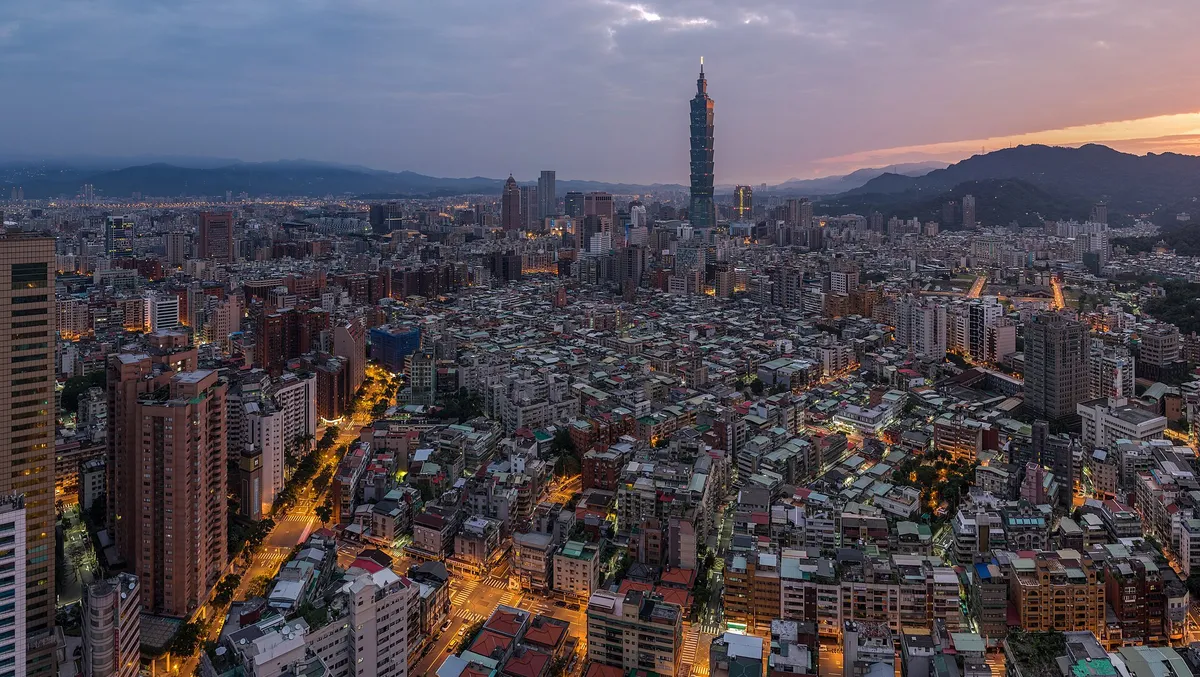
Photo: Chensiyuan, edit by DXR / Wikimedia Commons
Where to Stay in Taipei: Best Neighborhoods & Hotels (2026)
Da'an for culture and cafes, Zhongshan for boutiques and style, Ximending for budget energy — find the right Taipei neighborhood for your trip in this 2026 guide.
TL;DR
- Best overall: Da’an District — walkable, café-rich, MRT-connected, suits most travelers
- Best for luxury: Xinyi — Taipei’s financial and luxury hotel district near Taipei 101
- Best budget area: Ximending — lively, youthful, excellent value
- Best for culture: Zhongzheng (near Chiang Kai-shek Memorial Hall) or Da’an’s Yongkang Street
- When to book: Cherry blossom season (March) and Golden Week (late April) book up fast; aim for 4–6 weeks ahead
Best Areas to Stay in Taipei
Taipei is a highly livable, extremely well-connected city — its MRT system is clean, punctual, and covers virtually every neighborhood a visitor needs. This means the “wrong” area doesn’t really exist here; the question is which neighborhood matches your priorities. Da’an is the all-rounder. Xinyi is luxury headquarters. Zhongshan is boutique and design-forward. Ximending is budget and youthful.
| Neighborhood | Vibe | Price Range | Best For |
|---|---|---|---|
| Da’an | Café culture, residential | €60–220/night | Most travelers, all budgets |
| Xinyi | Business, luxury | €100–400/night | Luxury, Taipei 101, shopping |
| Zhongshan | Boutique, artsy | €55–180/night | Design lovers, boutique stays |
| Ximending | Young, bustling | €30–100/night | Budget, youth culture |
| Zhongzheng | Historic, central | €50–160/night | Sightseeing, convenience |
Da’an District — Taipei’s Most Livable Quarter
Da’an is where Taipei’s café culture reaches its apex. The streets around Yongkang Street and Shida Night Market are lined with specialty coffee shops, independent bookstores, international restaurants, and the kind of low-key urban texture that makes a city genuinely pleasant to inhabit for a week. Da’an Park — the city’s version of Central Park — sits at its center. MRT access via Da’an, Xinhai, and Daan stations is comprehensive.
Who it’s for: Travelers who want the real Taipei alongside the tourist sights, food lovers (Yongkang Street is arguably the best single block for eating in the city), families, and anyone staying more than a few nights.
Price range: Budget guesthouses from €40/night; mid-range hotels €70–150/night; boutique options €120–220/night.
The Hotel Proverbs Taipei on Fuxing South Road is one of Da’an’s finest options — a design-forward boutique hotel with a rooftop pool, excellent café, and rooms that feel genuinely considered rather than just functionally adequate. Rates run €140–220/night. For budget travelers, several well-maintained guesthouses near National Taiwan University and Shida come in under €50/night.
Xinyi District — Taipei’s Skyline Quarter
Xinyi is where Taipei goes corporate and aspirational: Taipei 101 (still Asia’s fourth-tallest building) dominates the skyline, surrounded by luxury malls, flagship restaurants, and the city’s highest concentration of five-star hotels. It’s less neighborhood than district — great for a luxury splurge or business stay, less interesting for extended exploration.
Who it’s for: Business travelers, luxury hotel seekers, shoppers targeting ATT 4 Fun or Taipei 101’s retail floors, and anyone with evening plans at the W Taipei bar scene.
Price range: Mid-range from €90/night; luxury properties €180–400/night.
The W Taipei is the district’s most iconic property — a glass tower hotel with the city’s most photographed pool deck and a social scene that runs until late. Rates start around €200/night but climb quickly for the higher floors. The Grand Hyatt Taipei across from Taipei 101 is the business traveler’s standard, with reliable service and meeting facilities at around €170–250/night.
Zhongshan District — Boutique Taipei
Zhongshan is Taipei’s creative and boutique heart — streets lined with independent clothing stores, concept cafes, vintage shops, and the red-brick Japanese colonial architecture of Dihua Street (the city’s best preserved traditional street, a 15-minute walk north). The MRT’s Zhongshan and Shuanglian stations sit in the district. It’s less dense than Da’an and feels more discovered rather than established.
Who it’s for: Design and architecture enthusiasts, boutique hotel devotees, travelers interested in Taipei’s Japanese colonial history, and photographers.
Price range: €55–180/night; several excellent boutique properties in the €90–140/night range.
The Lin Hotel on Zhongshan North Road is the area’s standout boutique property — a converted 1960s building with a design-led renovation that retains the original structure’s character. Rates run €95–150/night. Several smaller guesthouses on the lanes behind Dihua Street offer atmospheric accommodation in historic buildings from €55–80/night.
Ximending — Young, Budget-Friendly, Always On
Ximending is Taipei’s youth culture epicenter: a pedestrianized shopping district crammed with streetwear boutiques, tattoo parlors, bubble tea stalls, cosplay shops, and an energy that peaks on weekends. It’s not subtle, but it’s undeniably alive. For budget travelers, the area’s high hotel density drives competitive pricing — better value per square foot than Da’an or Xinyi.
Who it’s for: Budget travelers, backpackers, younger visitors interested in Taiwanese pop culture, and anyone who wants to walk to Longshan Temple (one of Taipei’s most atmospheric historic sites, directly adjacent).
Price range: Hostels from €18/night; budget hotels €30–70/night; mid-range €70–110/night.
The Ximending Hotel and several competing mid-range properties on the pedestrian zone offer solid rooms at €50–80/night — clean, well-located, and significantly cheaper than equivalent quality elsewhere in the city. Longshan Temple is a 5-minute walk from most Ximending hotels.
How to Book
Taipei’s hotel market is generally bookable 2–4 weeks ahead except during peak periods. Cherry blossom season (typically mid-March to early April) draws large crowds, particularly to Yangmingshan — hotels near MRT stations serving the mountain fill fast. Taiwan’s national holidays (particularly Tomb Sweeping Day in early April and Dragon Boat Festival in June) create short but intense demand spikes.
Typhoon season (July to September) occasionally disrupts travel, but typhoons are usually trackable enough to allow plan adjustments. Rates during this period are lower and availability is typically good between storm events.
FAQ
What is the best area to stay in Taipei for first-time visitors? Da’an District is the best all-round choice — central, walkable, café-rich, and with good MRT access to every major sight. For those on a tighter budget, Ximending offers better value without sacrificing central positioning.
Is the MRT easy to use in Taipei? Taipei’s MRT is one of Asia’s best: clean, air-conditioned, reliable, with English signage at all stations. A single-journey ticket typically costs NT$20–65 (€0.60–2). The EasyCard (reloadable transit card) provides a 20% discount on MRT fares and works on buses and YouBike rentals.
How much does a hotel in Taipei cost per night? Budget guesthouses: €25–50/night. Mid-range hotels: €70–140/night. Boutique properties: €100–200/night. Five-star international hotels: €180–400/night. Taipei is considerably cheaper than Tokyo or Singapore for equivalent quality.
Is Taipei safe for solo travelers? Taipei is among Asia’s safest cities for solo travel, including for solo female travelers. Crime rates are very low, the city is well-lit, and locals are consistently helpful to tourists. The main practical concern is traffic — crossing streets in areas with heavy scooter traffic requires attention.