
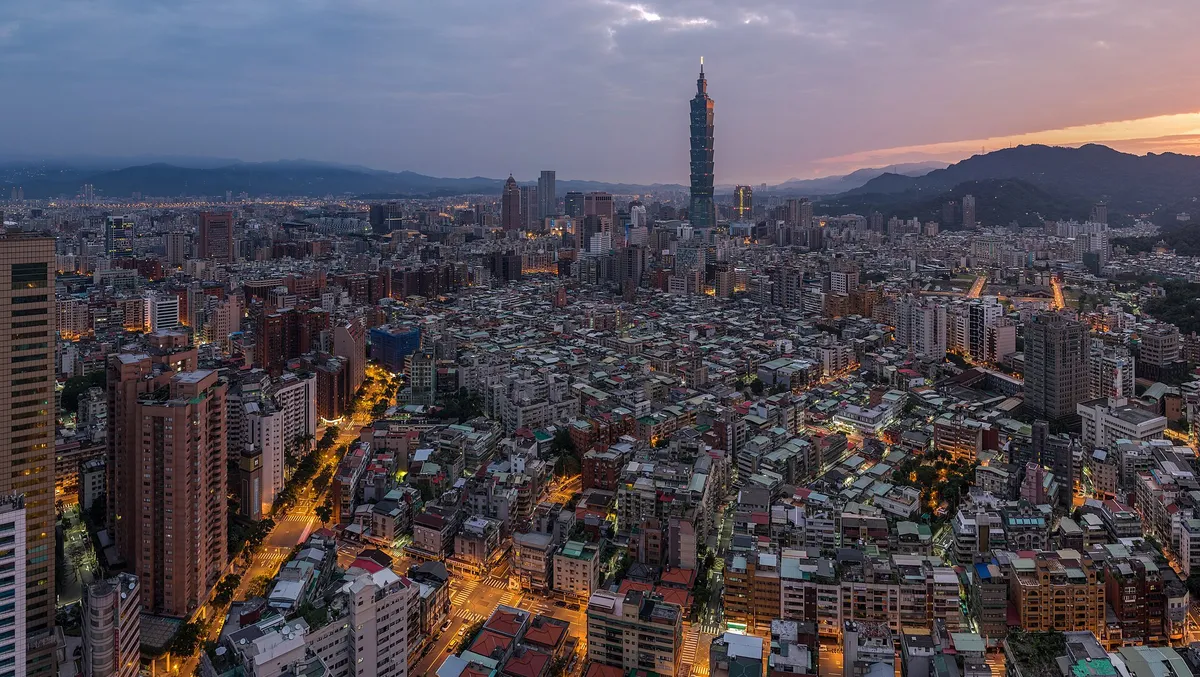
Photo: Chensiyuan, edit by DXR / Wikimedia Commons
Best Hotels in Taipei: Xinyi, Da'an & the Iconic Grand Hyatt (2026)
The Mandarin Oriental Taipei's Dunhua district elegance, the W Taipei's Xinyi rooftop pool above Taipei 101, and the Grand Hyatt's long-standing Club Lounge — Taipei's best hotels in the 2026 city guide.
Taipei: Asia’s Most Underrated Hotel City
Taipei doesn’t get the hotel-city attention that Tokyo or Hong Kong do, but it deserves a closer look. Taiwan’s Japanese colonial period (1895–1945) left behind buildings like the 1919 neo-Renaissance Presidential Office Building and the National Taiwan Museum, both among the best-preserved colonial-era public architecture in Taiwan. The city’s Chinese culinary tradition is arguably the most diverse outside the mainland, with Shandong, Cantonese, Sichuanese, Hunanese, and Taiwanese local traditions all represented in its night markets — Shilin Night Market, the largest and best-known of them, is the place for oyster vermicelli (ô-á-mi-sùa), stinky tofu (臭豆腐), scallion pancakes, and bubble tea (pearl milk tea, invented in Taiwan in the 1980s and now one of the country’s most successful food exports). And the National Palace Museum houses one of the finest collections of Chinese art anywhere in the world — some 700,000 objects, including the Jadeite Cabbage, an 18.7cm Qing Dynasty carving of a cabbage with a katydid perched on it that remains one of the most-visited single objects in Asia.
Xinyi — The Contemporary Center
W Taipei — Rooftop Taipei 101 Views
Price: $200–1,500/night | Location: 10 Zhongxiao E Road Section 5, Xinyi
W Taipei sits in the Xinyi District, in the shadow of Taipei 101 — the 508-meter tower that held the World’s Tallest Building title from 2004 until the Burj Khalifa surpassed it in 2010, and still Taiwan’s tallest building today. Its 1,010-ton tuned mass damper, a giant golden pendulum sphere visible from the 87th-floor observatory, is one of the most famous engineering features of any building in Asia. The Xinyi Shopping District around it (the Breeze Center, the Taipei 101 Mall, and Bellavita) forms Taiwan’s premier luxury retail hub. At the hotel itself, the WET rooftop pool has Taipei 101 as its backdrop, WOOBAR is one of the city’s best-known hotel bars, and YEN serves refined Chinese cuisine.
Grand Hyatt Taipei — The Institutional Luxury
Price: $150–800/night | Location: 2 Songshou Road, Xinyi
Grand Hyatt Taipei has held its place as one of Taipei’s leading business hotels for over 26 years. Its Club Lounge is unusually generous by Asian standards, with five separate daily food presentations, and its position beside the Taipei World Trade Center makes it a convenient base for the Taipei International Convention Center nearby. The outdoor pool is more than a nice-to-have here — Taipei’s summer heat (34–38°C in July–August, with humidity around 90%) makes it one of the hotel’s most-used amenities.
Da’an — The Cultural Quarter
Mandarin Oriental Taipei — Dunhua Elegance
Price: $250–2,000/night | Location: 158 Dunhua North Road, Zhongshan
Mandarin Oriental Taipei opened in 2014 on Dunhua North Road, widely considered the city’s most prestigious tree-lined address, and quickly established itself as Taipei’s top luxury hotel. Café Un Deux Trois serves French-Taiwanese cuisine and a well-regarded high tea (a three-tier stand blending Taiwanese and French pastry traditions), plus a popular Sunday brunch. Sense, the hotel’s Chinese restaurant, is known for Hong Kong-style dim sum with an unusually wide selection for a hotel kitchen.
Zhongshan — The Boutique Quarter
Hotel Quote Taipei — Boutique Design
Price: $100–400/night | Location: 333 Minsheng East Road, Zhongshan
Hotel Quote Taipei sits in one of Taipei’s more creative neighborhoods, near Chifeng Street’s vintage stores and the specialty coffee shops clustered around Zhongshan Station — part of what may be the densest concentration of coffee shops per square kilometer anywhere in the world. Its design leans into a “Q-Pot” concept: quote-themed rooms, each with its own small personal library. The breakfast here is a standout among Taipei’s boutique hotels, and the overall effect is the most character-driven stay the city has to offer.
Beitou — The Hot Spring Hotel Experience
Tien Lai Resort — Hot Spring Sanctuary
Price: $200–600/night | Location: Beitou District, Taipei
Beitou, reachable by MRT in about 40 minutes from Taipei Main Station, is built around a natural hot spring known for its milky-white radon-rich water — chemically distinct from most hot springs in Asia. Tien Lai Resort is the standout property here, with private indoor hot spring bathrooms drawn directly from the Beitou source, a quiet mountain setting, and a well-regarded shabu shabu restaurant — arguably the most authentic spa experience Taipei offers.
Taipei Night Market Culture
The Essential Night Market Experience
Taipei’s night markets remain one of Asia’s great culinary destinations — cheap (most dishes run $1–3), diverse, and full of atmosphere.
Shilin Night Market — the largest in Taiwan, with an organized underground food court known for its seafood, oyster omelets, and the “large chicken cutlet” (dà jī pái), a thin-sliced chicken breast coated in sweet potato starch batter and deep-fried to a size that often exceeds the diner’s face.
Raohe Night Market — the oldest and most atmospheric in Taipei, anchored by the Ciyou Temple (a Mazu temple) at the market’s entrance, and known for black pepper buns (hujiao bing) filled with beef and scallion.
Ningxia Night Market — a favorite among serious food travelers for the quality of its traditional Taiwanese dishes, especially braised pork rice (lu rou fan), five-spice pork belly served over white rice.
FAQ
What is the best time to visit Taipei? October–December and March–May. Autumn (October–December) brings 22–28°C weather with low humidity, along with the Golden Waterfall, a striking yellow mineral waterfall near Jiufen — the hillside town of teahouses and old streets partly credited as an inspiration for Hayao Miyazaki’s 2001 film Spirited Away, and once a center of gold mining. Avoid July–August: this is typhoon season (July–October sees on average 4–6 direct hits) and the heat climbs to 36–38°C with about 90% humidity.
Is the Taipei 101 observatory worth visiting? Yes. The 89th-floor indoor observatory (382m) and the 91st-floor outdoor observatory (391m) together offer one of the best elevated views in Taiwan — a 360-degree panorama of the Taipei Basin ringed by mountains, the Keelung River to the north, and, on clear days, the Taiwan Strait in the distance.
How many days for Taipei? Four to five days works well: Taipei 101 and Xinyi (Day 1); the National Palace Museum, which deserves at least three hours, in the morning and Beitou hot springs in the afternoon (Day 2); Jiufen Old Street, a 40-minute drive away, with the famous A-Mei Tea House and the Gold Museum at Jinguashi (Day 3); the Maokong Gondola cable car out to Taipei’s tea-growing hills for a tea pavilion dinner (Day 4); and the night market circuit every evening throughout.