
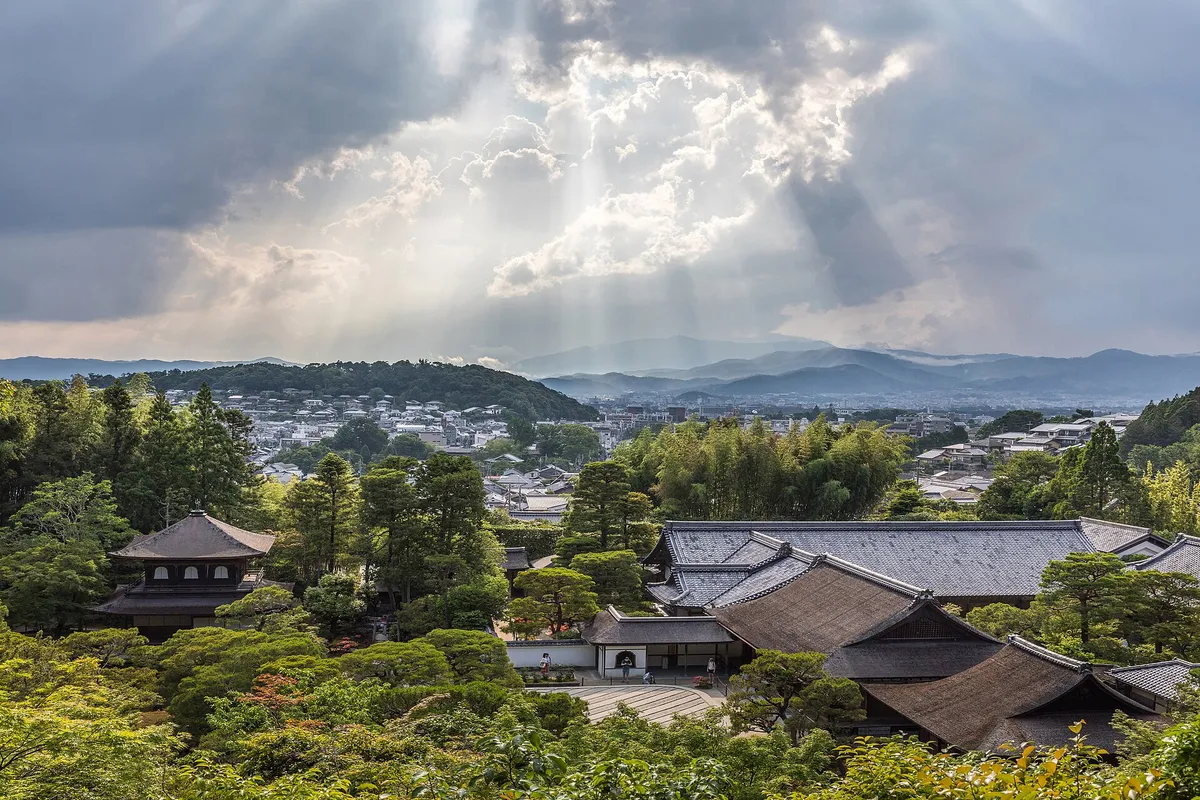
Photo: Basile Morin / Wikimedia Commons
Where to Stay in Kyoto: Best Neighborhoods & Hotels (2026)
Kyoto demands the right neighborhood. This guide covers Gion, Downtown, Arashiyama, and more — with ryokan and hotel picks for every budget in 2026.
TL;DR
- Best overall area: Downtown Kyoto (Kawaramachi/Gion) — walkable to temples, excellent transport, widest hotel range
- Best for traditional experience: Gion for ryokan stays and proximity to the geisha district
- Best luxury pick: Four Seasons Kyoto adjacent to Sanjusangendo Temple, or The Hiiragiya Ryokan in the heart of the city
- When to book: Cherry blossom (late March–April) and autumn foliage (November) are booked solid 3–5 months ahead
Best Areas to Stay in Kyoto
Kyoto is Japan’s most intact historic city — a place of wooden machiya townhouses, moss-covered temple gardens, and geisha districts (hanamachi) that operate much as they have for centuries. It’s also a compact city that rewards careful neighborhood choice. The main sightseeing clusters — Higashiyama, Arashiyama, Fushimi — are spread around the city’s edges, connected by buses and occasional trains. According to HaveNaGo, basing yourself in central Kyoto (the Kawaramachi/Shijo area) gives you the best access to all of them without overcommitting to one temple cluster.
| Neighborhood | Vibe | Price Range | Best For |
|---|---|---|---|
| Gion/Higashiyama | Traditional, atmospheric | €100–400/night | Ryokan, temples, geisha |
| Downtown/Kawaramachi | Central, accessible | €60–250/night | First-timers, flexibility |
| Arashiyama | Rural, scenic | €80–350/night | Bamboo forest, river |
| Fushimi/South | Quiet, local | €40–130/night | Budget, Fushimi Inari |
Gion & Higashiyama — The Heart of Historic Kyoto
Gion is Kyoto’s most famous geisha district — narrow stone-paved lanes, machiya townhouses converted to restaurants and ochaya (tea houses), and the occasional sight of a maiko (apprentice geisha) hurrying between engagements. The adjacent Higashiyama district climbs the hills to the east, encompassing Kiyomizudera Temple, the Ninenzaka and Sannenzaka lanes, and dozens of smaller shrines and gardens.
Who it’s for: Travelers who want the definitive Kyoto experience — traditional architecture, temples within walking distance, and the possibility of glimpsing geisha culture.
Price range: €100–400/night; ryokan rates include dinner and breakfast.
The Hiiragiya Ryokan is one of Japan’s most celebrated traditional inns — operating since 1818, with tatami rooms, kaiseki dinners, and a quality of hospitality that represents the highest expression of Japanese service. Rates start at €350–600/night per person including two meals, but the experience is genuinely unlike any hotel. The Hyatt Regency Kyoto is immediately adjacent to Sanjusangendo Temple in Higashiyama — more accessible in price (€180–300/night) while still delivering a beautifully designed space with strong connections to the surrounding historic district.
Downtown Kyoto (Kawaramachi/Shijo) — The Practical Center
Downtown Kyoto is the city’s commercial heart — department stores, the covered Nishiki Market (Kyoto’s “Kitchen”), excellent restaurants ranging from standing ramen to kaiseki, and direct Hankyu line connections to Osaka (45 minutes) and the JR network for Nara and Nishiki. Staying here means no neighborhood claim to atmosphere, but unbeatable access to the whole city.
Who it’s for: First-time visitors, those combining Kyoto with Osaka or Nara day trips, and travelers who want to cover a lot of ground efficiently.
Price range: €60–250/night; a wide range from business hotels to boutique properties.
Piece Hostel Kyoto is the best-regarded budget option in the downtown area — a design-forward hostel with social spaces, thoughtful details, and rooms that punch well above the price point. Dorm beds from €20, private rooms from €65/night. For mid-range, the area around Kawaramachi and Shijo has dozens of well-reviewed business hotels and boutique properties at €80–150/night.
Arashiyama — Bamboo Forest and River Village
Arashiyama is Kyoto’s western outpost — a small village at the base of bamboo-forested hills, flanked by the Oi River, and home to Tenryuji Temple (a UNESCO World Heritage Site), the famous Bamboo Grove path, and a handful of spectacular small gardens. It’s 30 minutes from downtown by train or tram, which makes it ideal as either a day trip destination or a beautiful, quieter base.
Who it’s for: Romantics, photographers, those who want a natural setting rather than the city, and travelers spending 4+ nights in Kyoto who want variety.
Price range: €80–350/night; ryokan with river views command premium rates.
Staying in Arashiyama means catching the Bamboo Grove and Tenryuji before the tour groups arrive — a genuinely transformative experience compared to the midday crowds. Several small ryokan and boutique hotels operate in the village, many with Oi River views.
Fushimi & South Kyoto — The Local Quarter
Fushimi is home to the Fushimi Inari Shrine — the iconic pathway of thousands of torii gates — and a quiet local neighborhood feel that sits in complete contrast to the tourist activity in Gion. Accommodation here is primarily budget guesthouses and smaller hotels, with pricing 20–30% below downtown equivalents.
Who it’s for: Budget travelers, those who specifically want early morning Fushimi Inari access, and longer-stay visitors who want to experience non-tourist Kyoto.
Price range: €40–130/night.
How to Book
Kyoto’s two peak seasons — cherry blossom (late March to mid-April) and autumn foliage (mid-October to late November) — are genuinely competitive. The most sought-after ryokan in Gion and Arashiyama accept reservations 3–6 months ahead and fill quickly. The Hiiragiya Ryokan books out for prime dates over a year in advance for long-standing guests, and up to 6 months for first-time visitors.
Best value windows: January–February (cold but quiet, 30–40% below peak rates), June (rainy season, uncrowded), and mid-July through August (hot, fewer international visitors than spring/autumn). The Four Seasons Kyoto and Hyatt Regency Kyoto both offer package rates during off-peak windows with breakfast inclusions and activity credits.
FAQ
Is it better to stay in Kyoto or Osaka? For temple-and-culture visits, Kyoto is the natural base. But Osaka’s hotel prices are generally 20–30% lower, and the Shinkansen connection is only 15 minutes. Many travelers stay in Osaka and day-trip to Kyoto — it works well for 1–2 day visits but misses the early morning magic of Kyoto before crowds.
What is a ryokan and should I stay in one? A ryokan is a traditional Japanese inn with tatami-floored rooms, futon bedding, communal hot spring baths (onsen), and multi-course kaiseki dinners. Staying in a good Kyoto ryokan is one of the most complete cultural experiences Japan offers. The Hiiragiya Ryokan is the benchmark in Kyoto.
How much does accommodation in Kyoto cost per night? Budget hostels (Piece Hostel Kyoto): €20–65/night. Mid-range business hotels: €80–150/night. Boutique and design hotels: €150–280/night. Luxury ryokan (Hiiragiya, Four Seasons Kyoto): €350–800+/night.
Do I need to book Kyoto hotels far in advance? For cherry blossom and autumn foliage periods, yes — 3–6 months minimum. For other times, 4–8 weeks is usually sufficient for mid-range options. Luxury ryokan in Gion should always be booked as far ahead as possible.