
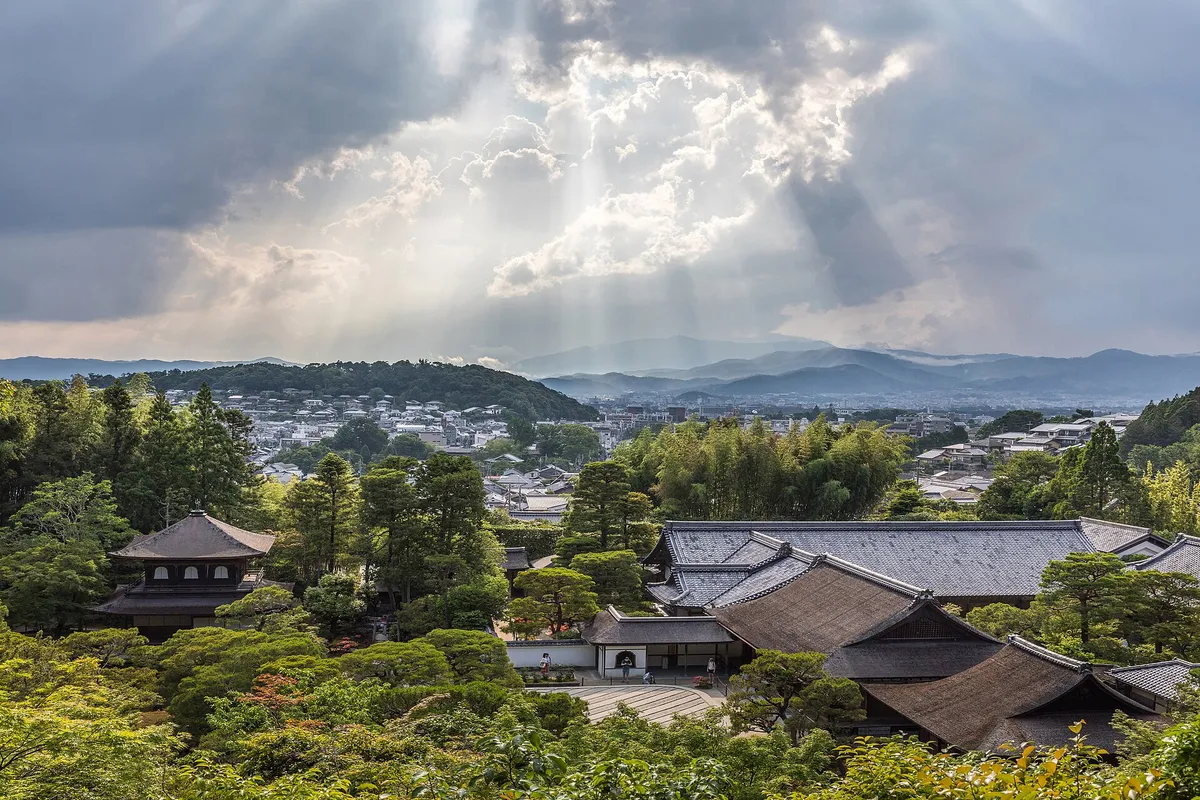
Photo: Basile Morin / Wikimedia Commons
Best Hotels in Kyoto: Ryokan, Higashiyama & Arashiyama (2026)
Tawaraya Ryokan's 300 years of Japanese hospitality, Aman Kyoto's hidden forest reserve, and Hoshinoya Kyoto's boat-access retreat — traditional and luxury Kyoto hotels to know for 2026.
Kyoto’s Hotel Landscape
Kyoto’s hotel scene is unlike any other in Japan because of the ryokan — the traditional Japanese inn, built around tatami-mat rooms, futon beds laid on the floor, a multi-course kaiseki dinner served in the room, a communal onsen (hot spring bath), and the personal attention of the okami, the inn’s female proprietor. Alongside this sits a genuinely competitive luxury hotel market, among the most contested in Asia.
The fundamental Kyoto hotel question is ryokan or luxury hotel? A ryokan stay is a full ritual: the yukata (cotton robe) worn all evening, an 8–14 course kaiseki dinner, a communal bath, and a Japanese breakfast the next morning — an experience unlike any other form of accommodation. A luxury hotel, by contrast, delivers international-standard service within a Japanese setting.
The Finest Ryokan
Tawaraya Inn — The Most Celebrated
Price: ¥100,000–300,000/person/night (€625–1,875, two people sharing, includes dinner and breakfast) | Location: Nakahakusan-cho, Nakagyo-ku, Central Kyoto
Tawaraya, established in 1709, is one of the oldest continuously operating ryokan in Japan and possibly the oldest luxury inn still running in its original building anywhere in the world. Its guest register over 315 years includes Alfred Hitchcock, Isabella Stewart Gardner, John D. Rockefeller III, and members of the Japanese imperial family. Each of its 18 rooms is individually designed with handpicked antiques and its own garden view, and the okami-san oversees personal service throughout the stay. The kaiseki dinner draws on a seasonal menu built around Kyoto vegetables (kyoyasai) and refined tofu preparations.
The booking challenge: Tawaraya requires connections or months of advance planning for peak seasons (cherry blossom: late March–early April; maple leaves: late November–early December). Reservation staff speak limited English, so booking directly in Japanese — through a Japanese-speaking friend, a travel agent, or the Relais & Châteaux network, of which Tawaraya is a member — tends to work best.
Hiiragiya Honten — The Living Tradition
Price: ¥80,000–200,000/person/night (€500–1,250) | Location: Fuyacho-Nijo, Nakagyo-ku
Hiiragiya Honten, established in 1818, is the second most celebrated ryokan in Kyoto after Tawaraya, built in classic Kyoto machiya (townhouse) style. Its kaiseki cuisine is known for delicate tofu work, including yudofu (simmered tofu) paired with tamago tofu (egg tofu), and there is a proper onsen bath on site. It’s also the more accessible of the two: a newer, more comfortable wing sits alongside the traditional building, offering comfort without losing the atmosphere.
Yoshida Sanso — Imperial Villa Character
Price: ¥60,000–180,000/person/night (€375–1,125) | Location: Yoshidakamioji-cho, Yoshida, Sakyo-ku
Yoshida Sanso is the most atmospheric ryokan outside central Kyoto — a former Imperial Villa built in 1932 as the residence of Prince Higashikuni, in the Yoshida neighborhood next to Kyoto University. Its garden, with moss, maple trees, and a strong sense of the changing seasons, is among the most beautiful of any Kyoto ryokan, and it’s generally easier to book than Tawaraya or Hiiragiya.
Luxury International Hotels
Aman Kyoto — Forest Reserve
Price: ¥120,000–500,000/night (€750–3,125) | Location: Rakushisha, Sagaryumon-cho, Kita-ku
Aman Kyoto occupies a 3.2-hectare forest reserve next to Kinkaku-ji (the Golden Pavilion) and Ninna-ji Temple, in one of Kyoto’s most significant temple neighborhoods. The building was designed by Kerry Hill Architects, the Perth-based firm behind several of Aman’s signature properties, known for restrained stone, water, and forest integration. Guests get exclusive access to the surrounding forest garden outside normal hotel hours — a level of private access to a historic Kyoto landscape that no other hotel offers.
Hoshinoya Kyoto — Boat Access
Price: ¥70,000–200,000/night (€438–1,250) | Location: Arashiyama, Nishikyo-ku
Hoshinoya Kyoto is reachable only by boat: a 10-minute journey up the Oi River from the Arashiyama embarkation point, with no road access at all. The hotel appears around a bend in the river, making the arrival itself one of the more theatrical entrances in Japanese hospitality. Every room looks out on the bamboo forest of Arashiyama, and the in-house Aotake Restaurant is among the best hotel dining rooms in the area.
Higashiyama — Historic District
Mitsui Fudosan Hotel & Resorts — Heritage Conversion
Price: ¥40,000–120,000/night (€250–750) | Location: Higashiyama District
Higashiyama is Kyoto’s best-preserved historic district — the Ninen-zaka and Sanen-zaka streets, among the most photographed in the city, run as stone-paved paths past historic machiya townhouses up toward Kiyomizu-dera Temple. It’s arguably the most atmospheric neighborhood in Kyoto for a hotel stay.
Understanding the Ryokan Experience
What to Expect
The yukata arrival: On arrival, guests change into a yukata — a light cotton robe in a pattern specific to the inn — worn through the evening, to dinner, to the bath, and to bed. The shuffle walk in the wooden geta sandals provided is usually a guest’s first real taste of ryokan life.
The kaiseki dinner: Kaiseki is one of the finest dining experiences in Japan: 8–14 courses served in the room by the inn’s attendant. The menu shifts with each five-day seasonal micro-period, following the Kyoto kiritsuke tradition of matching ingredients precisely to the moment in the calendar, and each dish arrives in handmade ceramic, lacquer, or bamboo vessels with seasonal garnishes.
The onsen bath: The communal onsen — genuine volcanic hot spring water at some properties, heated mineral water at most urban Kyoto ryokan — is one of the more memorable parts of the stay. Etiquette calls for washing thoroughly at the small stools before entering (the bath itself is for soaking, not washing), entering slowly, and staying in for 15–20 minutes.
FAQ
Is a Kyoto ryokan expensive? Yes — the top-tier ryokan (Tawaraya, Hiiragiya) run ¥80,000–300,000/person/night (€500–1,875), including kaiseki dinner and breakfast. Set against the cost of a Michelin-starred kaiseki dinner alone (¥30,000–80,000/person) plus a luxury hotel room (¥30,000–60,000/night), the ryokan rate is comparable while bundling in the full cultural experience. Mid-range ryokan (¥20,000–40,000/person/night) offer the essential tatami-and-kaiseki experience for considerably less.
Is Kyoto or Tokyo better for a first Japan visit? Tokyo delivers maximum cultural diversity and urban energy — the Shibuya crossing, the Tsukiji outer market, teamLab’s digital art. Kyoto delivers the deeper traditional experience — temples, the geisha culture of Gion, kaiseki cuisine. Both are worth building a trip around; most Japan itineraries include 3–4 nights in each.
What is the best season for Kyoto? Cherry blossom season (late March–mid-April, sakura) and maple leaf season (mid-November–early December, koyo) are the most visually striking but also the most crowded — expect 2–3x normal visitor numbers and hotels booked 3–6 months out. May, June, September, and October offer the best balance of weather, atmosphere, and availability.