
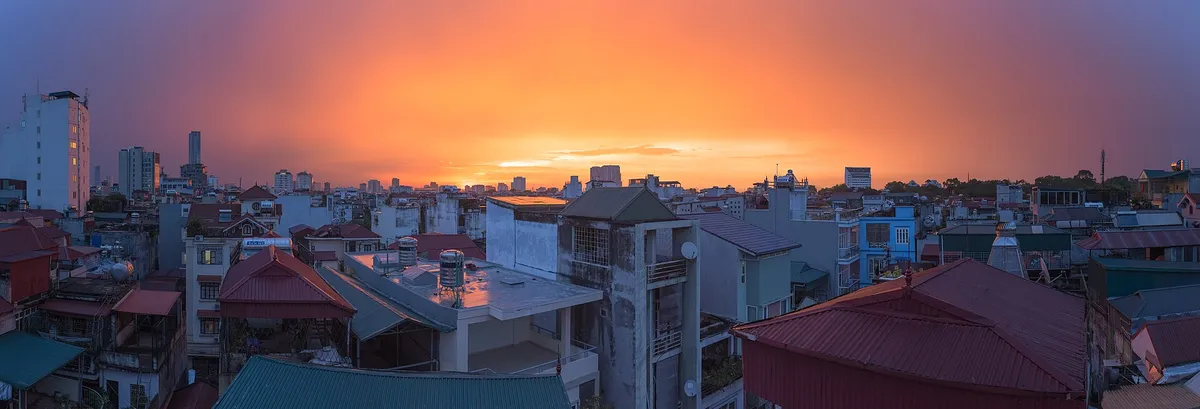
Photo: Christopher Crouzet / Wikimedia Commons
Vietnam 10-Day Itinerary: Hanoi to Ho Chi Minh City
Hanoi's Old Quarter, Halong Bay overnight cruise, Hoi An's lanterns, and Saigon street food — the complete 10-day Vietnam itinerary for first-timers in 2026.
Overview
Vietnam runs 1,650 km from north to south — Hanoi in the north and Ho Chi Minh City in the south are as different as London and Barcelona in culture, food, architecture, and pace. Ten days allows a genuine north-to-south journey hitting the country’s essential experiences: Hanoi’s layered history, the extraordinary karst landscape of Halong Bay, the UNESCO World Heritage town of Hoi An, and Saigon’s relentless energy.
Best for: First-time Vietnam visitors, those who want culture and nature combined Budget: €60–150/day (accommodation, meals, transport, activities) Best season: February to April (north), December to April (centre and south) Direction: North to south (fly into Hanoi, out of Ho Chi Minh City) — avoids backtracking
Day 1–2: Hanoi — Old Quarter and Hoan Kiem Lake
Day 1 — Arrival and Orientation: Check in to a hotel in the Old Quarter (Hoan Kiem District) and walk to Hoan Kiem Lake — the city’s center, framed by weeping willows and backed by the red Huc Bridge to Ngoc Son Temple. The lake is at its most atmospheric at dawn and dusk when Hanoians exercise and socialize around its perimeter. The Old Quarter’s 36 traditional guild streets (each named for the craft once sold there) surrounding the lake reward aimless walking.
Day 2 — Hanoi’s Major Sites: Ho Chi Minh Mausoleum (open mornings, closed Mondays and Fridays) — the remarkably preserved body of Ho Chi Minh is displayed in a Soviet-style mausoleum in the center of Ba Dinh Square. Adjacent: the Presidential Palace (occupied by Ho Chi Minh but where he refused to live), the One Pillar Pagoda, and Ho Chi Minh Museum.
Afternoon: The Temple of Literature (Van Mieu) — Vietnam’s first university, founded 1070, with beautiful garden courtyards. Vietnam Museum of Ethnology (excellent exhibition of Vietnam’s 54 ethnic groups).
Evening: Bia Hoi Corner at Hoan Kiem — the intersection of Ta Hien and Luong Ngoc Quyen, where dozens of tiny plastic-stool bia hoi (fresh draft beer, €0.30/glass) stands create one of Southeast Asia’s great street drinking experiences. Good Vietnamese street food surrounds.
Day 3–4: Halong Bay Cruise
Halong Bay (UNESCO World Heritage, 4 hours east of Hanoi) is one of Asia’s most otherworldly landscapes: 2,000 limestone karst islands rising from the emerald Gulf of Tonkin, with caves, hidden lagoons, fishing villages on floating platforms, and kayaking through sea arches.
Booking: Book a junk boat cruise before arriving in Vietnam. The overnight cruises (1 night) and the more worthwhile 2-night cruises (covering Bai Tu Long Bay, which is less visited) depart from Ha Long City. Budget options from €80/person; mid-range from €120/person; luxury junks from €250/person.
Day 3: Coach transfer from Hanoi (4 hours), board boat at noon, afternoon kayaking and cave exploration. Day 4: Dawn tai chi on deck, second cave/lagoon tour, return to Hanoi by evening.
Alternative: Ninh Binh (2.5 hours south of Hanoi) is sometimes called “Halong Bay on land” — karst peaks, rice paddies, and boat rides through flooded caves at Trang An (UNESCO). Less dramatically beautiful than Halong but more accessible and much less visited.
Day 5–6: Hoi An — The Ancient Town
Fly or take the night train from Hanoi to Da Nang (1.5 hours by air, 14 hours by train). Da Nang is the gateway to Hoi An (35 km south).
Hoi An Old Town is one of Southeast Asia’s best-preserved ancient port towns — a UNESCO World Heritage site with 15th–19th century trading architecture from Chinese, Japanese, Vietnamese, and European influences compressed into a car-free historic quarter. Lanterns hang from every eave; tailors fill every other shop.
Day 5: Walk the Old Town at sunrise and again after 8 PM (when the lanterns are lit). The Japanese Covered Bridge (Chùa Cầu) is the most photographed structure; the old merchant houses (Tan Ky House, Phung Hung House) are open for guided tours. The Central Market is excellent for fresh food.
Day 6: An Bang or Cua Dai beach (5 km east) for a beach day. Alternatively, hire a bicycle and cycle the rice fields to My Son (40 km, Cham Empire ruins — the “Vietnam Angkor,” UNESCO listed). An afternoon tailor appointment if you want custom clothing (Hoi An is famous for fast, cheap, quality tailoring — 24–48 hour turnaround).
Day 7–8: Ho Chi Minh City — Saigon’s Energy
Fly from Da Nang to Ho Chi Minh City (1.5 hours). Check in to the Bui Vien/Pham Ngu Lao backpacker area (budget) or District 1’s Dong Khoi area (upscale).
Day 7 — History and Architecture: The War Remnants Museum — the most viscerally effective war museum in Southeast Asia, documenting the American War (as Vietnam calls it) from the Vietnamese perspective. Difficult but essential. Reunification Palace (where North Vietnamese tanks crashed through the gates on April 30, 1975) is preserved exactly as it was — deeply strange and worth 90 minutes.
Notre-Dame Cathedral and the Central Post Office (both in District 1, on Dong Khoi) are fine French colonial monuments; the post office remains in use with its original wood and glass interior intact.
Day 8 — Ben Thanh Market and the Mekong: Ben Thanh Market (6 AM opening for the food stalls) is Saigon’s oldest and most central market. Day trip to the Mekong Delta (My Tho or Ben Tre, 2 hours south — organized tours from District 1 run €25–40/person and include river boat, floating markets, and coconut candy factories).
Evening: Saigon street food tour or the rooftop bars at the Bitexco Financial Tower. Bui Vien Street (walking street, open from 8 PM) is overwhelming and fascinating — backpacker Southeast Asia at its most concentrated.
Day 9–10: Cu Chi Tunnels and Final Day
Day 9: Cu Chi Tunnels (40 km northwest of Saigon, 1.5 hours). The 250 km network of underground tunnels used by Viet Cong guerrillas during the war — visitors can crawl through some sections. Simultaneously claustrophobic and extraordinary historical documentation.
Day 10: Departure from Tan Son Nhat Airport, or an extra day in the Mekong Delta (Can Tho, 3.5 hours, the delta’s largest city with excellent floating markets at dawn).
Practical Tips
Visas: Most nationalities require an e-visa (apply online, €25, takes 3 business days) or a visa on arrival letter. Check current requirements for your nationality — some nationalities receive 45-day visa-free entry.
Internal flights: Vietnam’s domestic airlines (Vietnam Airlines, VietJet, Bamboo Airways) are cheap and efficient. Hanoi–Da Nang and Da Nang–Ho Chi Minh City typically cost €25–60 if booked in advance.
Money: Vietnamese Dong (VND). ATMs are widespread. Most budget transactions are cash; larger restaurants and hotels accept cards. €1 ≈ 28,000 VND (2026).
Food: The cuisine changes distinctly from north to south. Pho (noodle soup, pork or beef) is everywhere but the Hanoi version is more subtle; banh mi (baguette sandwiches) are best in Hoi An; com tam (broken rice) and banh xeo (sizzling crepes) are Saigon specialties.