
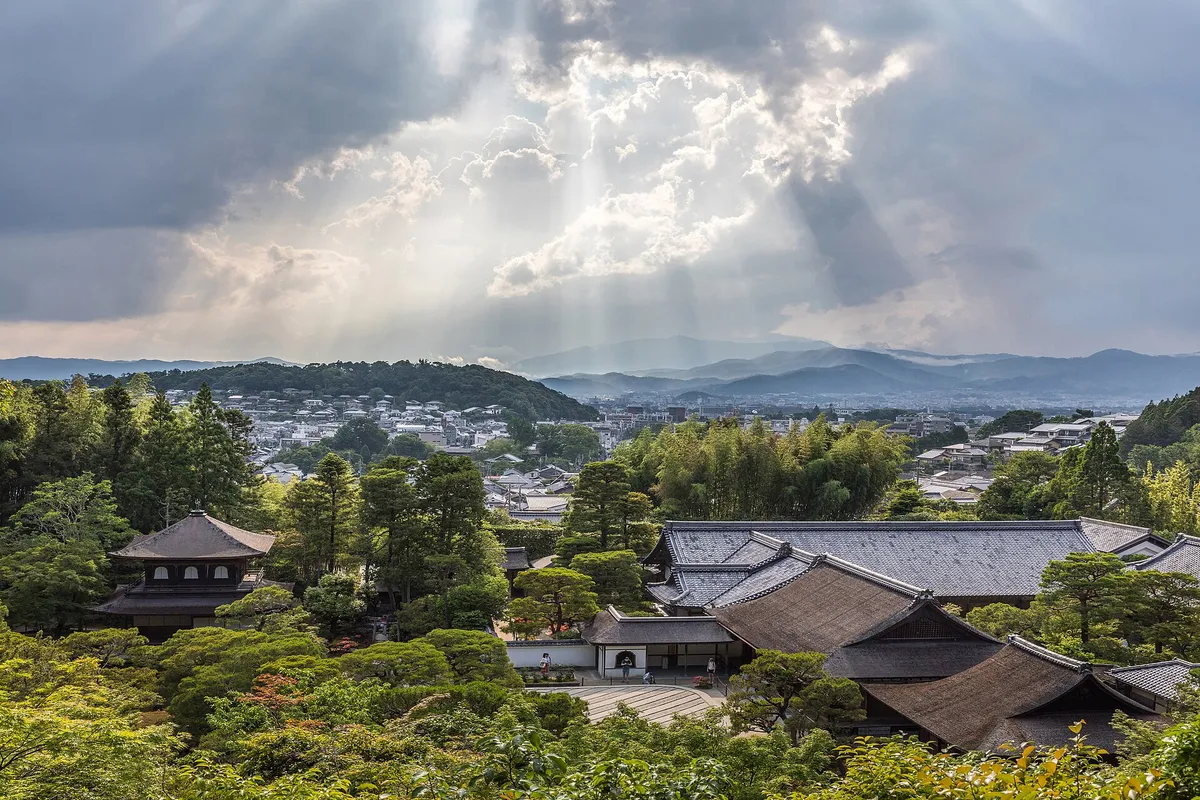
Photo: Basile Morin / Wikimedia Commons
Japan Ryokan Guide: Etiquette, What to Expect & the Best Inns (2026)
Tatami floors, communal onsen, and multi-course kaiseki dinners — the complete guide to staying in a Japanese ryokan for the first time, with the best inns in Kyoto, Hakone, and Kinosaki Onsen.
What Is a Ryokan?
A ryokan (旅館) is a traditional Japanese inn — a category of accommodation that has existed for 1,300+ years (the Nishiyama Onsen Keiunkan in Yamanashi, founded 705 CE, is the world’s oldest hotel still in operation). The ryokan experience is fundamentally different from any hotel experience in the world:
- Tatami floors: The woven rush mat floors that give Japanese rooms their characteristic smell and feel; shoes are removed at the entrance
- Futon sleeping: Beds are futon mattresses laid on the tatami floor each evening by staff (rolled up during the day, revealing the room’s full space)
- Yukata: The cotton kimono provided by the ryokan and worn throughout the property — in rooms, to and from the bath, to dinner, and sometimes in the local town streets
- Onsen (hot spring bath): Communal mineral water bathing, with gender-separated baths and specific etiquette requirements
- Kaiseki dinner: The multi-course traditional Japanese meal, typically 8–12 courses, included in the room rate, served either in the room or in a dedicated dining room
The Onsen: What First-Timers Need to Know
The onsen (温泉) is the centerpiece of the ryokan experience and the element most foreign to non-Japanese visitors. The rules are specific and non-negotiable:
Before entering:
- Undress completely in the changing room (locker/basket for belongings)
- Bring a small towel for modesty while moving between the washing area and the bath
At the washing stations (kake-yu): 3. Sit at one of the individual washing stools; use the provided soap, shampoo, and shower 4. Wash your entire body and rinse completely before entering the shared bath 5. Never bring soap, shampoo, or a large towel into the bath itself
In the bath: 6. Enter slowly (the temperature is typically 40–43°C — hot) 7. Immerse to neck level 8. Keep the small towel out of the bath (fold it on your head or set aside) 9. Do not swim, splash, or make excessive noise
The prohibition: People with visible tattoos are prohibited from using shared onsen at most Japanese establishments — this is a genuine policy at most traditional ryokan and public onsen baths, rooted in historical association between tattoos and the Yakuza. Some onsen have begun accepting tattoos (particularly international-oriented properties); check in advance if you have visible tattoos and want onsen access.
Private onsen (kazoku-buro or kashikiri-buro): Most ryokan offer private onsen baths for reservation — a private bath for 1–4 people, typically booked in 45-minute slots. For visitors who are uncomfortable with the communal experience, private baths provide the same mineral water experience in a private setting. Reserve at check-in.
Kaiseki Dinner: The Multi-Course Tradition
Kaiseki (懐石) is the traditional Japanese multi-course cuisine — originally developed in Kyoto’s Buddhist monastery culture as the meal preceding the tea ceremony, evolved into one of the world’s most sophisticated culinary traditions. The kaiseki dinner at a quality ryokan is included in the room rate (typically included in the “2 meals” plan — dinner and breakfast) and is typically the most important meal in the stay.
A typical kaiseki sequence (8–12 courses):
- Sakizuke — Amuse-bouche (small seasonal bite)
- Hassun — Seasonal overview (8 small preparations representing the season’s ingredients)
- Wanmori — The soup course (clear dashi broth with seasonal ingredients)
- Yakimono — Grilled fish or meat
- Takiawase — Simmered vegetables and proteins
- Mushimono — Steamed dish
- Sunomono — Pickled course
- Rice, miso soup, and tsukemono (pickled vegetables) — The meal’s traditional conclusion
Pacing: A kaiseki dinner is not eaten quickly — plan 90–120 minutes for the complete sequence. Sake (Japanese rice wine) is the traditional pairing; the ryokan’s sake selection typically features local brews from the region.
Dietary requirements: Most ryokan can accommodate dietary restrictions with 2+ weeks’ advance notice. Vegetarian kaiseki (shojin-ryori, the Buddhist monastery cuisine from which kaiseki derived) is available at some establishments. Vegan and allergen-specific requirements require more advance communication.
Best Ryokan by Region
Kyoto — The Cultural Center
Tawaraya Inn (Nijo, founded 1716): Japan’s most famous and historically significant ryokan — 18 rooms, 300 years of family operation. Book 6–12 months ahead.
Hiiragiya (Oike-dori, established 1818): The preferred alternative to Tawaraya — more rooms (33), kaiseki dinners of the same caliber, slightly more accessible booking. The old wing (Honkan) has the most atmospheric rooms.
Kinmata (near Nishiki Market, established 1801): The most intimate option — 7 rooms only, the most exclusive atmosphere, a kaiseki dinner that changes monthly with seasonal produce.
Hakone — Hot Spring Paradise
Hakone (90 minutes from Tokyo by Shinkansen, 60 minutes by Romancecar express) is Japan’s most accessible onsen town — within Mount Fuji’s shadow, with multiple volcanic springs and mountains rising straight from the town.
Gora Kadan (former Imperial family villa, now ryokan): The most luxurious ryokan in Hakone — a private outdoor onsen attached to each suite, kaiseki built around seasonal ingredients, and the mountain setting. ¥80,000–200,000/night.
Fujiya Hotel (Miyagase, 1878): One of Japan’s oldest Western-style hotels, with Japanese wing rooms — fascinating historical hybrid, extremely atmospheric. ¥25,000–60,000/night.
Senkyoro (Hakone-Yumoto): The most affordable serious ryokan in Hakone — excellent onsen, good kaiseki, genuine ryokan character at ¥20,000–40,000/night.
Kinosaki Onsen — Town Bathing Culture
Kinosaki Onsen (3 hours from Kyoto/Osaka by limited express train) is Japan’s finest onsen town — the system of 7 public baths (soto-yu, external baths) accessible to ryokan guests with an all-day pass means guests spend the day bathing-hopping between the town’s baths in their yukata, snacking on crab (Kinosaki is famous for its snow crab in season) and soba at the town’s restaurants, and returning to the ryokan for evening kaiseki.
Nishimuraya Honkan: the standout ryokan in Kinosaki — a 2,500 m² garden, multiple private onsen, and crab kaiseki that draws repeat guests (in season, November–March). ¥45,000–120,000/night.
Tohoku — Off the Tourist Trail
The Tohoku region (northeast Honshu) has some of Japan’s most overlooked rural ryokan — less internationally known, significantly more affordable, with dramatic scenery and authentic character.
Zao Onsen (Yamagata): The ice monster phenomenon (juhyo — snow-covered trees at high altitude, the “snow monsters”) combined with excellent ski slopes and sulfur-rich yellow onsen. Multiple ryokan from ¥15,000/night.
Practical Ryokan Tips
Booking:
- Book directly with the ryokan when possible (direct booking often includes better room assignment and more personal communication)
- Booking.com and Japanese travel sites (Jalan, Rakuten Travel) are used for many ryokan; some premier properties only accept direct bookings
- Specify dietary restrictions, preferred bath type (private or communal), and occasion (honeymoon, anniversary) at booking — the communication shapes the experience
Tipping: Tipping is not customary in Japan. At some traditional ryokan, there is a specific envelope (kokorozuke) for a discretionary tip to the o-kamisan (the room attendant/nakai-san); this is optional and varies by property. The service charge is typically included in the room rate.
Arrival time: Ryokan expect arrival between 15:00–18:00. Check-out is typically 10:00–11:00. The multi-course dinner starts at 18:00–19:00; arriving by 16:00 allows time for the bath before dinner.
FAQ
Is a ryokan right for me? If you’re willing to: sleep on the floor (futon, genuinely comfortable once accustomed), eat a multi-course Japanese dinner at the specified time, and engage with the communal bath culture — yes. If any of these elements are dealbreakers, a high-quality city hotel (such as a ryokan-influenced boutique like the Hoshinoya Tokyo) provides the aesthetic without the full traditional commitment.
How much does a good ryokan cost? The price typically includes room + dinner + breakfast. Budget range: ¥15,000–25,000/person (approximately €95–155), often with a satisfactory onsen and simple kaiseki. Mid-range: ¥30,000–50,000/person (€188–312), with quality kaiseki and private onsen options. Premier (Tawaraya, Gora Kadan, Hiiragiya): ¥60,000–150,000+/person (€375–940+).
Can I visit a ryokan for a bath without staying? Yes — many ryokan offer day-use onsen access (higateri — day visit bathing, typically ¥1,500–3,000). This is a practical way to experience the onsen at a premier property (the Gora Kadan day use, for example) without the accommodation cost.