
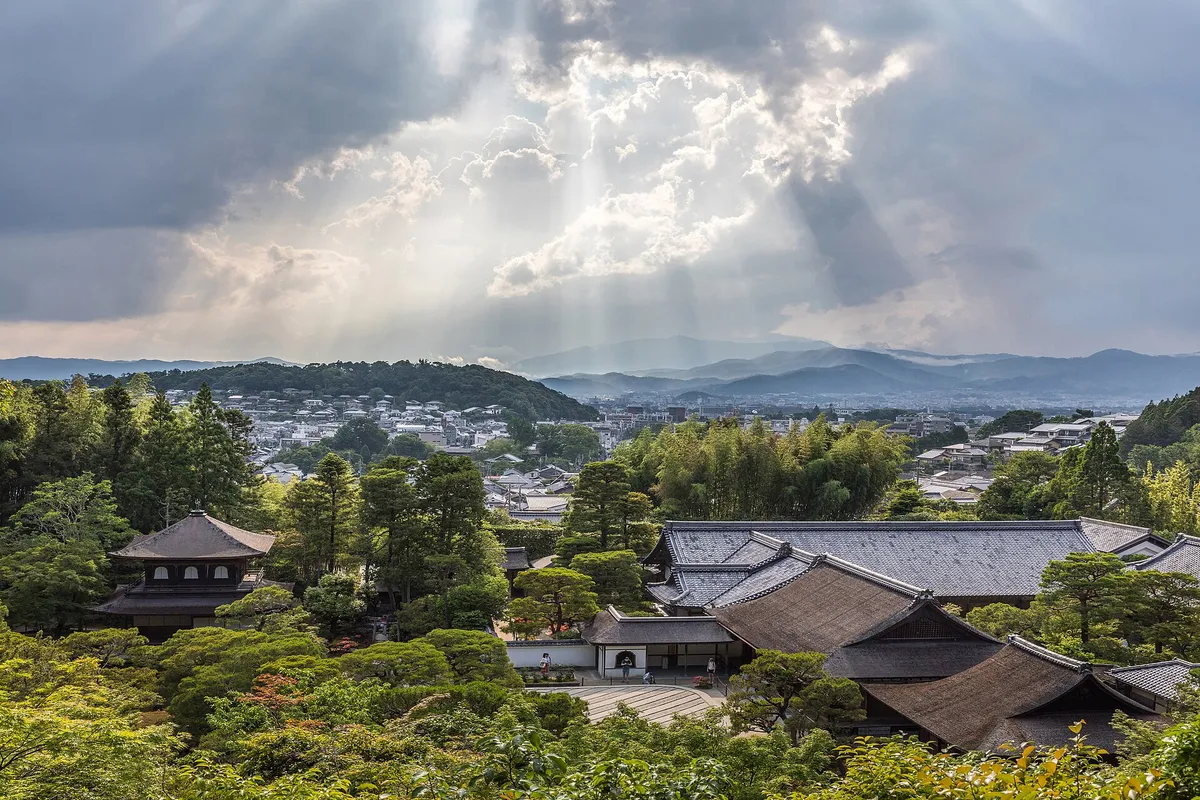
Best Hotels in Kyoto: Gion, Arashiyama & Fushimi Inari (2026)

Aman Kyoto's secret garden machiya compound, Suiran Kyoto's Arashiyama bamboo grove riverside, and SOWAKA Gion's 1928 traditional merchant house — Japan's most historically preserved city's finest hotels in 2026.

Kyoto: Japan’s Most Historically Complete City

Kyoto is the most culturally significant single city in Japanese civilization — the extraordinary combination of the extraordinary imperial history (the most important single imperial capital in the history of the Japanese nation: the extraordinary Heian-kyō (the most important single city founding in the history of Japanese cultural geography: the extraordinary 794 CE founding of Kyoto (the most enduringly positioned single Japanese imperial capital: the extraordinary Kyoto as Japan’s capital for the extraordinary 1,075 years (794–1869) — the most imperially durable single capital in the history of East Asian imperial civilization: the extraordinary 70 emperors (the most emperors associated with any single Asian capital: the most historically imperial single Asian city in recorded Japanese history)), the extraordinary temples (the most UNESCO-certified single Japanese city heritage: the extraordinary Historic Monuments of Ancient Kyoto — the most comprehensively heritage-listed single Japanese city: the extraordinary 17 properties comprising the most complete single UNESCO listing of any Japanese city: the extraordinary Kinkaku-ji (the Golden Pavilion — the most photographically famous single Japanese building: the extraordinary Rokuon-ji complex (the most gold-leafed single building in Japan: the extraordinary gold leaf (kinpaku) covering the extraordinary upper two stories of the extraordinary pavilion — the most opulently finished single Zen Buddhist temple in Japanese history), and the extraordinary geisha culture (the extraordinary geiko and maiko — the most internationally iconic single Japanese cultural figure: the extraordinary Gion district (the most geisha-traditional single district in Japan: the extraordinary Hanamachi (flower towns — the most geisha-professionally-concentrated single Japanese urban district: the extraordinary remaining geiko communities maintaining the most traditional single performing arts tradition in the history of Japanese classical culture: the extraordinary ozashiki (the geisha banquet — the most exclusive single traditional Japanese entertainment: the most invitation-only single cultural experience in the history of Kyoto traditional arts).


The Kyoto Hotels

Aman Kyoto — Secret Garden Machiya Compound

Price: ¥200,000–2,000,000/night (~$1,300–13,000) | Location: Okitayama Tennoguchi-cho, Kita-ku, Kyoto

Aman Kyoto (the finest hotel in Japan — the extraordinary satoyama forest position (the most hidden single hotel in Kyoto: the extraordinary Aman Kyoto — the most secretively located single Aman property: the extraordinary satoyama (the transitional woodland between the extraordinary mountain forest and the extraordinary farmland — the most ecologically transitional single Japanese landscape type: the extraordinary Aman positioned in the extraordinary protected forest zone north of the extraordinary Kyoto’s historically significant Kinkaku-ji — the most forest-private single luxury hotel position in Japanese hospitality history), the extraordinary hidden entrance (the most deliberately concealed single hotel entrance in Japan: the extraordinary hidden path through the extraordinary ancient woodland — the most arrival-theatrically designed single hotel approach in the history of Japanese luxury hospitality: the extraordinary forest corridor leading to the extraordinary private compound — the most dramatically isolated single hotel arrival experience in Asia), the extraordinary garden (the extraordinary ancient satoyama woodland surrounding the extraordinary Aman Kyoto (the most biologically mature single hotel garden in Japan: the extraordinary old-growth trees, the extraordinary moss gardens, and the extraordinary traditional Japanese stone lanterns — the most patina-rich single hotel natural environment in the history of Japanese luxury hotel design), and the extraordinary onsen (the extraordinary natural hot spring — the most historically valued single Japanese hotel amenity: the extraordinary natural onsen at the extraordinary Aman Kyoto (the most genuine single onsen at any Kyoto luxury hotel) is the finest Kyoto hotel.

Suiran Kyoto — Arashiyama Bamboo Grove Riverside

Price: ¥100,000–500,000/night (~$650–3,300) | Location: Saga Tenryuji Susukinobabacho, Ukyo-ku, Kyoto

Suiran Kyoto (the finest hotel in the Arashiyama district — the extraordinary Arashiyama position (the most bamboo-famous single Kyoto district: the extraordinary Arashiyama Bamboo Grove — the most photographically iconic single bamboo grove in the world: the extraordinary Chiku-rin no Komichi (Bamboo Path — the most visually tunnel-like single natural walkway in Japan: the extraordinary mature bamboo (Phyllostachys edulismōsō-chiku) creating the extraordinary green canopy over the extraordinary 200m path — the most serenely enclosed single natural path in the history of Japanese landscape experience), the extraordinary Ōi River position (the extraordinary hotel directly on the extraordinary Ōi (Hozu) river — the most Arashiyama-scenically positioned single hotel location: the extraordinary riverboat view (the extraordinary fune (wooden pleasure boat) on the extraordinary Ōi river — the most traditional single Kyoto riverside leisure activity)), and the extraordinary Tenryū-ji proximity (the extraordinary Tenryū-ji — the most important single garden temple in Arashiyama: the extraordinary Sōgen-chi pond garden (the most Zen-garden-historically important single pond in Kyoto: the extraordinary 14th-century Zen garden (the most artistically significant single dry garden predecessor: the extraordinary Musō Soseki design — the most influential single Zen garden designer in Japanese history) is the finest Arashiyama hotel.

SOWAKA Gion — 1928 Traditional Merchant House

Price: ¥50,000–250,000/night (~$330–1,650) | Location: Yasakakami-cho, Gion, Kyoto

SOWAKA Gion (the most authentically Gion hotel in Kyoto — the extraordinary 1928 machiya heritage (the most architecturally authentic single Gion hotel building: the extraordinary former merchant’s machiya (the most important single traditional Japanese townhouse type: the extraordinary machiya — the extraordinary town house (machi — the most important single urban residential building type in traditional Kyoto: the extraordinary unagi no nedoko (‘eel’s sleeping place’ — the most evocatively narrow single Japanese building nickname: the extraordinary narrow frontage and extraordinary deep interior (the most spatially efficient single traditional Japanese residential design: the extraordinary frontage tax — the most economically influential single Kyoto building design driver: the extraordinary historical frontage-based taxation creating the extraordinary narrow machiya building typology — the most tax-code-influenced single architectural form in the history of Japanese urban design), the extraordinary Gion location (the most important single geisha district in Japan: the extraordinary Hanamachi walking distance — the most important single geisha-sighting potential from any Kyoto hotel: the extraordinary evening walks through the extraordinary Gion stone-paved lanes — the most atmospherically old-Kyoto single nighttime walk in the city) is the finest Gion boutique hotel.


Kyoto Temple Guide

TempleStyleBest TimeUNESCOAdmission
Kinkaku-jiZen, Gold PavilionMorning (08:00)Yes¥500
Fushimi InariShinto, 10,000 torii05:00–07:00 (crowded later)NoFree
Ryōan-jiZen dry garden08:00–09:00Yes¥600
Arashiyama Bamboo GroveBamboo pathDawn (06:00)NoFree
Nijo CastleNijo-jo, nightingale floorsMorningYes¥1,020

FAQ

When is the best time to visit Kyoto? Late March–early April (cherry blossom) or November (autumn leaves) — the extraordinary Kyoto seasonal pilgrimage: the extraordinary sakura (the extraordinary cherry blossom — the most aesthetically anticipated single Japanese natural event: the extraordinary hanami (flower-viewing — the most culturally significant single Japanese spring activity: the extraordinary Maruyama Park and the extraordinary Philosopher’s Path in the extraordinary late-March to early-April bloom (the most unpredictably-timed single annual event: the extraordinary Japan Meteorological Corporation blossom forecast (the most intensely followed single weather prediction in the history of Japanese meteorological services: the extraordinary nationwide cherry blossom front tracking — the most climatologically anticipated single annual natural phenomenon in East Asia)), and the extraordinary koyo (the extraordinary autumn foliage — the most colorfully dramatic single Kyoto seasonal change: the extraordinary November koyo — the most photography-intensive single autumn month in the history of Japanese maple (momiji) color: the extraordinary Eikan-do Zenrin-ji (the most momiji-famous single Kyoto autumn temple: the extraordinary 3,000 maple trees — the most koyo-dense single Kyoto temple garden in the history of Japanese autumn foliage tourism).

What is the difference between a ryokan and a regular hotel? The most important single Japan accommodation distinction — the extraordinary ryokan (the most culturally defining single Japanese hospitality type: the extraordinary ryokan (traditional Japanese inn — the most regionally specific single accommodation concept: the extraordinary tatami floor rooms (the most environmentally distinctive single Japanese room: the extraordinary woven rush grass mat floor — the most sensorially distinctive single Japanese flooring: the extraordinary i-grass (Igusa) — the most traditionally woven single Japanese floor covering: the extraordinary tatami’s specific measurements (the most measurement-standardized single room sizing: the extraordinary Kyoto-ma tatami — the most size-variant single Japanese tatami standard in the history of Japanese architecture: the extraordinary Kyoto tatami slightly larger than the extraordinary Tokyo tatami)), the extraordinary futon (the extraordinary floor-level sleeping (the most culturally distinct single Japanese sleeping experience — the extraordinary floor-mattress vs the extraordinary Western bed), the extraordinary kaiseki dinner (the most elaborate single Japanese traditional meal: the extraordinary multi-course kaiseki — the most artistically plated single Japanese meal tradition: the most seasonally ingredient-focused single Japanese culinary art form in the history of Kyoto traditional cuisine), and the extraordinary onsen (the extraordinary communal hot spring bath — the most therapeutically valued single Japanese accommodation amenity: the extraordinary yukata (the extraordinary light cotton kimono — the most universally worn single ryokan casual garment in the history of Japanese traditional hospitality).

Related guides