
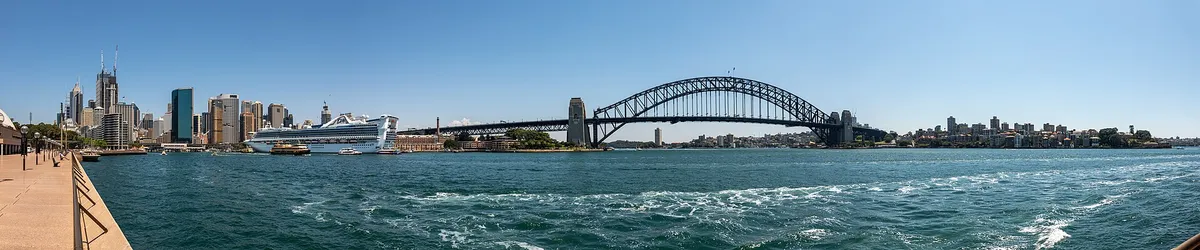
Photo: Dietmar Rabich / Wikimedia Commons
Where to Stay in Sydney: Best Neighborhoods and Hotels
A practical guide to Sydney's best neighborhoods for travelers — from the iconic CBD and Bondi Beach to the hip laneways of Surry Hills and the relaxed shores of Manly.
TL;DR
- Stay in the CBD or Circular Quay if you want to walk to the Opera House and Harbour Bridge and have easy access to everything.
- Choose Bondi Beach if sun, surf, and a buzzy coastal scene are your priorities.
- Book in Surry Hills for the best food, independent cafes, and a local feel at mid-range prices.
- Consider Manly for a quieter, ferry-linked beach escape that still puts you within 30 minutes of the city.
Sydney is one of those cities that seems almost designed to confuse first-time visitors. The harbour cuts the city into unexpected shapes, the train network does not go everywhere you think it should, and neighborhoods that look close on a map can be a surprisingly long drive apart. Getting your accommodation right makes an enormous difference to how much you enjoy the city — and how much time you spend stuck in traffic or waiting for a bus.
This guide breaks down the six most practical areas to stay, with honest price ranges, clear trade-offs, and a sense of the atmosphere you can expect.
Sydney Neighborhoods at a Glance
| Area | Best For | Price Range (per night) | Vibe |
|---|---|---|---|
| CBD / City Centre | Business, sightseeing, convenience | €100 – €300 | Busy, central, high-rise |
| Darling Harbour | Families, tourists, couples | €90 – €250 | Waterfront, entertainment-focused |
| Surry Hills | Foodies, independent travelers | €80 – €180 | Hip, creative, café-dense |
| Bondi Beach | Beach lovers, younger crowd | €80 – €200 | Coastal, energetic, touristy |
| Manly | Relaxed beach stay, families | €70 – €160 | Laid-back, scenic, residential |
| Newtown | Budget travelers, alternative scene | €60 – €130 | Bohemian, student-heavy, eclectic |
CBD and Circular Quay: The Heart of the Action
The central business district and the area around Circular Quay sit at the top of most itineraries for one simple reason: proximity. The Sydney Opera House is a ten-minute walk. The Harbour Bridge is visible from half the hotel windows. Ferries, trains, and buses all converge here, making day trips to Manly, Taronga Zoo, and the Blue Mountains straightforward.
Hotels in this zone are predominantly large international chains — Marriott, Shangri-La, InterContinental — alongside boutique options on smaller streets. Expect to pay between €100 and €300 per night for a standard double in high season (December to February). The range is wide because quality varies significantly even within the same postcode. A room on the harbour side commands a premium; a room facing an office block does not.
The trade-off with staying in the CBD is noise and density. This is a working city centre, not a resort, and the streets around Town Hall and George Street are loud well into the night. If you want to feel Sydney rather than just pass through it, you may find the CBD too anonymous. But for a first visit, or a trip that is heavy on sightseeing, it is close to unbeatable for convenience.
Who should stay here: First-time visitors, business travelers, anyone who wants maximum transport connections.
Darling Harbour: Waterfront Convenience for Families
Darling Harbour sits just west of the CBD and has reinvented itself over the past decade from a slightly tired tourist precinct into a genuinely pleasant waterfront district. The Australian National Maritime Museum, SEA LIFE Sydney Aquarium, and WILD LIFE Sydney Zoo are all here, which makes it an obvious choice for families with younger children.
Hotels here tend to be four-star properties aimed at conferences and leisure visitors. Rooms range from €90 to €250 per night, with rates dropping noticeably outside school holiday periods. The Sofitel and Novotel properties on the western side of the harbour are well-positioned and reliably comfortable.
One honest note: Darling Harbour is not where locals spend their evenings. Restaurants in this area skew toward tourist pricing and volume over quality. That is fine if you are here for the attractions, but if eating well matters to you, plan to take the short walk into Chinatown or Surry Hills for dinner.
Who should stay here: Families, groups attending events at the ICC Sydney convention centre.
Surry Hills: The Best Neighborhood for Foodies
Surry Hills has evolved from a working-class inner suburb into one of Sydney’s most satisfying places to spend time. It sits about fifteen minutes on foot from the CBD — close enough to walk to Central Station, far enough to feel like a real neighborhood.
The café and restaurant density here is extraordinary. Crown Street and its side streets are lined with independent coffee shops, wine bars, casual Thai and Vietnamese kitchens, and destination-level restaurants. If you are the kind of traveler who plans days around where to eat, Surry Hills will reward you constantly.
Accommodation runs from small boutique hotels to well-designed serviced apartments. Prices sit between €80 and €180 per night, making this one of the better value options close to the centre. The 1888 Hotel, built into a heritage-listed wool store, is a standout property in this part of the city.
The one practical note: Surry Hills is hilly (the name is not decorative) and street parking is limited. If you are renting a car, factor that in.
Who should stay here: Food-focused travelers, repeat visitors, couples who want a local feel.
Bondi Beach: Iconic, Energetic, Worth It
Bondi is Sydney’s most famous address, and it earns the reputation. The crescent of white sand, the grassy park running along the clifftop, the Bondi to Coogee coastal walk — these are genuinely spectacular. Staying here means rolling out of bed and into the water, watching the morning surf sessions from a café table, and absorbing a coastal energy that the inner city cannot replicate.
The downside is that Bondi is not particularly convenient for city sightseeing. It sits about 8 kilometres southeast of the CBD, and the public transport connection — a bus route that gets very crowded — is frustrating during peak times. If your trip is Bondi-centric, this does not matter. If you want to divide your time between the beach and downtown Sydney, the daily commute can wear thin.
Accommodation ranges widely. Backpacker hostels on Campbell Parade start below €50, but mid-range hotels and serviced apartments run €80 to €200 per night. The Hotel Bondi and the QT Bondi are the most prominent mid-to-upper options; both are well-located but book up early in summer.
Who should stay here: Beach-focused travelers, surfers, those on a longer trip who can afford to be away from the centre.
Manly: The Ferry Ride Is Part of the Experience
Manly sits on the northern side of the harbour, reached by a 30-minute ferry from Circular Quay. That ferry journey — past the Opera House, under the Harbour Bridge, out through the heads — is one of the best free activities Sydney offers.
The suburb itself is quieter and more residential than Bondi, with a surf beach on the ocean side and a calmer harbour beach on the other. The Manly Corso (the pedestrian strip connecting the two beaches) is lined with cafes, surf shops, and casual restaurants that cater to a mix of tourists and families who live locally.
Hotels and guesthouses here run €70 to €160 per night — noticeably cheaper than equivalent quality in the CBD or Bondi. The Manly Pacific is the largest hotel and sits directly on the ocean beach; smaller boutique properties on the side streets offer more character at lower prices.
The ferry schedule is important: the last service to the city runs around midnight, so late-night plans in the CBD require planning or a rideshare back.
Who should stay here: Couples, families, anyone who wants a beach stay with easy access to the city on a moderate budget.
Newtown: Budget-Friendly and Genuinely Local
Newtown is Sydney’s alternative heartland — a dense, walkable neighborhood built around King Street, which stretches for nearly two kilometres and contains an unlikely density of bookshops, vintage clothing stores, Thai restaurants, live music venues, and late-night bars.
This is not a tourist area in any conventional sense. You will not find souvenir shops or hop-on hop-off bus stops. What you will find is cheap, excellent food, a relaxed and inclusive atmosphere, and accommodation at prices that no longer exist in the inner city.
Budget hotels and guesthouses here run €60 to €130 per night. The trade-off is that Newtown sits further from the harbour and the main sightseeing drag. The train connection to the CBD is fast (Central Station is two stops), but you will need to be comfortable navigating the city independently.
Who should stay here: Budget travelers, solo visitors, anyone who wants to experience Sydney as a resident rather than a tourist.
Practical Tips for Booking
Book early for December to February. Sydney’s summer is its peak season, and good properties in Bondi and Manly sell out months in advance. If you are visiting over the Christmas and New Year period, treat hotel availability as a genuine constraint.
Consider serviced apartments for stays over five nights. Sydney hotel rates are high relative to European cities, and the cost of eating out three times a day adds up quickly. A serviced apartment with a kitchen can reduce overall trip costs significantly.
Check proximity to a train station. Sydney’s bus network is comprehensive but slow during peak hours. Properties within ten minutes’ walk of a train station offer substantially better flexibility.
HaveNaGo recommends cross-referencing hotel locations with the Transport NSW journey planner before booking — it takes two minutes and can save you from a neighborhood that looks central on a map but is poorly connected in practice.
FAQ
What is the best area in Sydney for first-time visitors? The CBD or Circular Quay area gives first-time visitors the easiest access to the Opera House, Harbour Bridge, ferries, and the main train network. It is not the most atmospheric choice, but it minimizes logistics on a short trip.
Is Bondi Beach worth staying at, or is it better as a day trip? Bondi is worth staying at if the beach is the focus of your trip. As a day trip from the CBD, it is perfectly manageable — the bus takes about 30 minutes. If you plan to divide your time between city sightseeing and the beach, staying in Surry Hills or the CBD and doing Bondi as a half-day trip is often more practical.
How expensive are hotels in Sydney compared to other major cities? Sydney sits among the more expensive hotel markets globally. Expect to pay more than you would in comparable European capitals for equivalent quality. Budget travelers should look at Newtown, Manly, or well-reviewed hostels in the CBD.
Is it safe to stay in all of these neighborhoods? Yes. All six neighborhoods listed here are safe for tourists. Sydney does not have the kind of sharp neighborhood safety contrasts that some cities do. Standard urban awareness — keeping an eye on your belongings in crowded areas, not leaving valuables visible in cars — is sufficient.