
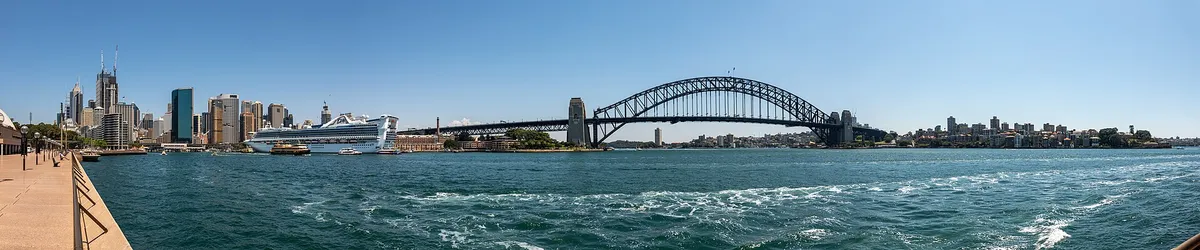
Photo: Dietmar Rabich / Wikimedia Commons
Australia East Coast Itinerary: Sydney to Cairns in 14 Days
Sydney's opera house, Byron Bay's surf culture, Brisbane's riverside, the Whitsundays' white-sand beaches, and Cairns' Great Barrier Reef — the classic Australia east coast in 14 days.
Overview
Australia’s east coast is one of the world’s great backpacker routes — a 2,700 km chain of cities, national parks, beaches, and reef systems running from Sydney to Cairns. Fourteen days gives you the headline experiences without exhausting yourself; three weeks is better if you have the time.
Best for: First-time Australia visitors, backpackers, beach travelers, reef and nature enthusiasts Budget: AUD 150–350/day (€80–190) for accommodation, meals, transport, and activities Best season: May to November (avoiding summer heat and Queensland cyclone risk); October is ideal Transport: Internal flights or the Greyhound bus network; campervan hire for more flexibility
The Route: Sydney → Gold Coast → Brisbane → Noosa → Airlie Beach → Cairns
The classic direction is south to north — this builds toward the highlight (Great Barrier Reef) and the northward winds make bus and campervan travel more comfortable. Flying Sydney–Brisbane (1.5 hours) and Brisbane–Cairns (2.5 hours) saves significant time.
Day 1–3: Sydney
Day 1 — Icons: Sydney Harbour is best experienced from the water — take the Manly Ferry (30 minutes from Circular Quay, one of Australia’s great short ferry rides) and explore Manly beach and promenade. Return via water taxi or ferry and walk the Sydney Harbour Bridge (BridgeClimb, NZD 200, or the free pylon lookout). The Sydney Opera House exterior is accessible for free; interior tours run AUD 43/person; performances require separate tickets.
Day 2 — Beaches and Coastal Walk: The Bondi to Coogee Coastal Walk (6 km, 2 hours, no elevation gain) is one of Sydney’s finest free experiences — cliff-top path linking seven beaches including Bondi (Australia’s most famous), Tamarama, Bronte, Clovelly, and Coogee. Return by bus from Coogee.
Afternoon: Newtown or Surry Hills for Sydney’s café, restaurant, and bar culture.
Day 3: Day trip to the Blue Mountains (1.5 hours west — the Three Sisters rock formation, Scenic World cable car, excellent bushwalking). Or the Royal National Park (30 minutes south — coastal walks, waterfall hikes, wild beaches).
Day 4–5: Byron Bay
Take the overnight Greyhound bus or a regional flight from Sydney to Byron Bay (11 hours by bus; no direct flights — fly to Ballina/Byron, 30 minutes).
Byron Bay is Australia’s most famous beach town — a progressive, expensive, surf-oriented community that has become one of the most lifestyle-heavy tourism destinations in the country. The beach is excellent; the Cape Byron Lighthouse is Australia’s most easterly point with extraordinary views; the surf at Main Beach and Clarkes Beach is learner-friendly.
Day 4: Beach and surf lesson (AUD 60–80 at any of the local surf schools). Day 5: Cape Byron Lighthouse walk (3 km loop at dawn for dolphin and whale watching), hinterland trip to Nimbin (the alternative community 30 km inland, locally famous).
Day 6–7: Gold Coast and Brisbane
Drive or bus north 2 hours to the Gold Coast — Surfers Paradise, Broadbeach, and Burleigh Heads. Choose one or two theme parks if traveling with children. The best beach stop for most travelers is Burleigh Heads (see the Where to Stay Gold Coast guide for detail).
Continue 1 hour north to Brisbane — a night for urban culture: South Bank Parklands and Queensland Museum, Fortitude Valley restaurants, Story Bridge climb (AUD 130, dawn or twilight option is spectacular).
Day 8–9: Noosa
Drive 1.5 hours north from Brisbane to Noosa — a relaxed, upscale resort town at the northern end of the Sunshine Coast. Noosa National Park (walking distance from the main street, Hastings Street) has excellent coastal walks with koala sightings, dolphins in the bay, and some of Australia’s best right-hand point break surfing at Noosa Main Beach (professionals only when swells arrive; learner-friendly on small days).
Day 8: Noosa Heads beach and National Park walk. Day 9: Day trip to Eumundi Markets (Wednesday and Saturday — one of Australia’s largest craft markets, 20 minutes inland) or the Noosa Everglades (kayaking tour, genuinely unique ecosystem, several operators in Noosa).
Day 10–12: Airlie Beach and the Whitsundays
Fly from Brisbane to Proserpine/Whitsunday Coast Airport, or take the overnight bus (14 hours). Transfer to Airlie Beach — the gateway town to the Whitsunday Islands.
The Whitsundays are 74 islands inside the Great Barrier Reef, with Whitehaven Beach as their centerpiece — 7 km of pure silica sand ranked among the world’s five finest beaches. The only way to reach it is by boat from Airlie Beach.
Day 10: Check in and arrange your sailing/snorkeling tour. Day 11–12: Two-night sailing or liveaboard cruise (AUD 250–450/person) — the Whitsundays are best experienced over 2 nights on a boat: Whitehaven Beach at dawn (before day-trip boats arrive), snorkeling at Knuckle Reef and Blue Pearl Bay, Hill Inlet lookout (the swirling white sand and turquoise water photograph seen everywhere in Australia).
Budget options (from AUD 250/person) involve basic boats with basic food; mid-range (AUD 350–450) significantly improves comfort.
Day 13–14: Cairns and the Great Barrier Reef
Fly from Proserpine to Cairns (1.5 hours) or continue the Greyhound bus journey north (8 hours).
Day 13: Cairns orientation and reef trip booking. The Kuranda Scenic Railway (AUD 55, 2 hours through World Heritage rainforest) and Skyrail Rainforest Cableway (AUD 65, gondola over the rainforest canopy) can be combined as a full day return trip.
Day 14: Great Barrier Reef day trip — full-day outer reef cruise (AUD 150–200/person, includes equipment, lunch, guided snorkeling). The best visibility is during the dry season (June–October). First-time scuba divers can complete an introductory dive on the day (AUD 80–120 supplement) without prior certification.
Fly out: Cairns International Airport connects directly to Singapore, Tokyo, Hong Kong, and Auckland, making it a practical northward exit point for onward travel.
Practical Tips
East Coast Pass: Greyhound’s Hop-on Hop-off passes (AUD 400–600 depending on coverage) allow unlimited travel along the east coast — cost-effective for those with 3+ weeks who prefer ground travel to flying.
Timing: The Schoolies period (late November – early December, Australian high school leavers’ holiday) fills the Gold Coast and Byron Bay with large groups of 17–18 year olds and should be avoided by other travelers. Queensland Schoolies runs simultaneously with Victorian Schoolies; together they fill hundreds of accommodation properties on the east coast.
Wildlife: The Australian east coast has excellent wildlife accessible without safaris: kangaroos (every national park), koalas (Port Macquarie, Noosa National Park, Magnetic Island near Townsville), humpback whales (June–November, the entire coast), sea turtles (Bundaberg and Mon Repos near Bundaberg, November–March nesting).
Money: Australia is expensive by global standards — AUD 15–20 for a café breakfast, AUD 25–40 for a restaurant main course, AUD 5–6 for a basic beer. Budget travelers staying in hostels and cooking occasionally can manage AUD 100/day; mid-range travelers can expect AUD 200–300/day all-in.