
Photo: Diego Delso / Wikimedia Commons
Where to Stay in Florence: Best Neighborhoods & Hotels (2026)
The Oltrarno's artisan workshops, Piazza Santa Croce's local life, and the Duomo area's central access — the best Florence neighborhoods and hotels for every budget in 2026.
Florence in Brief
Florence is one of the world’s most concentrated cultural destinations — the Uffizi Gallery, the Duomo, the Accademia (Michelangelo’s David), the Bargello, and dozens of other world-class collections in a walkable historic center of 2 km². The accommodation challenge is choosing a neighborhood that connects you to the culture without being trapped in the tourist zone.
The city is also relatively affordable by Italian standards — a mid-range hotel in Florence costs €100–200/night; luxury runs €300–600/night. The historic center is compact enough that walking everywhere is genuinely possible.
Best Neighborhoods
The Center (Piazza del Duomo area) — Maximum Access
Best for: First-time visitors who want to walk from their door to the Duomo; those on 2–3 day visits
The historic center around the Duomo and the Piazza della Repubblica is Florence’s most central area — the Duomo, the Baptistry, the Campanile, the Uffizi, Ponte Vecchio, and the Piazza della Signoria are all within 10–15 minutes walk.
Downside: The most expensive accommodation; heavily touristic (street hawkers, queues, tourist-trap restaurants); noisy in summer.
Practical: Florence’s famous Limited Traffic Zone (ZTL) means most vehicles are prohibited from the historic center, even for hotel check-in. Book hotels that offer valet parking or have a designated drop-off arrangement — arriving by taxi without knowing the ZTL rules can result in fines.
Oltrarno — Authentic Florence
Best for: Those who want to see the Florence that Florentines live in; boutique shoppers; the best independent restaurants
The Oltrarno (“the other side of the Arno”) is the neighborhood south of the Arno River — the artisan workshops (traditional bookbinders, goldsmiths, shoemakers, furniture restorers), the independent restaurants in the narrow streets around the Piazza Santo Spirito, and the Boboli Gardens (behind the Pitti Palace, one of Europe’s great Renaissance gardens) are all in this neighborhood.
The Oltrarno is also the location of the Brancacci Chapel (Masaccio’s 15th-century frescoes, considered a foundation moment of Renaissance painting) and the best neighborhood aperitivo scene in Florence.
Santa Croce — Local Character
Best for: Those who want a neighborhood feel without being far from the main sights; value seekers
The Santa Croce neighborhood (east of the center, around the Gothic Basilica di Santa Croce) feels more lived-in than the Duomo area — local cafés, genuine trattorie, and the extraordinary Sant’Ambrogio market (fresh food, clothing, and the best lunch crowd in Florence). The Basilica di Santa Croce (where Michelangelo, Galileo, and Machiavelli are buried, one of Florence’s finest Gothic buildings) anchors the piazza.
Best Hotels
Hotel Savoy — Piazza della Repubblica Luxury
Price: €350–900/night | Location: Piazza della Repubblica, center
The Savoy is Florence’s finest full-service luxury hotel — positioned on the extraordinary Piazza della Repubblica (the 19th-century triumphal arch, arcaded buildings, and coffee houses of the central square), with the Duomo visible on foot in 3 minutes. Renovated by Olga Polizzi, the rooms are elegant and well-proportioned; the restaurant Irene is one of Florence’s better hotel restaurants.
Portrait Firenze — Lungarno Boutique
Price: €400–1,200/night | Location: Lungarno degli Acciaiuoli (riverside)
Portrait Firenze is the most celebrated boutique hotel in Florence — a 37-apartment property on the Arno river, designed by Roberto Cavalli’s team, with river views, the Ponte Vecchio 50 meters away, and the personal atmosphere of a private residence. The rooftop terrace restaurant is extraordinary for sunset dinner above the Arno. Consistently ranked among Italy’s finest hotels.
Hotel Davanzati — Best Mid-Range Historic Center
Price: €120–250/night | Location: Via Porta Rossa, center
Davanzati is Florence’s best mid-range option in the historic center — a family-run hotel in a 15th-century palazzo, with thoughtfully designed rooms, a personal breakfast, and the family’s genuine investment in every guest’s experience. The location (steps from the Piazza della Repubblica) is excellent; the atmosphere is the opposite of anonymous.
Soprarno Suites — Oltrarno Design
Price: €150–300/night | Location: Via Maggio, Oltrarno
Soprarno is one of the best boutique accommodation options in Florence — suites in a 16th-century palazzo in the Oltrarno neighborhood, decorated with Florence artist collaborations, and a genuine neighborhood position (the breakfast café opens onto Via Maggio’s morning life). Better for a Florence that feels lived-in rather than museum-like.
Hotel Perseo — Budget Value
Price: €60–120/night | Location: Via de’ Cerretani, center
One of Florence’s consistently best-value options — a family-run hotel near the Duomo with clean rooms, helpful service, and remarkable value for the location. For travelers prioritizing location and cleanliness over design, Perseo is the most reliable budget-friendly option in the historic center.
Practical Information
Reservations: Most of Florence’s major attractions (the Uffizi, the Accademia, the Boboli Gardens, the Duomo dome climb) sell out days or weeks in advance in peak season. Book online well before arrival:
- Uffizi Gallery: Essential to pre-book — walk-up queues are 2+ hours in summer; timed-entry tickets at €20 available online, often sold out 2–3 weeks ahead in high season
- Accademia: Timed entry for the David — book a minimum of 1 week ahead in summer
- Duomo dome: Pre-book the Brunelleschi dome climb (4-hour slot, €18 for the combined cathedral pass)
ZTL: Florence’s traffic restriction zone covers the entire historic center — taxis and public transport can enter; private cars cannot. If driving to Florence, park at one of the peripheral parking garages (Oltrarno or north station area) and use public transport or walk in.
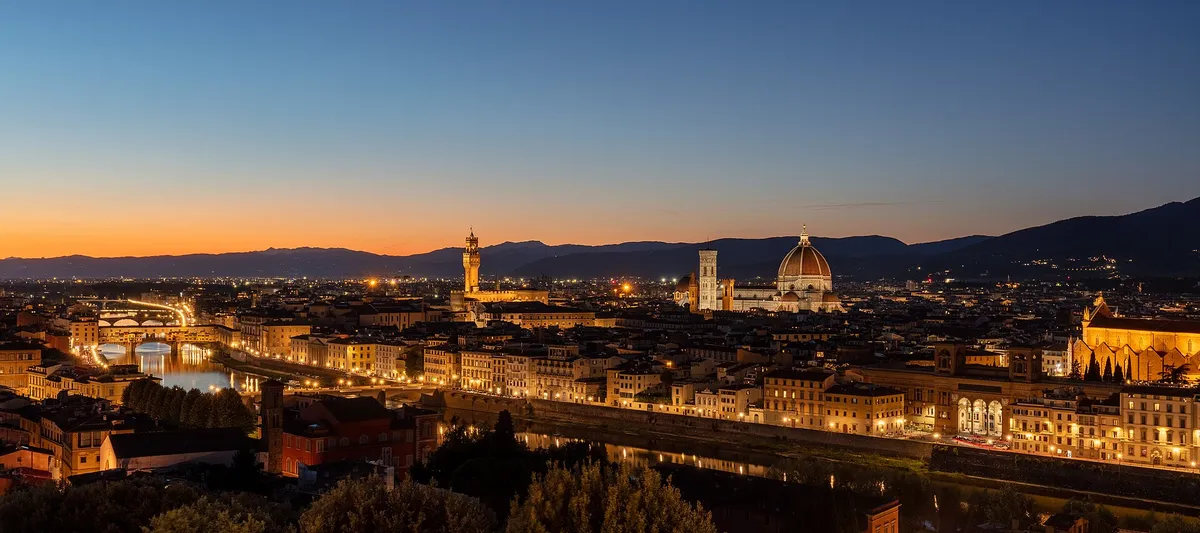
The best view in Florence: The Piazzale Michelangelo (accessible by bus 12 or 13, or a 20-minute walk up the Oltrarno hillside) at sunset — the full Florence skyline, the Arno, and the Duomo in extraordinary late light.
FAQ
When is the best time to visit Florence? April–May and September–October offer the best combination of pleasant weather (18–24°C) and manageable crowds. June–August is hot (30–36°C) and very crowded — the Uffizi queue management system reaches maximum capacity daily. December and January are quiet (cold, 5–10°C) with minimal queues at the galleries.
How many days does Florence need? 3 days for the essential circuit: the Uffizi, the Accademia, the Duomo and dome climb, the Pitti Palace and Boboli Gardens, Ponte Vecchio, and an evening in the Oltrarno for dinner and aperitivo. 5 days allows for day trips to Siena (1.5 hours by bus, one of Italy’s most beautiful medieval cities), San Gimignano (1.5 hours by bus, the medieval skyscrapers), and the Chianti wine country.
Is Florence safe? Yes — Florence is one of Italy’s safer major cities. The main risks are pickpocketing (particularly around the Uffizi, the Duomo, and public transit) and tourist-targeting scams (men who tie friendship bracelets onto your wrist then demand payment). Standard urban vigilance applies.