
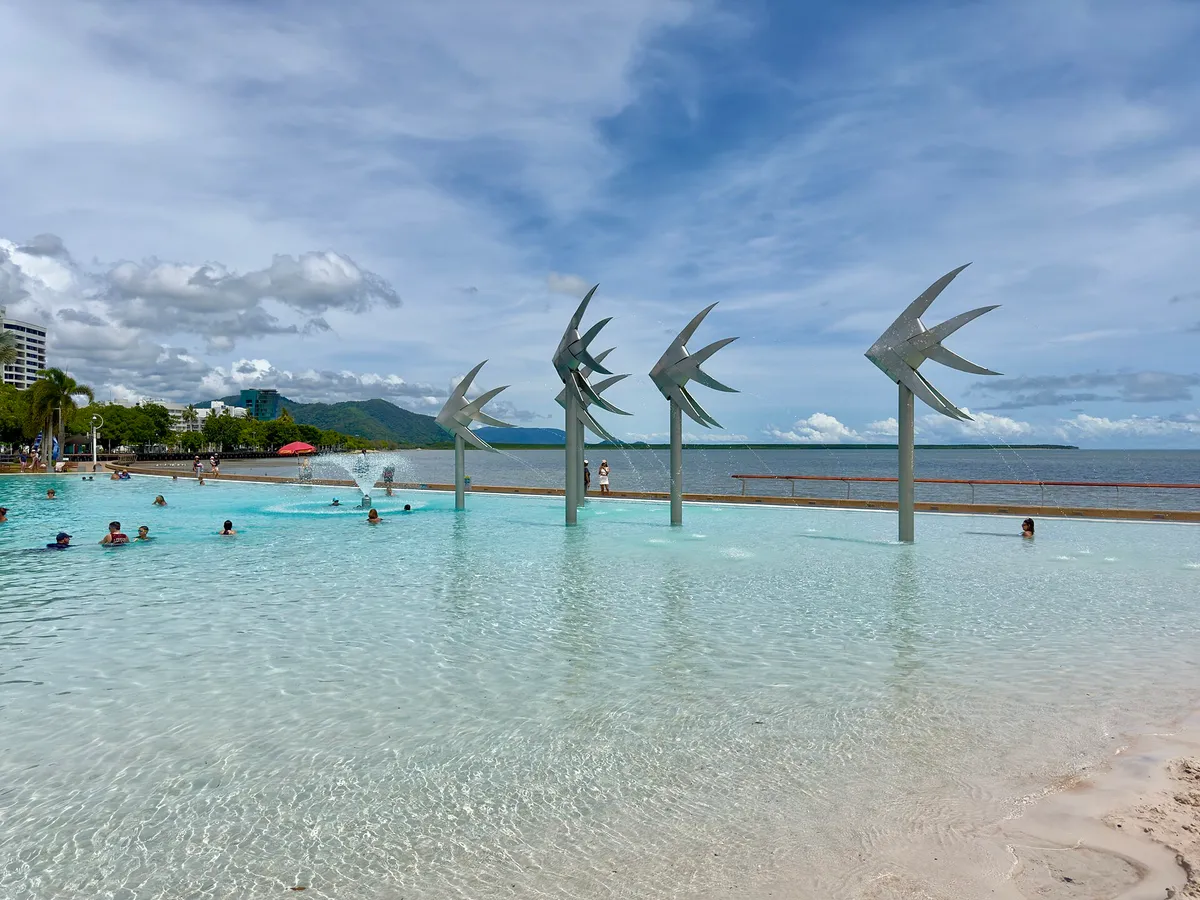
Photo: Chris Olszewski / Wikimedia Commons
Where to Stay in Cairns: Best Areas & Hotels (2026)
Cairns CBD for the Esplanade lagoon, Palm Cove for resort tranquility, Port Douglas for boutique luxury — this guide covers all Cairns bases for reef trips in 2026.
TL;DR
- Best base for the reef: Cairns CBD — all Great Barrier Reef tour operators depart from the Cairns Marina
- Best for resort relaxation: Palm Cove (25 min north) — tranquil boutique resort village
- Best for luxury: Port Douglas (65 km north) — upscale resort area, direct access to Low Isles
- Best budget: Cairns CBD hostels — excellent backpacker infrastructure
- When to book: June–October (dry season) is peak; book 4–6 weeks ahead for reef-side properties
Best Areas to Stay Near Cairns
Cairns is the gateway to the Great Barrier Reef and the Daintree Rainforest — Australia’s two UNESCO World Heritage areas in one region, making it one of the world’s extraordinary natural destinations. The city itself sits directly on Trinity Inlet and has the famous Esplanade Lagoon (a free public swimming pool and sunbathing area since there’s no beach in Cairns proper). The beach resorts are north of the city: Palm Cove, Port Douglas, and smaller villages along the Coral Sea coastline.
| Area | Vibe | Price Range | Best For |
|---|---|---|---|
| Cairns CBD | Convenient, bustling | €35–280/night | Reef access, budget travelers |
| Palm Cove | Boutique resort | €100–400/night | Couples, relaxed beach stay |
| Port Douglas | Upscale, village | €120–600/night | Luxury, Daintree proximity |
| Northern Beaches | Mid-range, families | €70–200/night | Beach access, value |
Cairns CBD — The Gateway
Cairns CBD is the most practical base for reef and rainforest activities — all Great Barrier Reef liveaboard and day trip boats depart from the Cairns Marina (Reef Fleet Terminal), the Skyrail Rainforest Cableway and Kuranda Scenic Railway start 15 minutes north, and Daintree tour operators pick up from CBD hotels. The Esplanade Lagoon is a free open-air saltwater lagoon popular for morning swimming and sunset drinks.
Who it’s for: First-time visitors, backpackers, those who want maximum day-trip flexibility, and anyone whose primary goal is reef diving or snorkeling.
Price range: Hostels from €20/night (dorm), private rooms from €35/night; mid-range hotels €70–150/night; upscale hotels €130–280/night.
The Shangri-La Hotel Cairns on the marina is the CBD’s flagship property — marina views, excellent pool, good spa, and reef boat departure steps from the door, at €150–280/night. The Pullman Cairns International is a reliable upscale option at €120–220/night. Backpacker infrastructure in Cairns is outstanding — multiple well-run hostels on the Esplanade and adjacent streets offer private rooms from €35–55/night.
Palm Cove — Tranquil Boutique Escape
Palm Cove is 25 km north of Cairns on the Coral Sea — a small beach village shaded by ancient paperbark trees and lined with boutique resorts, seafood restaurants, and one of Queensland’s most atmospheric beachside walking streets (Williams Esplanade). The beach itself is one of the best between Cairns and Port Douglas: calm (mostly sheltered from surf), with a natural stinger net enclosure for safe swimming from October to May.
Who it’s for: Couples seeking a romantic base, those who want resort calm alongside reef access, and travelers who’ve done Cairns city before.
Price range: €100–400/night; mostly boutique and upscale resorts.
The Alamanda Palm Cove by Lancemore is a consistently excellent boutique resort at €150–280/night. The Reef House Boutique Resort is more intimate and historic at €130–230/night. Several smaller villa-style resorts run €100–180/night.
Port Douglas — Luxury and Daintree Access
Port Douglas is 65 km north of Cairns — a former fishing village that has evolved into one of Australia’s most desirable resort destinations, with Four Mile Beach (genuinely spectacular), direct day-trip access to the Outer Great Barrier Reef and Low Isles, and the closest gateway to the Daintree Rainforest (20 minutes to the Daintree River ferry).
Who it’s for: Luxury travelers, those combining reef and rainforest, couples on honeymoon, and anyone who wants a more exclusive version of the Cairns experience.
Price range: €120–600/night; mostly upscale resorts.
Sheraton Grand Mirage Resort Port Douglas is the area’s flagship — a massive lagoon pool complex adjacent to Four Mile Beach at €200–450/night. The Pullman Port Douglas Sea Temple Resort is a newer alternative at similar rates. Several boutique villas and smaller resorts run €120–200/night.
How to Book
Cairns’ dry season (June to October) is the peak period — reliably sunny, low humidity (25–28°C), and the best time for reef visibility. However, this is also the coolest time for stinger jellyfish (Irukandji and box jellyfish are present October to May in the surf), so the dry season actually offers better beach swimming at Palm Cove and Port Douglas. Book 4–6 weeks ahead for dry season stays.
Reef trip options: Day trips from Cairns visit the Outer Reef (90-minute boat to pontoon platforms with snorkeling and diving), Low Isles near Port Douglas (1-hour boat, coral cay, excellent snorkeling), and Fitzroy Island (45 minutes, fringing reef, good for beginners). Liveaboard trips (2–3 days) access the most remote and spectacular reef sections.
FAQ
Can you swim in Cairns? Not from the city beach (there isn’t one — Cairns fronts the tidal mudflats of Trinity Inlet). The Esplanade Lagoon is the city swimming option. For actual beach swimming, drive 15 minutes north to Trinity Beach, 25 minutes to Palm Cove, or use the stinger-netted sections at these beaches October to May (stinger season, when jellyfish are present).
How do I see the Great Barrier Reef from Cairns? Book a day tour from the Reef Fleet Terminal. Options range from budget snorkel trips (€80–120/person) to sailing trips, semi-submarines, and advanced diving certification courses. The popular Outer Reef trips run €100–180/person for a full day including equipment, lunch, and guided snorkeling. Diving certification courses run 3–4 days for €350–500.
What is the Daintree Rainforest? The Daintree is the world’s oldest tropical rainforest (135 million years old, predating the Amazon) and one of the few places on Earth where rainforest meets the reef directly. Cape Tribulation, where the Daintree meets the Coral Sea, is one of Australia’s most extraordinary landscapes. Day trips from Cairns (€80–120/person) or self-drive (rental car, 2-hour drive) allow exploration.
Is Cairns suitable for non-divers? Yes — snorkeling provides an excellent reef experience without certification. Glass-bottom boat sections on the reef pontoons allow non-swimmers to observe coral. Kuranda (the rainforest village, 30 minutes by scenic railway or Skyrail cableway) is an excellent non-water activity. The Paronella Park day trip (90 minutes south, a ruined Spanish castle built in the rainforest in the 1930s) is one of Queensland’s strangest and most wonderful attractions.