
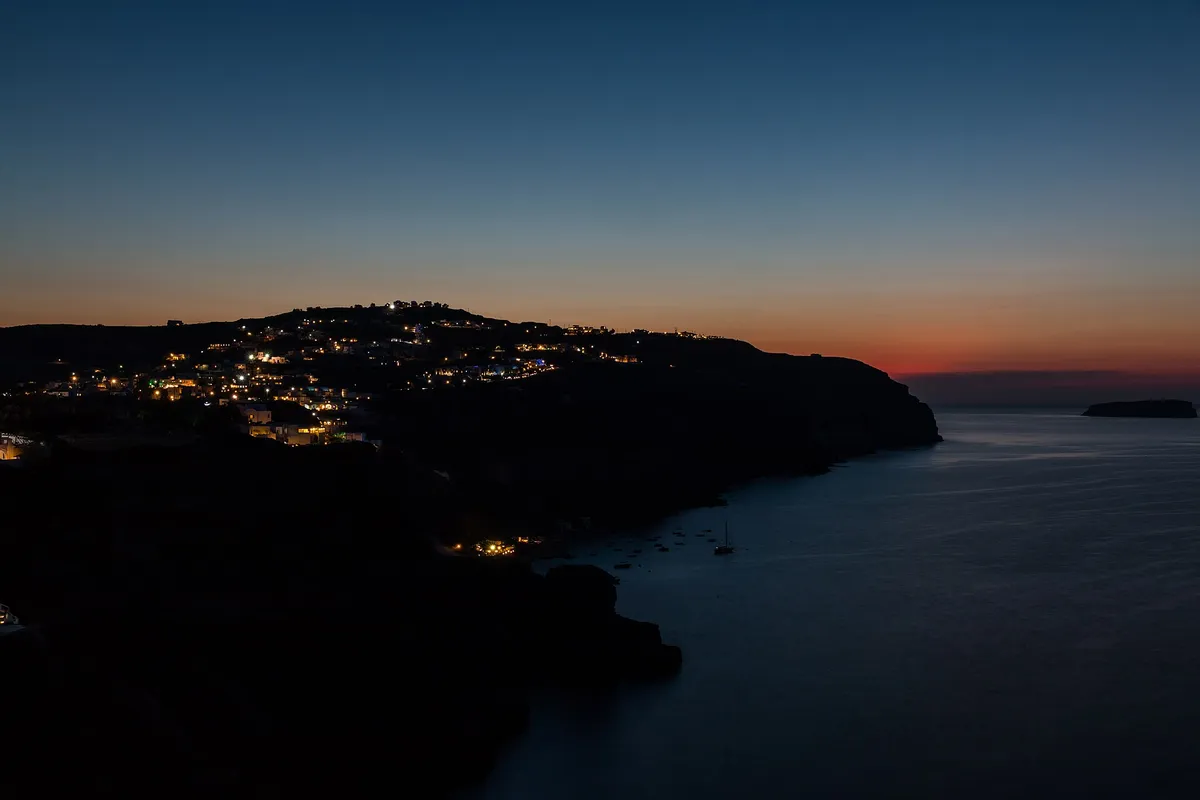
Photo: Dietmar Rabich / Wikimedia Commons
Santorini vs Mykonos 2026: Which Greek Island Should You Visit?
Santorini vs Mykonos — caldera sunsets and wine at Oia versus beach clubs and cosmopolitan nightlife at Mykonos Town. A complete comparison of both Greek islands for 2026 to help you choose the right destination.
Santorini vs Mykonos: Two Islands, One Question
These are the two most-visited Greek islands, the two most-Instagrammed, and the two most conflated. They are not the same experience. The choice between them depends entirely on what you want from an island: if you want the most dramatic volcanic landscape in the Mediterranean and the best sunset in Europe, go to Santorini. If you want the best beach parties in Europe and the social intensity of a cosmopolitan resort, go to Mykonos. If you have time, go to both — they’re 100km apart by ferry.
The Core Difference
Santorini (Thera): A volcanic caldera — the collapsed cone of a Minoan-era supervolcanic explosion (approximately 1600 BC, one of the largest volcanic events in human history) that created the crescent-shaped island and the iconic caldera (a body of water surrounded on three sides by the island’s cliffs, open to the south where the ring collapsed). The island’s villages (Oia, Fira, Imerovigli) sit on the rim of the caldera, 300m above the sea. The view from any of them is among the most dramatic in the world.
Mykonos: A Cycladic island with no volcanic drama, but with the finest beaches of any island in the Aegean, the most sophisticated hotel and beach club infrastructure in Greece, and a nightlife tradition that begins at midnight and ends at noon.
Santorini: What Makes It Special
The Caldera
The defining feature of Santorini is the caldera — the cliff-edge villages look not at a beach, but at a 400m-deep bay surrounded on three sides by 300m cliffs of dark volcanic rock, with the two active volcanic islands (Nea Kameni and Palia Kameni) rising from the water in the center.
No beach at the base of the caldera: The settlements of Oia and Fira are on the caldera rim — to reach the water involves either the famous donkey path (588 steps, replaced in function by the aerial cable car but still walkable) or a boat from the port.
Oia: The Sunset
The village of Oia at the northern tip of the caldera rim is the most photographed sunset location in Europe. The white cubic houses with blue domes, the windmill silhouettes at dusk, and the volcanic caldera below: this is the Santorini image.
Practical reality: The Oia sunset is visited by approximately 2,000 people per evening in July and August (the village has 500 permanent residents). The best positions (the castle ruins at the west end of the village) fill 2 hours before sunset. Arrive by 6pm for a position in July.
Alternative sunset positions: Imerovigli (the highest point on the caldera rim, 40m above Oia) has fewer visitors; the view is marginally different but less crowded. Or book a sunset catamaran from Ammoudi Bay (the small port below Oia) — the view from the water of the caldera lit by sunset is extraordinary.
Wine: The Assyrtiko
Santorini wine (the Assyrtiko grape) is one of the world’s most distinctive white wines: volcanic soil (the island has almost no clay, only pumice and ash), low yields (the vines grow in a basket shape, kouloura, to protect the grapes from the Aegean wind), and over-3,000-year-old vines (some Santorini vines are pre-phylloxera). The resulting wine is intensely mineral, high-acid, and long-lived.
The Santo Wines winery (near Pyrgos) has the finest terrace tasting room in the Aegean; Argyros Estate and Domaine Sigalas produce the best Assyrtiko.
Red Beach
Red Beach (near Akrotiri): The volcanic red and black cliffs meeting the Aegean — not the finest swimming beach (the sand is volcanic pebble; the path to the beach requires care) but the most dramatic coastal scenery on the island.
Akrotiri Prehistoric City
Akrotiri (the Minoan-era city preserved under volcanic ash): The most significant Bronze Age settlement in the Aegean — preserved like Pompeii 3,600 years before Pompeii, the ash sealed the buildings intact to two stories. The museum-roofed excavation site shows the streets, plumbing, and artwork of a sophisticated Minoan trading city.
Mykonos: What Makes It Special
The Beaches
Mykonos has 25 beaches, ranging from the family-friendly Platys Gialos to the party beaches of Paradise and Super Paradise.
The beach circuit (from Mykonos Town, counterclockwise):
- Ornos (5 min from town): The safest family beach; calm water
- Platys Gialos (8 min): The most organized beach; sunbeds, water sports
- Psarou (10 min): The most exclusive beach in Mykonos — the Psarou beach club attracts fashion industry, celebrities; one of the most expensive beach clubs in Greece
- Paradise Beach (15 min): The famous party beach — Tropicana bar, foam parties, DJ sets from 11am to dawn. The beach itself is good; the intensity is maximal
- Super Paradise (20 min, boat access or rough road): The original gay-friendly beach; the Babylon beach club
Mykonos Town (Chora)
Little Venice (Alefkandra neighborhood): The waterfront houses built directly over the sea — bars with cantilevered balconies where the Aegean breaks below the table. The most atmospheric part of Mykonos Town.
The windmills (Kato Mili, above Little Venice): The 16th-century Venetian windmills (7 remain; originally 16) are the visual icon of Mykonos. The viewpoint at sunset: the windmills silhouetted against the Aegean with Little Venice below.
Matogianni Street: The main luxury shopping street of Mykonos Town — Gucci, Louis Vuitton, Versace, alongside local boutiques and the most concentrated selection of decent bars in Chora. The fashion industry of Athens descends on Mykonos in July.
Delos Day Trip
Delos (the uninhabited sacred island, 30-minute boat from Mykonos): The most significant ancient Greek archaeological site after Athens and Olympia. Sacred to Apollo, the birthplace of the god in mythology — the sanctuary attracted votives from all over the Aegean, making it archaeologically extraordinary. The floor mosaics (the Lion Terrace, the House of the Dolphins) are among the finest surviving Hellenistic mosaics.
Boat to Delos: Only from Mykonos Old Port; the last boat returns at 3pm; the site is not accessible from Santorini.
Side-by-Side Comparison
| Category | Santorini | Mykonos |
|---|---|---|
| Landscape | Volcanic caldera, dramatic cliffs | Rolling hills, white Cycladic villages |
| Beaches | Volcanic pebble/sand; Red Beach | 25+ beaches; Paradise Beach party scene |
| Nightlife | Moderate; focused in Fira | Intense; all-night beach clubs |
| Crowds July | Very heavy (Oia sunset queue) | Very heavy (but spread across beaches) |
| Food | Good Greek tavernas; Assyrtiko wine | More expensive; excellent but tourist-oriented |
| Best for | Couples, honeymooners, photography | Groups, parties, beach luxury |
| Unique attraction | Caldera view, sunset, Akrotiri | Delos day trip, Little Venice, Super Paradise |
| Budget | High (€250–800/night midrange) | High (€300–900/night midrange) |
Combined Itinerary: Both Islands in 7 Days
Days 1–3: Santorini (base in Oia for the caldera view; rent a quad for independent exploration)
- Day 1: Arrive, settle, first caldera sunset from Oia castle ruins
- Day 2: Akrotiri excavations (morning, before crowds), Red Beach, Emporio village
- Day 3: Winery tour (Argyros or Sigalas), Imerovigli walk along caldera rim
Ferry: Santorini → Mykonos (Hellenic Seaways SeaJets, 2–3h)
Days 4–7: Mykonos (base in Mykonos Town for walking access to Chora; rent a quad)
- Day 4: Explore Chora (Little Venice, windmills, Matogianni), afternoon at Ornos
- Day 5: Delos day trip (8am departure; most significant archaeological experience)
- Day 6: Paradise Beach (afternoon/evening); Psarou lunch
- Day 7: Ano Mera village (the authentic inland village; Monastery of Panagia Tourliani, 1580); afternoon flight from Mykonos Airport
FAQ
When is the best time to visit Santorini and Mykonos? June and September offer the best balance: warm (25–28°C), sea warm enough to swim, significantly fewer crowds than July–August, and lower hotel prices. July–August is peak season with the highest prices, Oia at its most crowded, and Paradise Beach at its most intense.
Is Santorini overrated? No — the caldera view is genuinely extraordinary, unlike anything else in the Mediterranean. The crowds and prices are real; the landscape still delivers. Book accommodation at least 3–4 months ahead for July–August.
Can I visit both islands without flying? Yes — ferries connect them in 2–3 hours (high-speed) or 4–6 hours (conventional). The Mykonos–Santorini ferry runs daily in summer. Check Ferryhopper for schedules and tickets.