
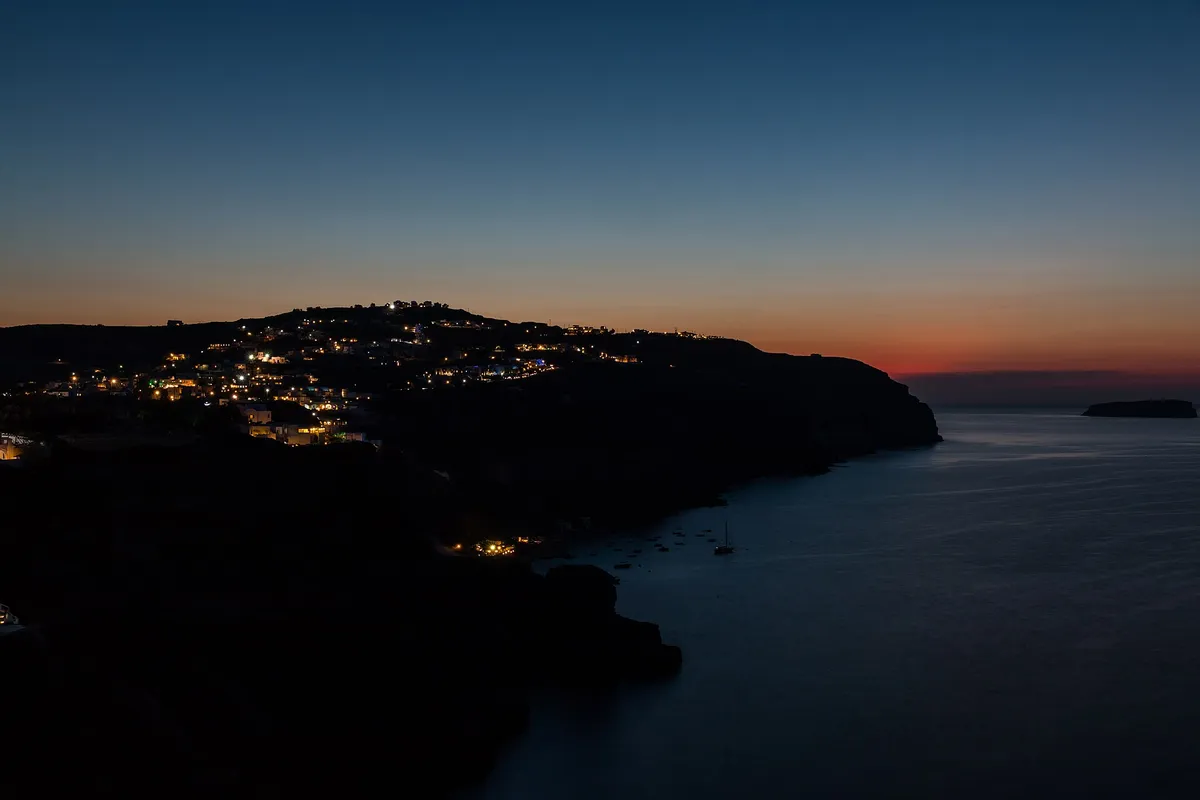
Photo: Dietmar Rabich / Wikimedia Commons
Best Time to Visit Greece: Athens, Santorini, Mykonos & Crete Season Guide 2026
When to visit Greece for perfect Aegean weather, avoid the August crowds on Santorini, and experience Orthodox Easter — complete month-by-month guide for Athens, Santorini, Mykonos, Crete, and the Peloponnese in 2026.
Best Time to Visit Greece: Month-by-Month Guide
Greece has 3,000 islands, 16,000 km of coastline, and a climate that makes most months viable. The question isn’t whether you can visit — it’s which experience you want.
The Best Overall Months
May–June and September–October are Greece’s finest windows:
- Warm sea (22–26°C in May–June; 24–26°C in September–October)
- Clear skies with the characteristic Aegean light
- 30–50% fewer tourists than July–August
- Open restaurants, boat tours, and water sports
- Accommodation prices significantly lower
Season by Season
Spring (April–May): Orthodox Easter + Wildflowers
April: Orthodox Easter
Orthodox Easter (date varies — typically 1–5 weeks after Western Easter) is Greece’s most important festival. If your dates align, this is an extraordinary time to visit:
- Midnight church services on Holy Saturday with candles passed through crowds
- Lamb on the spit on Easter Sunday at every family table
- Fireworks over Athens at midnight (the Acropolis lit up behind the explosions)
- Small villages in the Peloponnese and Crete transform completely
Practical note: April can still be cool (18–22°C), and the sea is cold for swimming (16–18°C). Perfect for Athens, Delphi, and archaeological sites; too cold for beach holidays.
May: The transition month — excellent. Temperatures reach 22–26°C, wildflowers cover the hillsides, and the sea is warming (20–22°C). Fewer tourists than summer.
Summer (June–August): Peak Season
June: One of the best months — warm but not oppressive (27–30°C), all services running, slightly below peak crowds.
July–August: Greece at maximum capacity. Santorini and Mykonos are extremely crowded — queues for everything, inflated prices, accommodation hard to find without 3–6 months advance booking.
The trade-off: Peak summer guarantees perfect beach weather (sea 26–28°C) and a vibrant, social atmosphere. If you want the ultimate Santorini sunset or Mykonos party scene, July–August is when you go — just plan 4–6 months ahead.
Meltemi wind: July–August brings the meltemi — the strong northerly Aegean wind (30–50 km/h). Beneficial for cooling, catastrophic for ferry schedules. The Cyclades (Mykonos, Santorini, Naxos) are most affected. Build extra days into ferry-dependent itineraries.
Autumn (September–October): The Best Secret
September: Arguably Greece’s best month for most travelers. The Aegean sea is at its warmest (25–27°C), the summer crowds are leaving, temperatures are perfect (28–30°C), and accommodation prices drop 30–40%.
October: Still excellent in most islands through mid-October. Some smaller hotels and seasonal restaurants begin closing after mid-October. Crete and the Dodecanese (Rhodes, Kos) remain pleasant through late October.
Winter (November–March): Athens and the Mainland
The islands largely close in winter — many hotels and restaurants shut. But Greek winter has its highlights:
Athens: Excellent in winter for cultural tourism — museums, the Acropolis (no queues), and authentic neighborhood life. Temperatures 10–15°C, occasionally rainy. The Athens Christmas market and Syntagma Square illuminations are charming.
Skiing: Mount Parnassus (2h from Athens) and Mount Falakro (Kavala) offer skiing December–March.
Island-Specific Best Times
| Island | Peak Season | Best Overall | Avoid |
|---|---|---|---|
| Santorini | July–Aug | May–June, Sept | Aug (extreme crowds) |
| Mykonos | July–Aug | June, Sept | Aug (party overload) |
| Crete | July–Aug | May–June, Oct | None (year-round viable) |
| Naxos | July–Aug | June–Sept | Meltemi July–Aug (windy) |
| Rhodes | July–Aug | May, Oct | None (longest season) |
| Corfu | July–Aug | June, Sept | Aug (Italians arrive en masse) |
| Zakynthos | June–Sept | May, Oct | Aug (Navagio overrun) |
| Paros | July–Aug | June, Sept | Aug (windsurfers + meltemi) |
Athens: Year-Round Destination
Athens is Greece’s best year-round city — the Acropolis, National Archaeological Museum, and Byzantine museums are excellent in any season.
Best months for Athens: April–June (outdoor culture, pleasant temperatures) and September–November (post-summer, still warm, excellent for sightseeing).
Worst months for Athens: July–August (extremely hot, 35–40°C; Athenians flee to islands; the city quiets).
Island Hopping Guide by Season
May–June: Ideal for island hopping — ferries running on schedule, all attractions open, weather reliable, sea swimmable.
July–August: Ferries crowded, possible meltemi delays; book crossings in advance.
September: Perfect — same services as summer, fewer crowds, sea warmer than June.
October: Some routes reduced; check schedules for outer islands.
FAQ
When is Santorini not overcrowded? Santorini has become genuinely problematic in July–August — cruise ships disgorge 10,000–15,000 day-trippers simultaneously, and Oia’s sunset viewpoint can have 2,000 people. May–June and September are when Santorini shows its beauty without the chaos. Staying overnight (rather than day-tripping from a cruise) is essential for experiencing the island properly at any time.
Is Greece expensive? Greece is mid-range by Western European standards but with enormous variation. Mykonos and Santorini are premium destinations (€200–400/night for mid-range hotels in peak season). Crete, Naxos, Lefkada, and the mainland are 40–60% cheaper for equivalent quality.
Can you swim in Greece in May? The Aegean is cold in May (18–21°C) — possible but bracing. The Ionian Sea (western coast, Corfu, Lefkada, Zakynthos) is warmer and more comfortable for May swimming. By late May/early June, the Aegean reaches 22–23°C — perfectly swimmable for most people.