
Paris Travel Guide: The City of Light, Revealed
Plan your perfect Paris trip with our complete guide covering the Eiffel Tower, Louvre, Marais, Montmartre, food scene, metro tips, best time to visit, and where to stay by arrondissement.
Paris has been the template for the romantic European city for centuries, and it hasn’t tired of the role. Beneath the clichés — the baguettes, the berets, the perpetually indifferent waiters — lies a city of extraordinary museums, brilliant food at every price point, quartiers that each feel like a distinct village, and a riverfront that remains one of the world’s great urban spaces. Paris rewards visitors who come with patience and curiosity rather than a checklist.
Essential Attractions
Eiffel Tower
The Tour Eiffel is still startling in person, no matter how many photographs you’ve seen. Built for the 1889 World’s Fair and initially decried as an eyesore, it has become the definitive symbol of a city. Go at dusk to see it lit against a darkening sky, then stay for the sparkling light show that runs for five minutes every hour after dark.
Practical tips: Book summit or second-floor access online weeks in advance (peak season sells out). The summit (276m) requires either stairs plus lift, or two lifts. The queue to buy tickets on-site can be two hours or more. Alternatively, the free view from the Trocadéro across the Seine is superb.
The Louvre
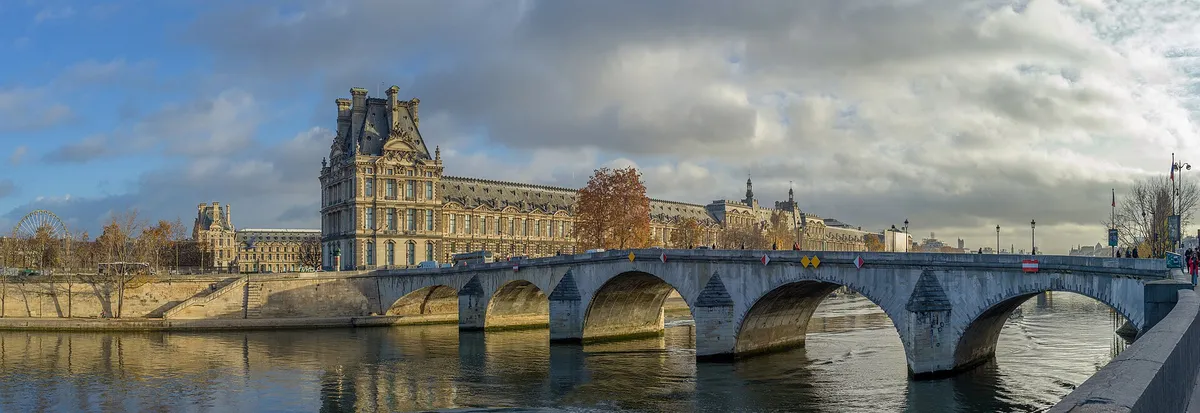
The world’s most-visited museum is also one of the most overwhelming. Home to 35,000 objects across 73,000 square metres of gallery space, the Louvre requires strategy rather than ambition. Don’t try to see everything — it’s impossible in a single visit.
Focus areas: the Denon Wing holds the Mona Lisa, the Venus de Milo, and Winged Victory. The Sully Wing has Egyptian antiquities. The Richelieu Wing has Dutch and Flemish masters.
Arrive when it opens (9am) on a Wednesday or Friday, when it stays open until 9:45pm. Lines at the pyramid entrance can be avoided by entering via the Carrousel du Louvre underground mall or the Richelieu entrance on the Rue de Rivoli side. The Paris Museum Pass includes the Louvre and skips the ticket queue.
Musée d’Orsay
Housed in a converted Belle Époque railway station, the d’Orsay holds the world’s greatest collection of Impressionist and Post-Impressionist art — Monet’s water lilies, Renoir, Degas, Van Gogh, Cézanne, Toulouse-Lautrec. Less crowded than the Louvre and better laid out, it’s many visitors’ favourite Paris museum. The giant clock faces on the upper level are photographed as frequently as the art.
Go on a Thursday evening when it’s open until 9:45pm and significantly quieter.
Notre-Dame Cathedral
The iconic Gothic cathedral is under reconstruction following the 2019 fire and has reopened to visitors from December 2024. The exterior and towers are accessible; ongoing work continues on certain sections. Check the official site for current access details.
Sainte-Chapelle
The most underrated sight in Paris. Built by Louis IX in 1248 to house the Crown of Thorns, Sainte-Chapelle is essentially a building constructed around 15 panels of stained glass, 15 metres high. On a sunny day, standing inside when the light comes through the windows is one of the most beautiful experiences in Europe. It’s smaller than expected and often bypassed in favour of Notre-Dame — the inverse of where the magic actually resides.
Best Neighbourhoods
Le Marais (3rd and 4th Arrondissements)
The Marais is Paris’s most fashionable neighbourhood and its most historically dense. Medieval hôtels particuliers (private mansions) sit alongside contemporary art galleries, the Centre Pompidou, and the Place des Vosges (the oldest planned square in Paris, built 1612). The Marais is the heart of Paris’s Jewish community, with excellent falafel on Rue des Rosiers. It’s also the epicentre of Paris LGBTQ+ life.
Walk the Rue de Bretagne market, visit the Musée Picasso, and get lost in the covered passages off Rue de Bretagne.
Montmartre (18th Arrondissement)
The hill of Montmartre still retains something of the bohemian village that attracted Picasso, Toulouse-Lautrec, and Van Gogh. The Sacré-Cœur Basilica at its summit offers sweeping views over Paris. The streets around Place du Tertre are tourist-heavy (street artists, overpriced cafés), but one or two streets away you find genuine neighbourhood life.
Rue Lepic has excellent food shops. The Moulin de la Galette, one of the last surviving windmills, was immortalized by Renoir. The Cimetière de Montmartre holds the graves of Degas, Émile Zola, and Truffaut.
Saint-Germain-des-Prés (6th Arrondissement)
The Left Bank neighbourhood associated with Sartre, de Beauvoir, and Camus. Café de Flore and Les Deux Magots are iconic but expensive; the neighbourhood’s quieter cafés and the outdoor market at Marché Saint-Germain are better value. The Musée d’Orsay is a short walk along the Seine.
Food Scene
Paris’s reputation as a food city is entirely justified, though the worst tourist restaurants near major sights can be abysmal. Rules of thumb:
- Avoid any restaurant displaying photos of the food on its exterior signage.
- Boulangeries (bakeries) are the best value-for-quality food in Paris. A croissant (€1.20–1.60), a pain au chocolat, or a sandwich on a fresh baguette are all superior breakfasts and lunches.
- Patisseries for afternoon sugar: Pierre Hermé, Ladurée, and Du Pain et des Idées (11th arrondissement, exceptional) are worth the queue.
- Brasseries for classic French cooking: steak-frites, croque-monsieur, moules marinières, onion soup. Le Comptoir du Relais in Saint-Germain, Brasserie Lipp, and Le Procope are longstanding classics.
- Bistrots are Paris’s sweet spot — small neighbourhood restaurants, weekly-changing blackboard menus, excellent quality for €15–25 for a two-course lunch including wine.
- Les Halles food market area has moved to Rungis outside the city — the Forum des Halles shopping centre replaced the original market. For the authentic covered market experience, head to Marché d’Aligre in the 12th (Tuesday–Sunday mornings).
Getting Around
Paris’s Métro is one of the world’s best urban transit systems — 16 lines covering the entire city, trains every 2–5 minutes, and a flat fare structure that makes it very economical. Buy a carnet (book of 10 tickets) or use a Navigo Easy contactless card. Single tickets (T+ tickets) are €2.15.
Velib’ is the city bicycle sharing scheme — stations every 300 metres in central Paris, useful for short trips and riverside cycling. Download the app before arriving.
Walking between many central attractions is surprisingly quick: Notre-Dame to Sainte-Chapelle is 3 minutes; the Louvre to the Musée d’Orsay is 15 minutes along the Seine.
Avoid taxis during rush hour — the Métro is almost always faster.
Paris Museum Pass
The Paris Museum Pass covers entry to 50+ museums and monuments including the Louvre, Musée d’Orsay, Sainte-Chapelle, Versailles, and many others. It skips the ticket queues, which alone justifies the cost in peak season. Prices: 2 days (€55), 4 days (€70), 6 days (€85). Note: the Eiffel Tower is not included.
Best Time to Visit
May–June is widely considered peak season for good reason: mild temperatures (17–22°C), long days, the city in full bloom, and fewer crowds than July–August.
September is equally good — summer heat has faded, tourist numbers drop sharply after school starts, and the city has an energized, autumnal quality.
July–August is hot (25–35°C, occasionally higher), very crowded, and many Parisian restaurants and small shops close for August holidays. Major sights are at maximum capacity.
December–January is cold but atmospheric: Christmas lights along the Champs-Élysées, festive markets, and significantly lower hotel prices. Museums are pleasantly uncrowded.
Where to Stay by Arrondissement
1st–4th (Central Paris): The most convenient for sightseeing. The Marais (3rd–4th) is the liveliest neighbourhood base. Hotels here are often expensive; look for small boutique hotels in converted hôtels particuliers.
5th–6th (Left Bank / Latin Quarter): Classic Paris ambience, close to the d’Orsay and Luxembourg Gardens. Student energy in the Latin Quarter makes it lively without being rowdy.
7th (Eiffel Tower area): Quieter and expensive. Best for visitors primarily focused on the Eiffel Tower, d’Orsay, and Musée Rodin.
9th–11th (Opéra to République): Excellent value, excellent restaurant scene (11th is one of Paris’s most exciting dining neighbourhoods), well-connected by Métro. Slightly removed from the major tourist sights but authentic Parisian neighbourhood life.
18th (Montmartre): Charming but requires a Métro ride to most major sights. Best for visitors who want the village-Paris experience over convenience.
Paris is a city of layers. Every visit peels back another one. The visitor who returns for the fifth time still finds something new — a covered passage they walked past on every previous trip, a restaurant that opened last month, a neighbourhood café where the owner has been making the same three dishes for forty years. Come prepared to be surprised.