
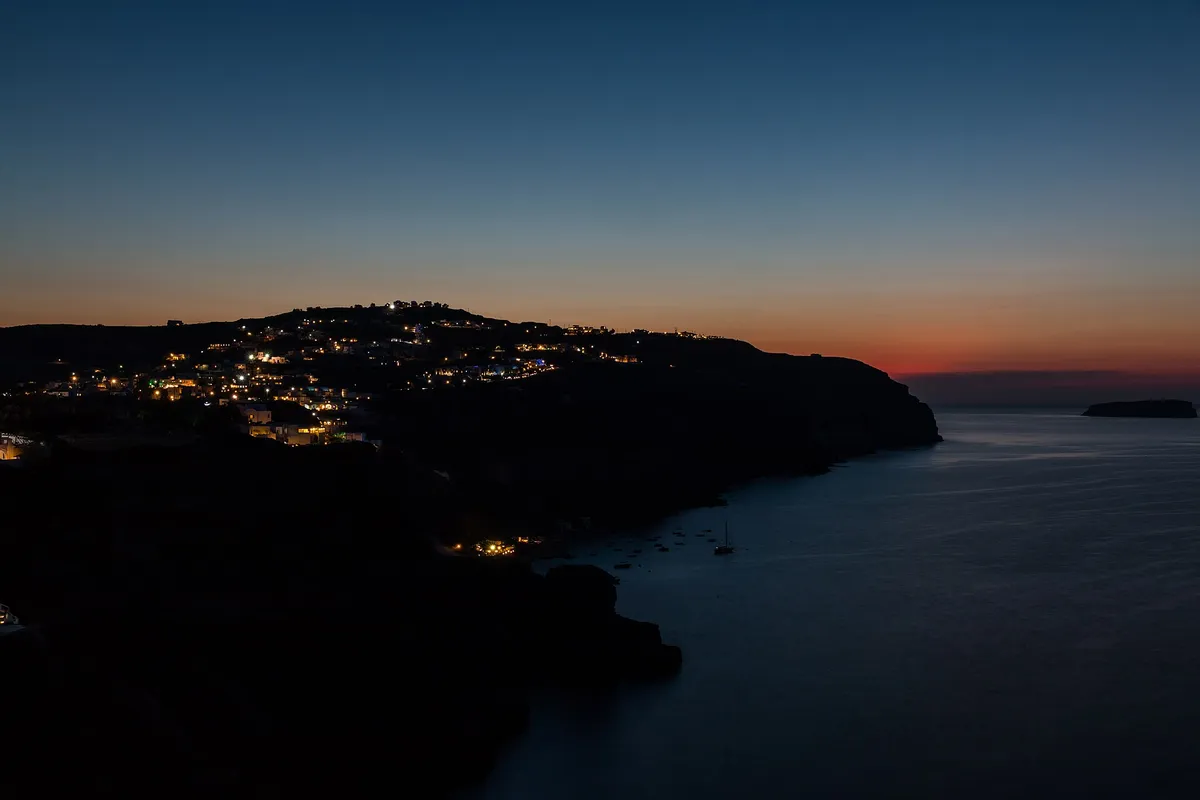
Photo: Dietmar Rabich / Wikimedia Commons
Best Honeymoon Destinations in Europe: Santorini, Amalfi & Beyond (2026)
Santorini's caldera at sunset, Positano's clifftop views, Dubrovnik's walled city by night, and Paris from a Marais apartment — some of Europe's best honeymoon destinations with specific hotel picks for 2026.
Europe for Honeymoons
Europe has one of the world’s densest concentrations of settings built for romantic experience — the combination of the Mediterranean’s light and warmth, the atmosphere of its historic cities, and a long-accumulated understanding that luxury hospitality is one of the continent’s great specializations produces a genuinely wide range of honeymoon possibilities.
The Classic Choices, Done Properly
Santorini, Greece — The Benchmark
Santorini is the world’s most honeymoon-photographed destination and, unusually for such a setting, it delivers on the promise. The caldera views (the flooded volcanic crater, the deep blue water, the white cubic architecture of Oia and Imerovigli) are genuinely striking in person.
The strategy: The difference between a mediocre Santorini honeymoon and a memorable one is entirely accommodation — staying on the caldera rim (Oia or Imerovigli) vs. staying inland or at the beach. The caldera rim hotels (Canaves Oia, Perivolas, Aenaon Villas in Imerovigli) provide the private infinity pool over the caldera that is the defining Santorini experience. The beach hotels (Perissa, Perivolos) are significantly cheaper but miss the point entirely.
Best for: Couples who want the iconic Mediterranean honeymoon, the infinity pool, and a memorable sunset in a compact, walkable setting.
Book: Canaves Oia (one of the best boutique hotels on Santorini, €600–4,000/night); Aenaon Villas in Imerovigli (smaller, more intimate, slightly better sunset angle, €400–2,000/night)
Timing: Late May and September — warm, sea temperature excellent, crowds 40% lower than July–August peak.
Paris, France — The Romantic Capital
Paris is the world’s most famous romantic city and the claim has substance — the architectural beauty (the city’s Haussmann boulevard uniformity gives the urban fabric a coherence that no other city has), the food culture, and the sheer density of cultural experience make Paris the most satisfying city for couples who also want to eat well, visit museums, and walk beautiful streets.
The strategy: Stay in the Marais (4th arrondissement) for the most atmospheric honeymoon hotel experience — the small boutique hotels in converted mansions (Hôtel du Particulier, Hôtel Saint-Marc, Pavillon de la Reine at Place des Vosges) provide the most romantic accommodation in Paris. Avoid the chain hotels on the main boulevards — they are efficient but provide none of Paris’s intimate scale.
Non-negotiable experiences: Dinner at a zinc bar bistrot (Au Passage, Septime, or Frenchie), an evening at the Musée d’Orsay when it’s open late (Thursday evenings, the Impressionist collection with fewer visitors), and the Sainte-Chapelle (the Gothic glass chapel — the 15th-century stained glass wall is one of the most striking visual experiences in Europe, and its small scale makes it feel far more intimate than Notre-Dame).
Best for: Couples who want the most culturally complete honeymoon in Europe — food, museums, shopping, and remarkable architecture.
Positano and the Amalfi Coast, Italy — Cliffside Drama
The Amalfi Coast is among Europe’s most viscerally beautiful landscapes — the vertical scale (cliffs descending 500 meters directly to the sea), the pink, yellow, and orange painted houses stacked up the cliff face, and the concentrated 50km stretch from Sorrento to Salerno create a landscape unlike anywhere else in Europe.
The strategy: Stay in Positano (the most beautiful and most visited village) or Ravello (the hilltop village above the coast, home to the Villa Rufolo and Villa Cimbrone gardens, with views extending to Sicily on clear days) rather than the middle towns of Amalfi or Praiano.
The hotels: Belmond Hotel Caruso (Ravello — arguably the most magnificent hotel on the Amalfi Coast, an 11th-century palazzo with an infinity pool overlooking the terrace gardens and the sea below, €700–3,000/night); Le Sirenuse (Positano — the most famous hotel on the Amalfi Coast, an 18th-century pink palace on the cliff face with one of the most photographed hotel pools in Italy, €600–2,500/night).
Logistics: The Amalfi Coast road is narrow and congested in summer — the smarter strategy is to arrive by ferry from Naples or Sorrento (the sea approach to Positano, watching the village appear around the headland, is one of the finest arrivals in European travel), and to minimize car use during the trip.
Dubrovnik, Croatia — Walled City Drama
Dubrovnik’s Old Town (the medieval walled city, entirely preserved, UNESCO World Heritage) is among Europe’s finest urban environments — intact limestone walls, the broad Stradun pedestrian promenade, and an Adriatic setting where the sea is visible from every wall walk, together creating one of the most complete medieval city experiences in Europe.
The strategy: Stay inside the walls — the small boutique hotels within the Old Town (Pucić Palace, Hotel Stari Grad, Prijeko Palace) provide the experience of living in the medieval city: walking to restaurants through the marble-paved alleys, hearing the sea from the walls, and catching the quality of light at dawn before the day-trippers arrive.
Best experience: The City Walls Walk (at 07:00, before the day-trippers arrive from the cruise ships) — the 2km circuit at the top of the walls with the city below and the Adriatic beyond is one of the best walks in Croatia.
Best for: Couples who want the drama of a medieval setting with a sophisticated restaurant scene and Adriatic swimming.
The Less Expected Choices
Valletta, Malta — Mediterranean Baroque
Valletta (the world’s smallest capital city, and arguably one of the most historically concentrated cities in Europe — UNESCO World Heritage, 320 monuments in just 0.8km²) is Malta’s baroque capital, built in one campaign by the Knights of St. John after the Great Siege of 1565. The Caravaggio paintings in St. John’s Co-Cathedral (the largest painting by Caravaggio in the world, the Beheading of St. John the Baptist, is here), the Grand Harbour (the largest natural harbor in the Mediterranean), and intimate hotel options (the Iniala Harbour House, the Rosselli — both in 16th-century palazzo conversions) make Valletta one of Europe’s most overlooked honeymoon destinations.
Best for: Couples who have done the obvious choices and want cultural depth, excellent food, and no crowds.
Ljubljana and Lake Bled, Slovenia — Fairy Tale
Ljubljana (Slovenia’s capital, a compact, walkable, genuinely beautiful Central European city with a castle, a dragon bridge, and one of the finest covered markets in Central Europe) combined with Lake Bled (the glacial lake with the island church, the castle on the vertical cliff above, and a dramatic Alpine backdrop) creates one of Europe’s most atmospheric honeymoon combinations at a fraction of the price of the more famous alternatives.
Best for: Couples who want spectacular Alpine and lake scenery, castle walks, and an authentic European city experience at Central European prices.
Lisbon and the Alentejo, Portugal — Atlantic Soul
Lisbon (widely considered one of the most beautiful capitals in Southern Europe — tiled buildings, the Moorish Alfama quarter, the Belém Tower, and its fado music) combined with a night or two in the Alentejo (the wine region 2 hours east — the Herdade do Esporão wine estate, the walled city of Évora with its Roman temple) creates a Portugal honeymoon with both urban sophistication and rural tranquility.
Best for: Couples who want the most relaxed and most affordable honeymoon in Western Europe — Lisbon is genuinely more affordable than Paris, Rome, or Barcelona.
Practical Honeymoon Notes
Booking honeymoon add-ons: Most quality hotels have honeymoon packages — these typically include room upgrades, champagne and flowers on arrival, and a late checkout. Book at time of reservation and confirm 48 hours before arrival. The upgrade is not guaranteed unless specifically confirmed.
The photography question: Every major European honeymoon destination has professional photographers who specialize in honeymoon photography — a 2-hour session in Santorini, Positano, or Dubrovnik typically costs €300–600 and provides professional-quality images of some of the most photographed settings in the world. For couples who care about documenting the trip, booking a local photographer for a single session is more valuable than carrying your own equipment throughout.
Insurance: Travel insurance with “Cancel for Any Reason” coverage (typically costs 8–10% of total trip cost) is strongly recommended for honeymoons — flight cancellations, airline strikes, and weather events in peak season are all genuine risks that standard travel insurance may not cover.
FAQ
When should European honeymoons be booked? For July–August peak season (the most common honeymoon timing): 6 months minimum for Santorini, Positano/Amalfi, and Dubrovnik — these sell out. For shoulder season (May–June, September–October): 2–3 months is adequate for most destinations, 4 months for the most sought-after specific hotels.
Which European honeymoon destination is most worth the money? Santorini delivers the most on its promise relative to its price for a pure “luxury resort” honeymoon. The Amalfi Coast (Positano/Ravello) delivers better on a combination of landscape and cultural depth. Paris delivers best for couples who value food, art, and urban quality.
Is it worth going to Europe in shoulder season for a honeymoon? Emphatically yes — late May and September in Santorini, Positano, and Dubrovnik have weather nearly identical to July (25–28°C, warm sea), prices 20–40% below peak, and meaningfully thinner crowds. The Oia sunset in September is less contested by 40% compared to August.