
Photo: Diego Delso / Wikimedia Commons
Florence 3-Day Itinerary: Uffizi, David, Duomo & Best Restaurants 2026
The perfect 3 days in Florence — Uffizi Gallery and Botticelli's Venus, Michelangelo's David, Duomo and Brunelleschi's dome, Oltrarno neighborhood, and where to eat the best bistecca fiorentina, gelato, and lampredotto in 2026.
Florence 3-Day Itinerary: The Cradle of the Renaissance
Florence contains more UNESCO World Heritage Sites per square kilometer than any other city on earth. It was the birthplace of the Renaissance, banking, and the Italian language as literature. Three days here is a genuine encounter with Western civilization.
Pre-booking essential: Uffizi Gallery (book 2–4 weeks ahead in summer), Accademia (David — book 1–2 weeks ahead), Duomo dome climb (Brunelleschi’s cupola — book weeks ahead in peak season, maximum capacity strictly enforced).
Day 1: The Uffizi and the Historic Core
Morning: Piazza della Signoria and the Uffizi
Start at Piazza della Signoria — Florence’s outdoor sculpture museum. The original piazza (still occasionally functioning as intended) contains: Cellini’s Perseus (1554), Giambologna’s Rape of the Sabine Women (1583), and a copy of Michelangelo’s David where the original stood until 1873 (the real one is at the Accademia). The Loggia dei Lanzi gallery (free, open air) is extraordinary.
Uffizi Gallery — the world’s finest collection of Italian Renaissance painting, built by the Medici family from the 1560s. Pre-book (€20+booking fee). Priority rooms:
- Room 10–14: Botticelli’s Birth of Venus (1485) and Primavera (1480) — the most important paintings of the early Renaissance
- Room 35: Michelangelo’s Doni Tondo (his only surviving panel painting)
- Room 66: Raphael’s Leo X with Cardinals (1518)
- Room 83: Titian’s Venus of Urbino (1538) — the most sensual Renaissance nude
Time: 2.5–3 hours for a focused visit.
Afternoon: The Duomo and Cathedral District
Florence Cathedral (Santa Maria del Fiore) — the Duomo’s pink-green-white marble exterior is the most extraordinary cathedral façade in Italy. Designed by Arnolfo di Cambio in 1296; Brunelleschi’s dome completed 1436.
Brunelleschi’s Dome (Cupola): The engineering achievement of the 15th century — the largest brick dome ever constructed (46m diameter), built without formwork, without Brunelleschi ever explaining his method to anyone. The 463-step climb (€20, pre-book, time slots) gives extraordinary views and the chance to see the interior of the dome up close. Book weeks ahead in summer — it sells out.
Baptistry of San Giovanni: Florence’s oldest building (4th–11th century), with Ghiberti’s Gates of Paradise (1425–1452) — Michelangelo reportedly called them worthy of the gates of paradise. The originals are in the Museo dell’Opera del Duomo.
Evening: Chianti Wine and Local Food
Oltrarno dinner: Cross the Ponte Vecchio (goldsmiths’ bridge since the 14th century) to the Oltrarno neighborhood — Florence’s most authentic quarter.
Lampredotto: Florence’s unique street food — offal (tripe) sandwich, cooked in broth with salsa verde. Nerbone in the Mercato Centrale is the most famous vendor. Polarizing but genuinely Florentine.
Bistecca fiorentina: The Florentine T-bone, served rare (only option, minimum 600g). Priced by weight (€60–90/kg). Buca Mario (1886, Florence’s oldest restaurant) and Trattoria Sostanza (1869) are the most historically significant spots.
Day 2: Michelangelo’s David and Fiesole Day Trip
Morning: Accademia Gallery
Galleria dell’Accademia — the sole purpose of visiting is Michelangelo’s David (1504). Pre-book (€12+fee). The gallery is small; the walk from the entrance to the Tribune where David stands is a 5-minute ritual.
David stands 5.17m tall. The scale is shocking — the head and hands are deliberately oversized (designed for the Duomo’s exterior, where viewers would look up). The veins in the hands, the expression of concentrated tension before battle — this is the most powerful sculpture of the Renaissance.
Don’t rush: Take 20–30 minutes with David alone. Circle it. The back is as extraordinary as the front.
Also in the Accademia: Michelangelo’s unfinished Prisoners (1519–1534) — four figures emerging from marble blocks, hands and faces struggling free. These are often more moving than the finished David.
Afternoon: Fiesole Day Trip
Fiesole (30 min by bus 7 from Piazza San Marco): The Etruscan hill town above Florence, at 295m. The views of Florence from Fiesole’s terrace are the best in the region — rolling Chianti hills, cypress trees, and the Duomo dome visible 30km away.
Roman Theatre: Fiesole’s 1st-century BC Roman amphitheater is intact and still used for performances in summer. Roman baths and Etruscan walls on the same archaeological site.
Return to Florence for evening.
Evening: Piazzale Michelangelo
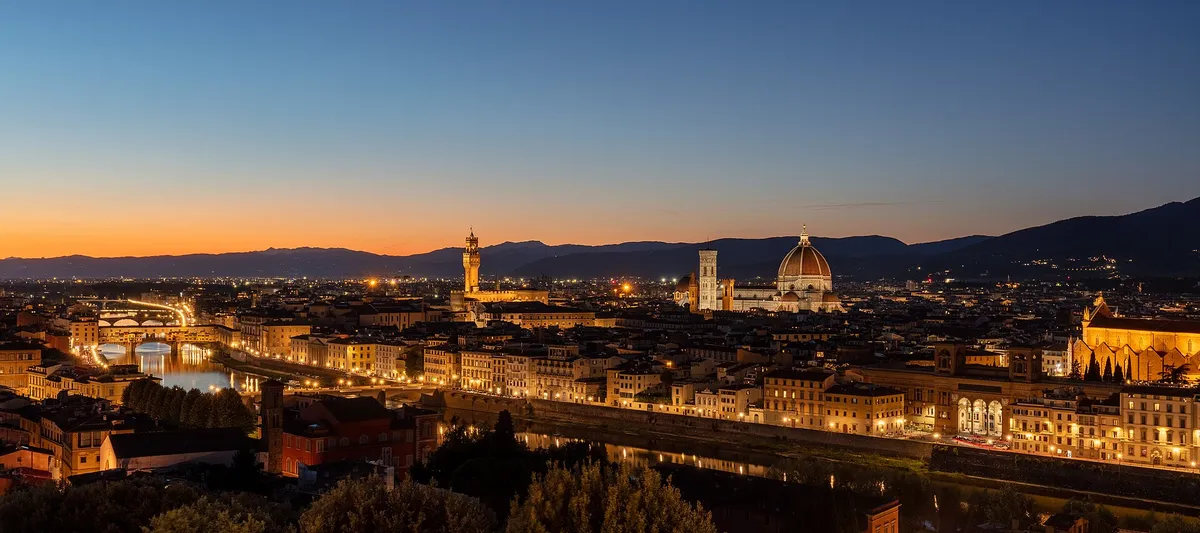
Piazzale Michelangelo (30-min walk up Via San Miniato, or take bus) — the hilltop terrace above the Arno with the most photographed view of Florence. The sunset here (6–9pm depending on season) is extraordinary — the Arno, the bridges, the Duomo, Palazzo Vecchio, and the hills beyond.
Day 3: Pitti Palace and the Oltrarno
Morning: Palazzo Pitti and Boboli Gardens
Palazzo Pitti — the Medici’s most extravagant residence (1458, expanded repeatedly), now housing four museums and the Boboli Gardens.
Priority: Palatine Gallery — the Medici’s private art collection, with Raphael’s La Velata (1516) and Madonna della Seggiola (1514), Titian’s Concert of the Ages, and a room of Rubens that hangs like a private vault.
Boboli Gardens (€10, included in Pitti Museum pass): Florence’s finest park, climbing the hillside behind the palace in formal terraces, grottoes, and fountains. The Kaffehaus at the top has excellent espresso and the best garden views.
Afternoon: Oltrarno Neighborhood
Santo Spirito — Brunelleschi’s final church (1444), the most severely beautiful interior in Florence. The surrounding piazza is Oltrarno’s neighborhood living room — flea market on weekends, aperitivo in the evenings.
Fondazione Zeffirelli (Via San Niccolò) — Florence-born director Franco Zeffirelli’s museum of cinema and opera. Small but extraordinary.
Artisan workshops: The Oltrarno is Florence’s historic artisan district — bookbinders, goldsmiths, leather workers, and picture framers still working in 15th-century-style workshops. Via Maggio is the best street for antiques.
FAQ
How do I avoid the crowds at the Uffizi? Book the first time slot (8:15am when it opens). The gallery is significantly less crowded in the first 90 minutes. Avoid August — the Uffizi in August is extremely difficult despite timed entry.
Is Michelangelo’s David worth a separate Accademia visit? Absolutely — the David is one of the world’s great single-object experiences. The gallery itself is small and takes 45–60 minutes total; don’t expect a full museum.
What is the best day trip from Florence? Siena (1.5h by bus or train) — the most beautiful medieval city in Tuscany, with the Piazza del Campo (the world’s finest piazza), the Duomo (Gothic, with Duccio’s extraordinary floor), and the Palio horse race (July and August — extraordinarily crowded). San Gimignano (1.5h) for the medieval towers. Chianti wine country by car — the most beautiful drive in Italy.