
Photo: Bengt Nyman from Vaxholm, Sweden / Wikimedia Commons
Best Hotels in New Zealand: Top Picks for Auckland, Queenstown & Beyond
From Auckland's waterfront towers to Queenstown's lakefront lodges and Wellington's design hotels, discover New Zealand's finest places to stay with prices, comparisons, and...
TL;DR
- The best hotel in New Zealand for luxury is Matakauri Lodge outside Queenstown — lake views, exceptional food, and genuine privacy from €500/night
- Auckland’s best value luxury option is Hotel Grand Windsor at €120-220/night, offering heritage elegance in the CBD
- Wellington’s QT is the most distinctive hotel in the capital: bold design, strong food and bar programme, central location at €120-220/night
- Post-earthquake Christchurch has rebuilt its hotel offering significantly; The George and Otahuna Lodge are now genuinely world-class
New Zealand’s hotel landscape reflects the country’s dual character: wildly beautiful natural settings on one hand, relaxed and unfussy sophistication on the other. Unlike Southeast Asia or the Maldives, New Zealand’s best hotels do not compete on spectacle or scale. They compete on setting, on food quality (the country’s produce and wine are exceptional), and on the ease with which they connect you to the landscape outside.
This guide covers the four main visitor destinations — Auckland, Queenstown, Wellington, and Christchurch — with two to three hotel picks per city, honest price ranges, and the kind of practical detail that helps you choose between properties that might look similar on a booking platform.
Auckland: Gateway City with Genuine Character
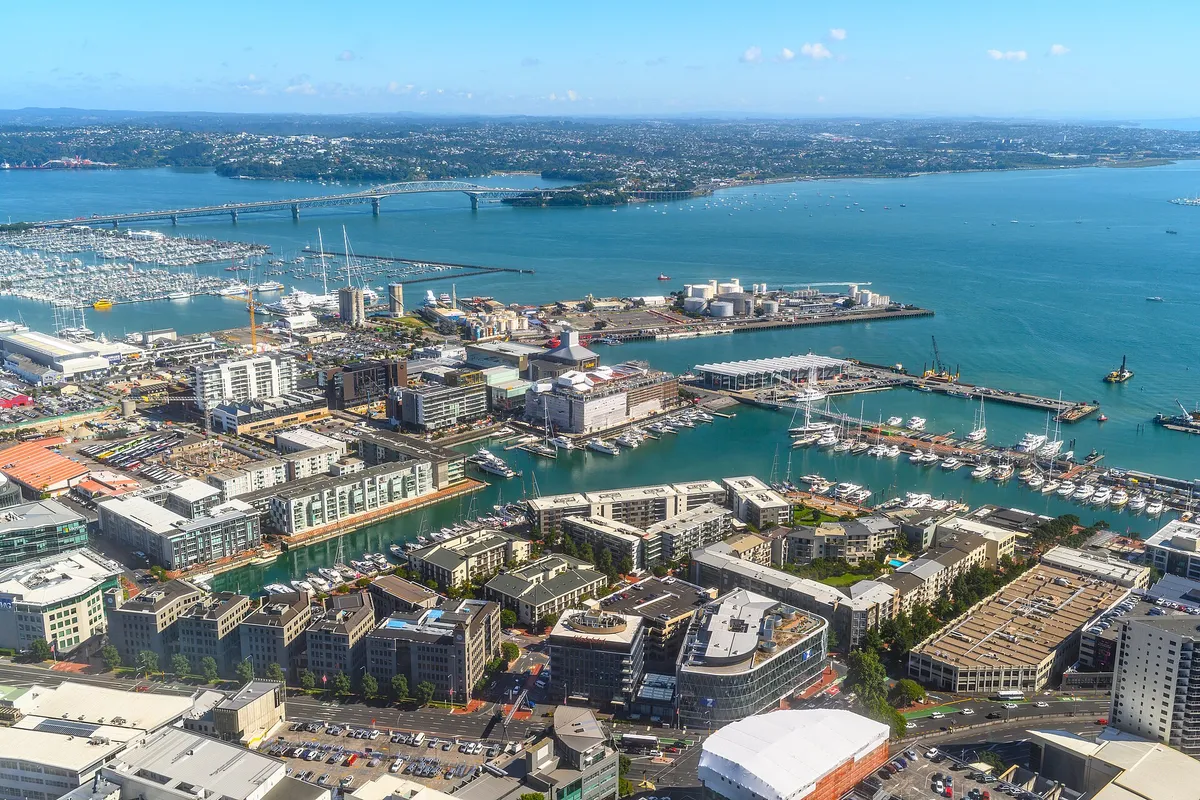
Auckland gets unfair reviews from travellers who treat it as a transit stop. The city is spread across a narrow isthmus between two harbours, with a skyline defined by the Sky Tower and a waterfront that has undergone significant regeneration over the past decade. The central city is walkable, the restaurant scene (particularly in the CBD, Britomart, and Ponsonby) is excellent, and the wine country of Waiheke Island is forty minutes by ferry.
The Grand by SkyCity
Location: Hobson Street, CBD | Price: €150-280/night | Best For: Travellers wanting everything in one building, casino access, central positioning
The Grand is Auckland’s most comprehensive city hotel. Connected directly to the Sky Tower and SkyCity casino complex, it offers a level of self-containment unusual for New Zealand: multiple restaurants (including Doris by Nic Watt, one of the city’s better seafood restaurants), a spa, a pool, and a convention space all within the building. Rooms are generous by Auckland standards, with floor-to-ceiling windows and well-designed bathrooms.
The hotel lacks the heritage character of the Windsor or the design edge of SO/, but it compensates with reliability and breadth. If you are arriving on an international flight and want simplicity on your first night, this is the default choice.
Booking tip: The Sky Tower entry is discounted for hotel guests. If you want the observation deck experience (and the views at dusk are genuinely impressive), factor this in.
Hotel Grand Windsor
Location: Queen Street, CBD | Price: €120-220/night | Best For: History enthusiasts, those wanting character over scale, couples
The Windsor occupies a 1928 Edwardian building on Queen Street — one of the few pre-war hotels in central Auckland still in active use. The lobby, with its original plasterwork and dark timber joinery, signals immediately that this is a different proposition from the chain properties. Rooms vary considerably by category: the heritage suites are large and atmospheric; standard rooms in the inner section can feel compact. Book a corner or street-facing room for the best light.
Breakfast is served in the Windsor Brasserie, and the quality — house-made pastries, local eggs, New Zealand cheeses — is several notches above the typical hotel buffer standard. The bar programme, featuring New Zealand craft beer and an intelligently assembled wine list, is worth an evening even if you are staying elsewhere.
SO/ Auckland
Location: Federal Street, CBD | Price: €130-240/night | Best For: Design-conscious travellers, those who value food and bar quality, younger travellers
SO/ Auckland arrived in 2021 and immediately redefined the upper end of Auckland’s lifestyle hotel market. The property occupies the Heritage Auckland building — a 1912 former chief post office — but the interiors are entirely contemporary: collaborations with New Zealand artists, bold colour palettes, and a design language that references the country’s Polynesian cultural influences without tipping into pastiche.
The rooftop bar, SO/ Good Bar, has become one of Auckland’s better drinking destinations independent of the hotel context. Cocktails reference New Zealand ingredients (feijoa, kawakawa, horopito), and the view across the CBD to the harbour is excellent.
Booking tip: SO/ is part of the Accor portfolio, which means Accor ALL loyalty points apply. If you accumulate points across other Accor properties, this is a useful property to redeem at.
Queenstown: Adventure Capital with Surprising Luxury
Queenstown’s reputation rests on adrenaline: bungee jumping, skydiving, white-water rafting, heli-skiing. But the town has developed a parallel identity as one of New Zealand’s most sophisticated destinations for food, wine, and accommodation. The combination — extreme sport in the morning, exceptional pinot noir at dinner — is available almost nowhere else.
The setting is extraordinary regardless of what you do in it: Lake Wakatipu reflects the Remarkables mountain range on three sides, and the light here, particularly in autumn (April-May) and winter (June-August), has a quality that photographers return for repeatedly.
Eichardt’s Private Hotel
Location: Marine Parade, Queenstown waterfront | Price: €200-400/night | Best For: Those who want to be in Queenstown’s centre, history, lakefront access
Eichardt’s is the oldest building on the Queenstown waterfront, dating to the 1870s gold rush era. The current property — extensively renovated and expanded — retains the original facade while offering thoroughly contemporary luxury inside: twelve suites, a private bar (for guests only), and a level of personal service unusual in a property this central. The lakefront location means you are genuinely beside the water, not across a road from it.
The Private Bar is one of Queenstown’s more civilised drinking experiences: a fireplace, a serious whisky selection, and staff who remember your order from the previous night. Breakfast in the room or on the balcony looking out to the Remarkables is one of those travel experiences that compounds the value of the stay.
Booking tip: Eichardt’s does not have a conventional spa. For spa access, guests typically use Matakauri Lodge’s facilities (see below), which can be arranged through the hotel.
The Rees Hotel
Location: Lake Esplanade, Queenstown | Price: €180-350/night | Best For: Families, longer stays, those wanting full hotel facilities with lake views
The Rees sits slightly outside Queenstown’s town centre, on the northern shore of Lake Wakatipu. The position — quiet, with unobstructed views across the lake toward the mountains — trades some walking convenience for calm. Rooms are large and well-designed; apartments and suites with full kitchens suit families or travellers staying a week or more.
The on-site restaurant, True South Dining Room, takes New Zealand’s farm-to-table tradition seriously. The menu changes with seasons, the lamb and beef are sourced from nearby Central Otago properties, and the wine list — Central Otago pinot noir specifically — is one of the strongest in the region.
Matakauri Lodge
Location: Glenorchy Road, outside Queenstown | Price: €500-900/night | Best For: Honeymoons, special occasions, anyone wanting the definitive New Zealand luxury lodge experience
Matakauri is the closest New Zealand gets to the East African lodge model: an intimate property (twelve suites plus a standalone lodge house) set entirely within the landscape, where the outdoors is the point and the building exists to connect you to it. Suites are built along the lake’s edge, with private decks, fireplaces, and floor-to-ceiling glass framing the Remarkables. The lodge house can be booked exclusively for groups.
The kitchen — produce from the Queenstown farmers’ market, Central Otago wines, a menu that changes daily — operates at a level that would earn recognition in any major city. Guided walks, lake kayaking, and stargazing are arranged by the lodge. Helicopters land on the property for heli-hike access to more remote terrain.
Booking tip: Matakauri is part of the Robertson Lodges collection. Sister properties Kauri Cliffs and Cape Kidnappers, on the North Island, offer a complementary experience. A two-or-three property itinerary combining all three is genuinely one of the world’s great domestic luxury travel circuits.
Wellington: The Capital Gets It Right
Wellington is New Zealand’s cultural capital in the truest sense: the city punches well above its size (population approximately 215,000) in museums, independent restaurants, arts venues, and café culture. Te Papa Tongarewa, the national museum, is genuinely world-class and free to enter. The waterfront precinct, Cuba Street’s independent retail strip, and the hilltop suburb of Kelburn are all walkable from the central hotels.
The harbour setting — Wellington sits at the southern tip of the North Island, facing Cook Strait — means wind is a constant companion. This is not a beach destination. But for urban culture, food quality, and the feeling of being somewhere with genuine local character, Wellington rivals Auckland on most metrics.
InterContinental Wellington
Location: Grey Street, CBD | Price: €140-260/night | Best For: Business travellers, those wanting traditional luxury, conference guests
The InterContinental has been the default luxury business hotel in Wellington for over three decades. The property is solid rather than exciting — consistently high standards, a professional service team, reliable room quality, and a central location that keeps you close to parliament, the waterfront, and the main museum strip. The pool and fitness centre are among the better hotel gym setups in the city.
For travellers arriving from international IHG properties, the loyalty integration and service standard make this the path of least resistance.
QT Wellington
Location: The Terrace, CBD | Price: €120-220/night | Best For: Design travellers, those who value a strong food and beverage programme, anyone who finds standard corporate hotels depressing
QT Wellington is the most interesting hotel in the capital. The property occupies a converted 1970s government building; the redesign — overseen by Nic Graham & Associates — is maximalist, playful, and deeply committed to New Zealand artistic references. Corridors are lined with commissioned works; public spaces use colour and texture in ways that most hotel designers would not risk.
The food programme is the hotel’s strongest card. Hippopotamus, the main restaurant, serves serious European-influenced New Zealand cuisine in an environment that manages to be simultaneously theatrical and comfortable. The bar programme is strong, and the market-driven cocktail list changes quarterly.
Bolton Hotel
Location: Bolton Street, CBD | Price: €100-190/night | Best For: Independent travellers, longer stays, those wanting apartment-style flexibility
Bolton Hotel is Wellington’s best boutique option for independent travellers. The property consists entirely of studios and suites with full kitchens — useful for stays of a week or more, or for travellers who prefer to shop at the nearby Moore Wilson’s Fresh food hall rather than eat every meal in a restaurant. Service is lighter-touch than at the InterContinental or QT, but the location (five minutes’ walk from the Beehive, ten from Te Papa) is hard to fault.
Christchurch: A City Rebuilt, A Hotel Scene Renewed
Christchurch’s transformation since the 2010-2011 earthquake sequence is one of the more remarkable stories in recent urban planning. The city lost its Victorian and Edwardian centre almost entirely; what has replaced it is a combination of bold contemporary architecture, low-rise innovation precincts, and carefully preserved survivors. The rebuilt city centre is more open, more interesting, and in many ways more liveable than the pre-earthquake version.
For visitors, this means a hotel landscape that ranges from heritage survivors to brand-new purpose-built properties, all operating against a backdrop of Hagley Park, the Avon River promenade, and the rebuilt Cathedral Square.
The George Christchurch
Location: Park Terrace, Hagley Park | Price: €150-280/night | Best For: Couples, food-focused travellers, those wanting Hagley Park access
The George is Christchurch’s finest boutique hotel, positioned directly on Hagley Park with views across the park and the distant Port Hills. The property survived the earthquakes intact (an unusual distinction in the city centre) and has been refined continuously since. Rooms are luxurious without ostentation; the service is personal in the way that small properties can achieve and large ones typically cannot.
The on-site restaurant, Pescatore, has held its position as one of Christchurch’s best for well over a decade. Seafood from the Canterbury and Marlborough coasts, locally sourced meat and vegetables, and a wine list that covers New Zealand’s key regions with unusual depth.
Booking tip: The George is the only central Christchurch hotel that fronts Hagley Park. Morning runs or walks through the park — particularly in autumn, when the European tree plantings turn — are one of the underrated pleasures of staying here.
Otahuna Lodge
Location: Tai Tapu, 20 minutes from Christchurch | Price: €500-900/night | Best For: Special occasions, those wanting a country house experience, small groups
Otahuna is the South Island’s answer to Matakauri: a heritage property (a 1895 Victorian manor house on 30 acres) offering the full luxury lodge experience. The house sleeps a maximum of twelve guests, the kitchen grows much of its own produce, and the level of personalised service is achievable precisely because the guest count is kept small.
The property is a twenty-minute drive from central Christchurch, which places it close enough to the city for day trips but far enough for genuine countryside calm. Dinners — communal, seasonally driven, with wines matched course by course — are the centrepiece of each evening.
Chateau on the Park
Location: Deans Avenue, near Hagley Park | Price: €100-180/night | Best For: Families, groups, value-conscious travellers wanting reliable quality
Chateau on the Park is Christchurch’s most reliable mid-range option for families and groups. Set in garden grounds adjacent to Hagley Park, the property has an outdoor pool, a restaurant, and room configurations that suit families better than most city centre properties. The design is traditional rather than cutting-edge, but the maintenance standard and service consistency make it a dependable choice.
Hotel Comparison Table
| Hotel | Location | Price/Night | Best For | Rating |
|---|---|---|---|---|
| The Grand by SkyCity | CBD, Auckland | €150-280 | Self-contained city stay | 8.7/10 |
| Hotel Grand Windsor | CBD, Auckland | €120-220 | Heritage, character | 8.9/10 |
| SO/ Auckland | CBD, Auckland | €130-240 | Design, rooftop bar | 9.0/10 |
| Eichardt’s Private Hotel | Waterfront, Queenstown | €200-400 | Lakefront, historic | 9.4/10 |
| The Rees Hotel | Lake Esplanade, Queenstown | €180-350 | Families, lake views | 9.1/10 |
| Matakauri Lodge | Glenorchy Rd, Queenstown | €500-900 | Luxury lodge, honeymoons | 9.7/10 |
| InterContinental Wellington | CBD, Wellington | €140-260 | Business travel | 8.8/10 |
| QT Wellington | The Terrace, Wellington | €120-220 | Design, food & beverage | 9.2/10 |
| Bolton Hotel | CBD, Wellington | €100-190 | Independent, longer stays | 8.6/10 |
| The George Christchurch | Hagley Park, Christchurch | €150-280 | Boutique, food | 9.3/10 |
| Otahuna Lodge | Tai Tapu, Christchurch | €500-900 | Special occasions, groups | 9.6/10 |
| Chateau on the Park | Hagley Park, Christchurch | €100-180 | Families, value | 8.4/10 |
Booking Tips for New Zealand Hotels
Understand the season. New Zealand’s peak season is December to February (Southern Hemisphere summer). Queenstown has a second peak in July-August for ski season. Shoulder seasons — March-April and October-November — offer genuinely better value, good weather, and noticeably fewer crowds, particularly in Queenstown and on the South Island.
Allow more time than you think you need. New Zealand is larger and the roads are slower than visitors typically expect. Auckland to Queenstown via road is 1,500+ kilometres — even by air it is a 2.5-hour flight. Build itineraries that allow genuine time in each destination rather than attempting to cover the whole country in ten days.
Book Matakauri and Otahuna well in advance. Both properties have limited room counts (twelve and six suites respectively). Peak dates — particularly Christmas-New Year, Easter, and school holiday periods — book out six months or more in advance.
Ferry connections. The Interislander ferry between Wellington and Picton (Marlborough) is a practical and scenic way to move between the North and South Islands. The crossing takes three to four hours, passes through Queen Charlotte Sound, and is significantly cheaper than flying for travellers with rental cars.
HaveNaGo recommends combining at least two New Zealand destinations in any itinerary — the diversity between Auckland’s urban energy, Queenstown’s adventure landscape, and Christchurch’s rebuilt character is best appreciated by contrast.
FAQ
What is the best hotel in New Zealand overall?
For the complete luxury lodge experience that New Zealand does better than almost anywhere, Matakauri Lodge outside Queenstown is the benchmark. For urban luxury, The George in Christchurch and Eichardt’s in Queenstown both consistently outperform larger competitors on service and character.
Is Queenstown worth visiting in winter?
Yes, particularly for skiers. The Remarkables and Coronet Peak ski fields are within thirty minutes of central Queenstown. The town itself is lively in winter, the accommodation rates are competitive compared to Northern Hemisphere ski resorts, and the light on the lake in June and July is extraordinary.
How has Christchurch recovered since the earthquakes?
Significantly. The 2010-2011 earthquakes destroyed approximately 80% of the central city’s buildings, but the rebuild has produced a genuinely interesting contemporary urban environment. The Riverside Market, the Cardboard Cathedral, the Avon River promenade, and the International Antarctic Centre are all worth time. The hotel offering — particularly The George and Otahuna Lodge — is as strong as it has ever been.
What is the best base for exploring the South Island?
Queenstown is the most practical base for adventure activities and access to Fiordland (Milford Sound is a four-hour drive or a short flight). Christchurch offers better access to the Mackenzie Country (Aoraki/Mount Cook), the Marlborough wine region, and Kaikōura for whale watching. Many travellers rent a campervan or car and treat the South Island as a circuit rather than a fixed-base destination.