
Photo: Matheenfaiz / Wikimedia Commons
Budget Maldives: How to Visit Without Spending $1,000/Night (2026)
Maafushi island guesthouses for $80/night, Male's transit hotels for the overnight connection, and the local ferry system — the honest guide to visiting the Maldives on a budget in 2026.
The Maldives on a Budget: Is It Possible?
The Maldives has a reputation as one of the world’s most expensive destinations — overwater bungalows at €1,000–5,000/night, seaplane transfers at $400 each way, and $30 cocktails at the pool bar have created the impression that it’s exclusively for the ultra-wealthy. That’s no longer accurate.
Since 2009, the Maldivian government has allowed tourism on local islands, previously restricted to resort islands only. The “guesthouse revolution” that followed created a budget and mid-range option delivering 80–90% of the Maldives experience at 10–15% of the resort cost.
The Two Maldives
Resort Islands
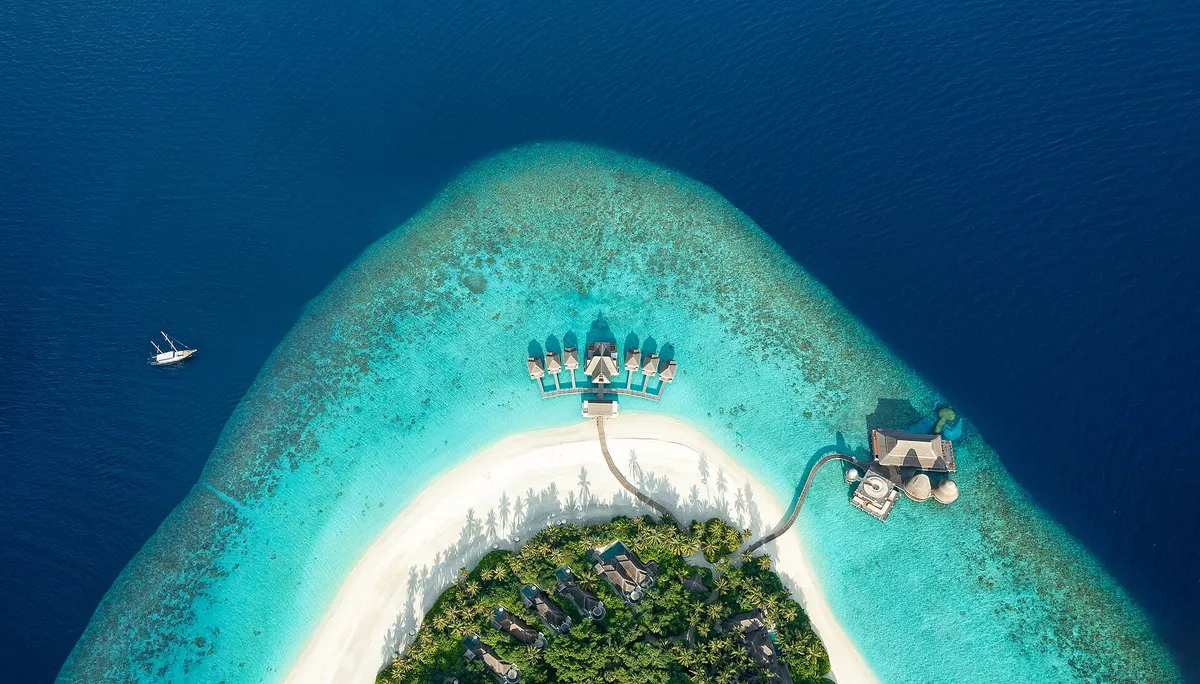
The original Maldives tourism model — entire islands leased to international hotel operators, no local population, entirely self-contained “tax-free zones.” No alcohol restrictions (the Maldives is officially dry, but resort islands hold liquor licenses); private beach and overwater access; seaplane or speedboat transfer from Male airport.
Cost: $400–5,000+/night for accommodation alone. Transfer: $200–500/person each way by seaplane. Minimum week’s cost for two people: $10,000–30,000+.
Best for: The classic overwater bungalow experience; complete privacy; snorkeling straight off your own bungalow; honeymoons and anniversary trips.
Local Islands (Guesthouses)
The emerging budget model — local Maldivian islands with a mixed population, where the local community lives on part of the island and the tourist “bikini beach” is segregated to a specific section. Alcohol isn’t available on local islands; you either travel off-island to consume it or head to a nearby resort island’s sandbar. Transfers from Male airport run by speedboat or local ferry, both much cheaper than seaplanes.
Cost: $50–200/night for accommodation. Transfer: $20–80/person by speedboat or $2–10 by local ferry. Week’s cost for two people: $800–2,500.
Best for: Budget travelers; those prioritizing snorkeling and diving over the overwater bungalow itself; travelers who want genuine cultural contact with Maldivian life; longer stays.
The Best Local Islands
Maafushi
Maafushi (South Malé Atoll — 45 minutes by speedboat from Male airport, 2–2.5 hours by local ferry) is the most developed local island for budget tourism, with 20+ guesthouses, multiple dive centers, and the best “bikini beach” infrastructure (the designated tourist beach where swimsuits are permitted) of any local island.
Recommended guesthouses:
- Arena Beach Hotel ($80–150/night): The standout budget guesthouse on Maafushi — its house reef is arguably the best snorkeling spot on the island, with Napoleon wrasse, reef sharks, moray eels, and sea turtles all visible from the beach without a boat. Rooms are air-conditioned, and breakfast is included
- Sandies Bathala ($60–120/night): Good location, air-conditioned, helpful staff
- Summer Island Guesthouse ($50–90/night): The most affordable option with acceptable standards
Rasdhoo
Rasdhoo (North Ari Atoll — 2.5 hours by speedboat from Male at $70–90/person each way, or via the Ari Atoll ferry from Male at $5–10 but 5–6 hours) is the place to go for hammerhead shark diving — scalloped hammerheads congregate at dawn at “Hammerhead Point” during the current season (November–April). Its guesthouse scene is smaller and more intimate than Maafushi’s, with just 5–7 properties.
Thoddoo
Thoddoo (North Ari Atoll) is the only agricultural island in the Ari Atoll, known for its watermelon, papaya, and vegetable farms, a strong community character, and excellent diving — a good pick for travelers who want authentic local island life alongside the reef.
Fulidhoo
Fulidhoo (Vaavu Atoll, reachable by the very inexpensive local government ferry from Male for $5, though the schedule takes planning) has some of the most beautiful beaches of the easily accessible local islands, with good snorkeling right off the sand and the quiet of a genuinely small island — about 300 residents.
Transfer Options from Male Airport
Male airport (Velana International Airport) sits on Hulhulé Island, connected to Male city by the Sinamalé Bridge (opened 2018, the largest bridge in the Maldives) — but not to the outer atolls.
Speedboat transfer (most common):
- To Maafushi (South Malé Atoll): 45 min, $20–30/person each way (guesthouse speedboat), $60–80/person each way (private speedboat)
- To Rasdhoo (North Ari Atoll): 2.5 hours, $70–90/person each way
Local government ferry (cheapest):
- To Maafushi: Thursday/Sunday sailings, 2–2.5 hours, $2/person (the service local Maldivians use)
- To outer atolls: multiple routes, extremely cheap, but schedules require planning
Seaplane transfers: Only available to resort islands — not relevant for guesthouse travelers.
Transit hotel in Male: Male airport has no connected transit hotel, unlike Singapore, Dubai, or Bangkok. If you arrive late and need to connect to a speedboat the next morning, a 10-minute water taxi ($2–5/person) gets you to Male city, where options include Hotel Anini ($50–80/night) and Hotel Relax Inn ($40–70/night).
What to Do: The Real Maldives Activities
Snorkeling
The Maldives offers some of the best snorkeling anywhere — dense coral reef diversity, heavy marine life, and 30–40m water clarity.
From the beach: Most local islands have a house reef accessible right from the beach, with coral gardens, sea turtles, and blacktip reef sharks (harmless and common) all visible without a boat.
Snorkeling trips: Every guesthouse runs day snorkeling trips ($30–50/person) to specific sites: turtle point (near-guaranteed turtle sightings), manta ray point (seasonal, November–April), and shark point (nurse and reef sharks).
Diving
The Maldives ranks among the world’s top five dive destinations, thanks to current dives through the channels between atolls, where pelagic species — manta rays, whale sharks, hammerheads — move through in large numbers, plus strong coral formations and visibility.
Dive cost from guesthouses: $35–60/dive versus $80–120/dive from resort island operators — one of the sharpest cost gaps between the guesthouse and resort routes through the Maldives.
Dolphin Cruises and Sunset Sandbar
Every guesthouse offers dolphin cruises ($20–30/person); spinner dolphins travel in large pods around the South Malé Atoll year-round. The sandbar trip — standing on a temporary strip of sand that appears above the tide at low water, surrounded by open turquoise sea — is probably the most photographed moment of any local island trip.
FAQ
Can you drink alcohol on local islands? No — the Maldives is officially a dry country, and alcohol is available only on resort islands with their special liquor licenses. Guesthouses on local islands cannot serve it. The standard workaround is an optional “sunset sandbar” trip to a nearby uninhabited island, or a trip to a nearby resort island, where drinks are available.
Is the guesthouse snorkeling as good as resort island snorkeling? Often, yes — and sometimes better. The house reefs at Maafushi’s Arena Beach, at Rasdhoo, and at Fulidhoo rank among the better snorkeling reefs in the Maldives. The resort island advantage is proximity: some overwater bungalows sit directly above the reef, versus a 2–5 minute walk to the beach for guesthouse travelers.
When is the best time for the budget Maldives? November–April, the dry-season northeast monsoon period, brings the clearest water, the calmest weather, and the most marine life. Late November and late April are the sweet spots — good conditions with lower prices, since December 20–January 10 and February see rates run 20–30% above the seasonal average.