
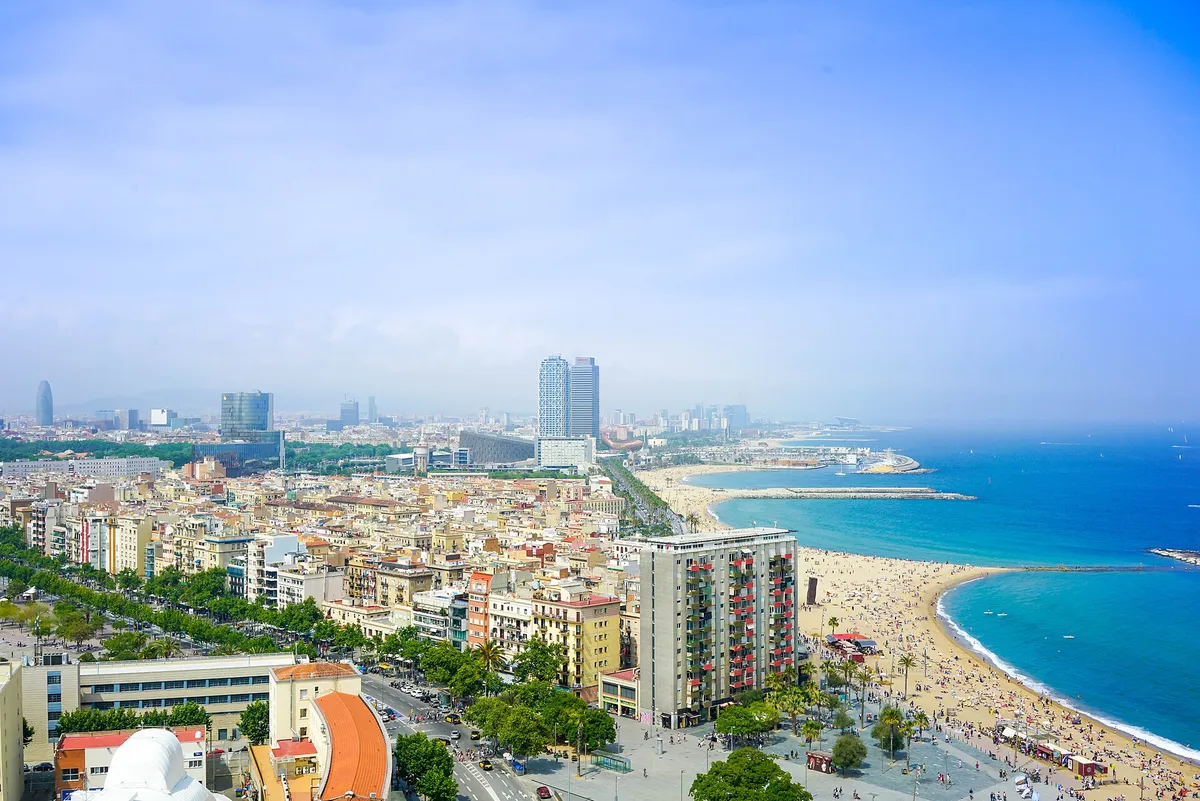
Photo: Enes royalfound / Wikimedia Commons
Barcelona vs Madrid: Which Spanish City Should You Visit? Complete Comparison 2026
Barcelona vs Madrid — an honest comparison of architecture, food, beaches, neighborhoods, football culture, cost, and which Spanish city is better for different types of travelers in 2026.
Barcelona vs Madrid: The Complete Comparison
Spain’s two great cities define two entirely different travel experiences. Barcelona is Mediterranean — Gaudí, beach culture, Catalan identity, cosmopolitan. Madrid is continental — Velázquez, the Prado, Castilian grandeur, late-night tapas culture that puts the rest of Europe to shame.
Both are world-class cities. The choice depends on what you’re optimizing for.
At a Glance
| Category | Barcelona | Madrid |
|---|---|---|
| Population (city) | 1.7 million | 3.4 million |
| Distance to beach | 10 min | 4h (Valencia) |
| UNESCO site | Gaudí works (7 buildings) | None |
| Best museum | Picasso Museum | Prado (the greatest in Spain) |
| Food style | Catalan, seafood, avant-garde | Castilian, tapas, cocido madrileño |
| Language | Catalan + Spanish | Spanish |
| Transport to airport | 35 min (Aerobus) | 20 min (Metro Line 8) |
Architecture
Winner: Barcelona — one of the world’s greatest architectural cities
Barcelona’s case: No city on earth has the architectural concentration of Barcelona’s Modernisme:
- Sagrada Família (Gaudí, 1882–2026+): The most visited monument in Spain, still under construction 144 years after starting. The interior of the completed nave is one of the world’s great architectural spaces — organic columns like stone trees, light filtered through stained glass in greens, blues, and ambers.
- Casa Batlló and Casa Milà (La Pedrera): Two Gaudí residential buildings on Passeig de Gràcia that are simultaneously private apartment blocks and extraordinary public attractions. Casa Batlló’s rooftop dragon ridge and mosaic skin are unlike anything else in architecture.
- Palau de la Música Catalana (Domènech i Montaner, 1908): The most spectacular concert hall in Europe — every surface covered in mosaic, stained glass, and sculpture.
- Gothic Quarter (Barri Gòtic): The most intact medieval street grid in Western Europe, with Roman walls (2nd century BC) still visible.
Madrid’s architecture: The Prado, the Royal Palace (3,418 rooms, the largest palace in Western Europe by floor area), and the Gran Vía are impressive but not at Barcelona’s architectural density.
Art and Museums
Winner: Madrid — the Prado is the greatest art museum in Spain and one of the greatest in the world
The Prado (Calle Ruiz de Alarcón, free on Monday evenings): The world’s finest collection of Spanish painting from the 15th–19th centuries:
- Velázquez’s Las Meninas (1656): Widely considered the world’s greatest painting — depicting King Philip IV’s court in a technical and philosophical complexity that still baffles art historians
- Goya’s The Third of May (1814): The defining anti-war painting; the prisoner facing the firing squad is as immediate as a photograph
- Goya’s Black Paintings (from his final years, transferred from walls of his house): The most disturbing works in the Prado — Saturn Devouring His Son, The Witches’ Sabbath
Thyssen-Bornemisza (Madrid): A private collection covering everything the Prado doesn’t — Monet, Renoir, Klimt, Hopper.
Reina Sofía (Madrid): Guernica (Picasso, 1937) — the most significant political painting of the 20th century, 7.8m wide, commissioned for the Republican pavilion at the Paris World’s Fair in protest of the Nazi bombing of Guernica.
Barcelona museums: The Picasso Museum (largest early Picasso collection), the MNAC (Romanesque art), the CCCB and MACBA (contemporary). Strong but doesn’t rival Madrid’s triangle.
Food
Winner: Draw — completely different strengths
Barcelona’s food:
- Catalan cuisine (separate identity from Castilian Spanish): Esqueixada de bacallà, pa amb tomàquet, fideuà (Valencian noodle paella)
- La Boqueria: One of Europe’s finest covered food markets (Rambla, tourist-affected in the central section but still excellent in the back)
- Avant-garde dining: Tickets (Albert Adrià), Disfrutar (three Michelin stars, world’s best restaurant ranked 2023–2024) — Barcelona is the avant-garde capital of Spain
Madrid’s food:
- Tapas culture at 10pm: Madrid’s dining culture genuinely does not begin until 9pm and peaks at 11pm. The Barrio de Las Letras (Huertas), La Latina, and Malasaña neighborhoods are the best tapas bar areas.
- Mercado de San Miguel: The finest food hall in Madrid — jamón ibérico de bellota (the best ham in the world, from acorn-fed black pigs), Manchego cheese, fresh seafood.
- Cocido Madrileño: Madrid’s classic stew — garbanzos, morcilla, chorizo, chicken, beef — served in three courses (broth, then vegetables, then meat). La Bola Taberna (1870) is the most historic.
Beach
Winner: Barcelona — obviously (Madrid is inland, 4 hours from the sea)
Barcelona’s Barceloneta Beach is 10 minutes from the Gothic Quarter by foot or metro. The Catalan coast extends to the Costa Brava (north) and Costa Daurada (south). Madrid visitors typically travel to Valencia (4h by AVE high-speed train) for a beach day.
The Verdict
Choose Barcelona if you:
- Want to see Gaudí (Sagrada Família, Casa Batlló, Park Güell)
- Want beach access combined with a major city
- Are interested in Catalan culture and avant-garde dining
- Have 3 days or fewer (Barcelona is more concentrated)
Choose Madrid if you:
- Are an art enthusiast (the Prado-Thyssen-Reina Sofía golden triangle is unrivaled)
- Want authentic Spanish nightlife and tapas culture
- Are interested in flamenco (more authentic in Madrid than Barcelona)
- Have 4+ days (Madrid rewards deeper exploration)
Honest recommendation: If you can do both, the AVE high-speed train (Barcelona Sants to Madrid Atocha, 2h30, €40–100) makes a combined trip easy. 3 nights Barcelona + 2 nights Madrid is one of the great European trips.
FAQ
Which city is better for football? Both cities have iconic clubs (Barça and Real Madrid), but the Bernabéu (Real Madrid’s renovated stadium, 2023) and the Camp Nou (Barcelona, currently being rebuilt) are both extraordinary venues. A Real Madrid match at the Bernabéu is one of the world’s great sports experiences.
Which city is better for nightlife? Madrid — late by any global standard, with clubs not starting until 2am and running until 7am. Ibiza aside, Madrid’s Malasaña, Chueca, and Lavapiés neighborhoods are the best nightlife in Spain.
Which city is cheaper? Madrid is approximately 10–15% cheaper than Barcelona for accommodation. Both are cheaper than London, Paris, or Amsterdam.