
Photo: Enes royalfound / Wikimedia Commons
Barcelona 10-Day Itinerary: Gaudí, Gothic Quarter, Costa Brava & Day Trips 2026
10 days in Barcelona and Catalonia: Sagrada Família, Park Güell, Gothic Quarter, La Barceloneta, Montserrat day trip, Costa Brava beaches, Dalí Theatre-Museum in Figueres, and the best tapas bars in 2026.
Barcelona 10-Day Itinerary: The Complete Catalonia Experience
Ten days in Barcelona and its surrounding region gives you time to experience the city deeply and explore the extraordinary Catalan countryside — the Costa Brava, Montserrat, and Dalí’s homeland in the Alt Empordà.
When to visit: May–June or September–October. July–August is extremely hot (35°C+) and tourist density reaches its annual peak.
Day 1: Gothic Quarter and the Waterfront
Morning: Arrive in Barcelona. Drop bags at your hotel (stay in the Gothic Quarter or El Born for your first days). Walk to La Rambla for orientation — 1.3km pedestrian boulevard from Plaça de Catalunya to the sea.
Afternoon: Dive into the Gothic Quarter (Barri Gòtic) — Europe’s largest intact medieval quarter. Key stops: Barcelona Cathedral (13th century, free entry before 12:30), the Roman Temple of Augustus (free, inside a medieval courtyard), Plaça de Sant Jaume (city hall and Generalitat face each other), and the labyrinthine Call (medieval Jewish Quarter).
Evening: Walk 10 minutes to El Born neighborhood — Barcelona’s hippest quarter, centered on the extraordinary Gothic Santa Maria del Mar basilica (1384). Dinner at any of the tapas bars on Carrer del Parlament or Carrer del Parlament.
Day 2: Sagrada Família + Eixample
Morning: Sagrada Família — Antoni Gaudí’s masterwork, under continuous construction since 1882 and still unfinished. Pre-book tickets online (essential — €26–33 depending on tower access). Allow 2–3 hours minimum. The interior, completed in 2010, is extraordinary — stained glass in every direction, columns like a stone forest. The Nativity façade (Gaudí’s original) faces east; the Passion façade (Subirachs, 1987) faces west.
Afternoon: Walk through Eixample — Barcelona’s 19th-century grid district designed by Ildefons Cerdà. The wide octagonal blocks contain: Casa Batlló (Gaudí, 1906 — book ahead, €35), Casa Milà/La Pedrera (Gaudí, 1912, €25), and the Bloc de les Aigues walking route showing Catalan Modernisme at its best.
Evening: Dinner in Eixample — the Esquerra de l’Eixample is Barcelona’s best neighborhood for contemporary restaurants.
Day 3: Park Güell + Gràcia Neighborhood
Morning: Park Güell (Gaudí, 1914) — the terraced hillside park above the city. The Monumental Zone (€10, pre-book mandatory) contains the famous mosaic terrace with city views. The surrounding free park is also beautiful for morning walks.
Afternoon: Walk down to Gràcia — once a separate village, now Barcelona’s most characterful neighborhood. Carrer de Verdi, the weekend market at Plaça del Diamant, independent bookshops, and genuine local bar culture.
Evening: The Gràcia Festival (La Festa Major de Gràcia) runs in August — streets are decorated competitively in extraordinary themed designs. Year-round, Plaça del Sol and Plaça de la Virreina are perfect for evening vermouth.
Day 4: Montjuïc + Barceloneta
Morning: Montjuïc — the hill above the harbor with the best views of Barcelona. Take the cable car from Barceloneta (or the telefèric from Paral·lel metro). The Barcelona Pavilion (Mies van der Rohe, 1929 — reconstructed 1986) is an architectural pilgrimage; the Fundació Joan Miró has the world’s best Miró collection; the Castell de Montjuïc gives 360° city views.
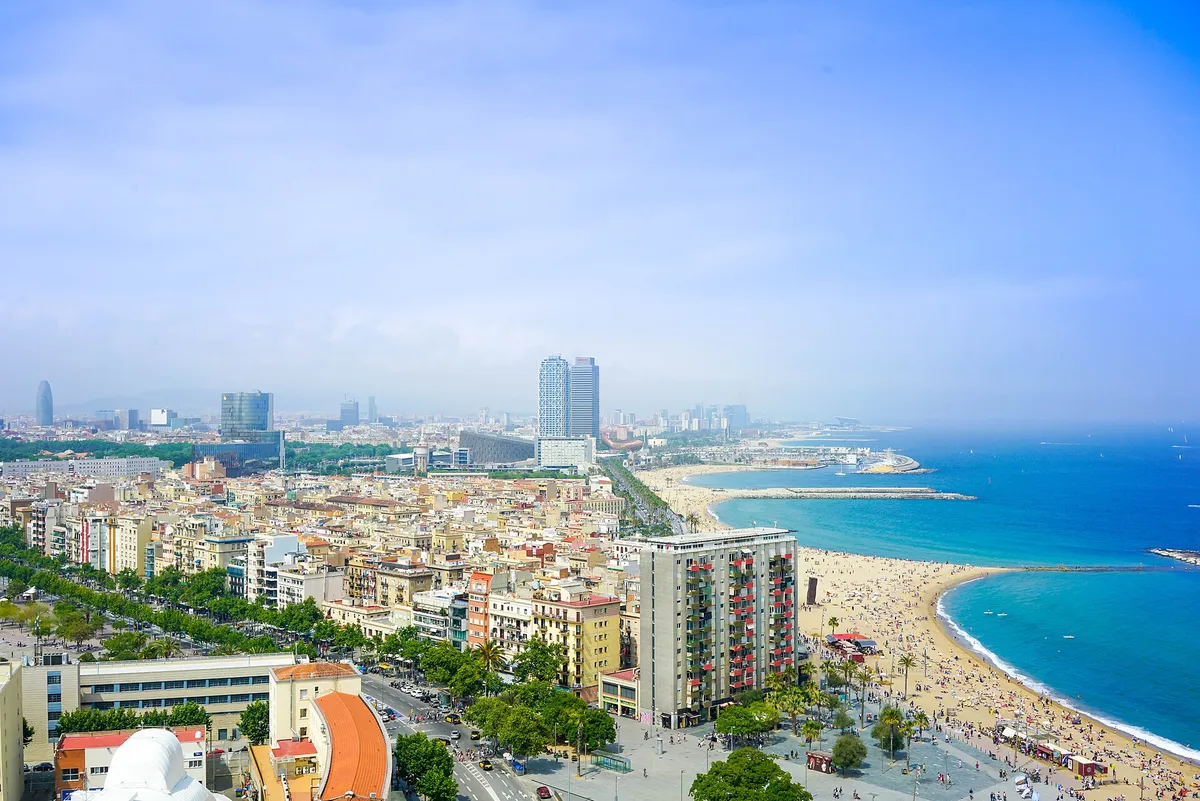
Afternoon: La Barceloneta beach — 4.5km of urban beach, crowded but fun. Walk the beach promenade, swim, and eat paella or fideuà (noodle version) at any chiringuito (beach restaurant). Note: beach restaurants in Barcelona are genuinely good, unlike many tourist cities.
Day 5: Day Trip — Montserrat
Getting there: FGC train from Plaça Espanya (1h15, €20 round trip including rack railway).
Montserrat: The mountain monastery complex at 725m — serrated sandstone peaks rising from the plain. The Black Madonna (La Moreneta, 12th century) is Catalonia’s patron saint. The Montserrat Museum has impressive art (El Greco, Caravaggio). Hike to Sant Joan hermitage (45 min) or Santa Cova (30 min down) for the best views and solitude.
Return: Back to Barcelona for evening; the monastery is an easy day trip.
Day 6: El Raval + MACBA + Palau Güell
Morning: MACBA (Museu d’Art Contemporani de Barcelona) — Richard Meier’s 1995 white building is a Barcelona landmark; the collection covers post-1945 art with strong Catalan focus.
Palau Güell (Gaudí’s first major commission, 1890, UNESCO, €12) — the extraordinary stone façade and colored ceramic chimneys are a preview of what Gaudí would later do at La Pedrera and Sagrada Família.
Afternoon: La Boqueria Market — the most famous food market in Spain. Skip the overpriced tourist stalls at the entrance and go to the back where locals shop: fresh fruit, jamón ibérico, Catalan cheeses, seafood. Don’t buy a prepared fruit cup at the front — it’s a tourist trap.
Day 7: Day Trip — Costa Brava (Calella de Palafrugell or Cap de Creus)
Getting there: Car (1.5–2h) or bus from Barcelona Sants (Empresa Sarfa, 2h).
Calella de Palafrugell: Classic Costa Brava — whitewashed fishing village, crystal-clear coves, pine trees reaching the water. The Cap de Creus peninsula (Salvador Dalí’s spiritual homeland) has the most dramatic rocky coastline in Spain.
Cadaqués: The most beautiful village on the Costa Brava — white cube houses climbing steep hills, crystal bay. Dalí lived here; his house at Portlligat is a 5-minute walk from the village (€14, pre-book).
Day 8: Day Trip — Figueres + Dalí Theatre-Museum
Getting there: Train from Barcelona Sants (2h, €30 round trip).
Dalí Theatre-Museum (Figueres) — the most-visited museum in Spain after the Prado. Designed by Dalí himself as his greatest surrealist work. The Jewel Hall, the Mae West Room (furniture arranged as a face), and the Cadillac filled with water are among the world’s most extraordinary museum installations. Pre-book essential.
Optional extension: Combine with Dalí Castle Púbol (Girona province, requires car) or the Dalí House in Portlligat.
Day 9: Market Days + Neighborhoods
El Encants (flea market, Mon/Wed/Fri/Sat) — Barcelona’s open-air antique and secondhand market under a spectacular mirrored canopy.
Poblenou neighborhood — Barcelona’s old industrial district, now the city’s tech hub and most creative neighborhood. The Rambla del Poblenou is Barcelona’s quietest Rambla; the warehouse-to-gallery conversions are some of the city’s best.
Sant Pau Recinte Modernista — Lluís Domènech i Montaner’s 1930 hospital complex (UNESCO), Gaudí’s rival and equal. Usually Sagrada Família gets all the attention, but Sant Pau is arguably more beautiful.
Day 10: Final Exploration + Departure
Morning: One last neighborhood walk — choose Sarrià (village-feel suburb in the hills above the city) or Gràcia’s Mercat de l’Abaceria.
Afternoon: Last tapas lunch — pa amb tomàquet (bread rubbed with tomato and olive oil), croquetas de jamón, gambas al ajillo, patatas bravas. Vermouth on Carrer del Parlament at 1pm surrounded by Catalans is the perfect Barcelona goodbye.
FAQ
Is Barcelona safe? Barcelona is generally very safe, but it has one of Europe’s worst pickpocketing problems — particularly on La Rambla, at La Boqueria, and on the metro (Line 3 towards Barceloneta). Use inside pockets or anti-theft bags in crowded areas. Bag snatching from café tables and from bicycle riders happens. Stay alert in tourist crowds.
Do I need to speak Spanish or Catalan in Barcelona? English works everywhere in tourist areas. Catalans appreciate any effort with Catalan (spoken by 36% of the population): gràcies (thank you), bon dia (good morning). Spanish works everywhere but Catalan is the preferred language for official contexts.
What is the best area to stay in Barcelona? El Born/Gothic Quarter: Best for atmosphere, walking access, but noisy at night. Eixample: Best for shopping, dining, elegant accommodation, quiet nights. Gràcia: Best for feeling like a local, less touristy, 15 min walk from most sites. Barceloneta: Beach access but far from Gaudí sights; loud in summer.