
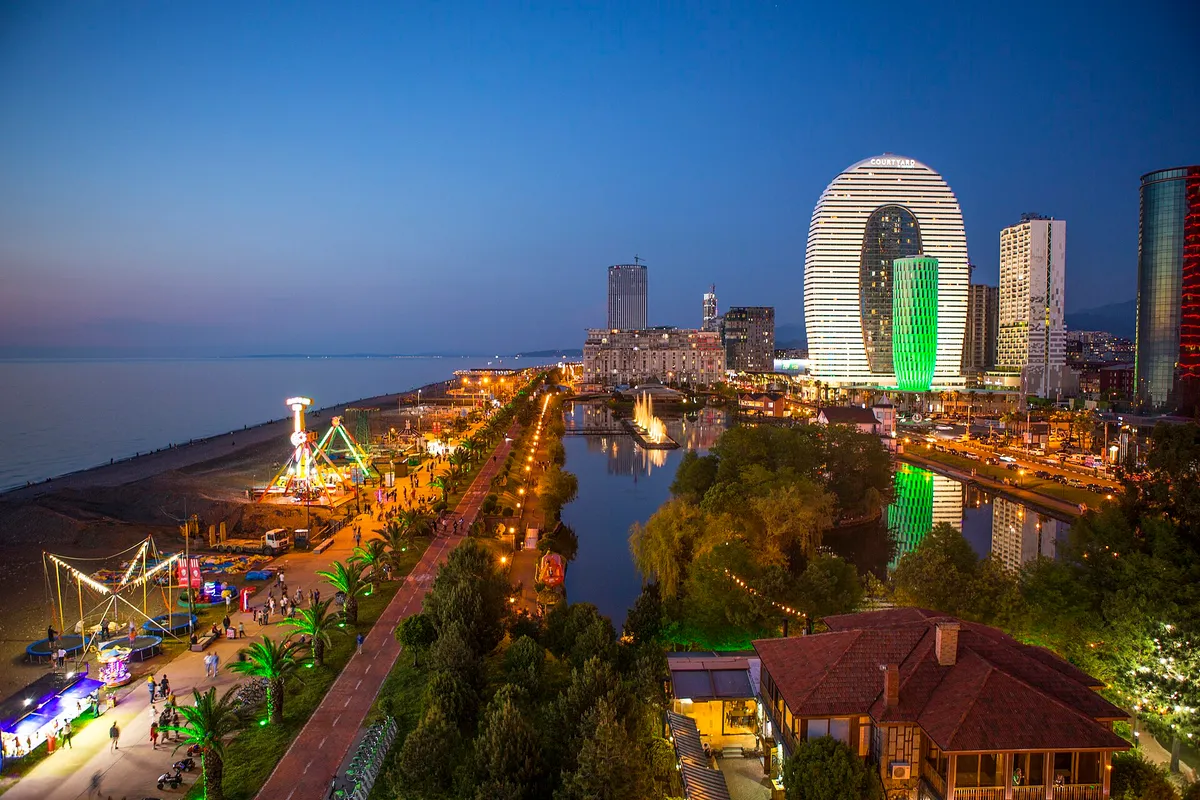
Photo: Olga1969 / Wikimedia Commons
Where to Stay in Tbilisi: Best Neighborhoods & Hotels (2026)
The Old Town for historic atmosphere, Fabrika for creative energy, Vera for leafy Georgian streets — find the right Tbilisi neighborhood for your trip in this 2026 guide.
TL;DR
- Best for atmosphere: Old Town (Kala) — sulfur baths, carved balconies, Narikala Fortress
- Best for creative culture: Fabrika or Marjanishvili area — Georgia’s most dynamic neighborhood
- Best for upscale local life: Vake or Vera — tree-lined streets, embassies, wine bars
- Best budget: Old Town guesthouses or Fabrika hostel — excellent value
- When to book: Tbilisi is manageable year-round; 2–3 weeks ahead is usually sufficient
Best Neighborhoods in Tbilisi
Tbilisi is the Caucasus’ most vibrant capital — a city of 1.5 million built along the steep banks of the Kura (Mtkvari) River gorge, with wooden balconied houses cascading down cliffs, sulfur bath domes, medieval fortresses, and one of the world’s most underrated wine cultures all within walking distance of each other. The city has transformed significantly since 2010, with a creative class and international tourism infrastructure building on top of the Soviet and pre-Soviet fabric.
| Neighborhood | Vibe | Price Range | Best For |
|---|---|---|---|
| Old Town (Kala) | Historic, charismatic | €30–250/night | Atmosphere, sightseeing |
| Fabrika / Chugureti | Creative, bohemian | €15–150/night | Young travelers, nightlife |
| Rustaveli Avenue | Central, cultural | €50–200/night | Museums, Opera, convenience |
| Vake | Upscale, residential | €60–220/night | Local life, parks |
| Vera | Embassy, leafy | €55–200/night | Quiet, European feel |
Old Town (Kala) — The Heart of Historic Tbilisi
Tbilisi’s Old Town is one of Eastern Europe and the Caucasus’ most extraordinary urban landscapes — a dense neighborhood of carved wooden balconied houses in various states of restoration and dignified decay, Orthodox churches, a Persian-era fortress (Narikala), a mosque, synagogues, and the Abanotubani (sulfur bath district) all within a 20-minute walk. The streets are uneven, the neighborhoods blend into each other unexpectedly, and the architecture spans fifteen centuries.
Who it’s for: First-time visitors, those who want to be in the most atmospheric part of the city, history and architecture enthusiasts.
Price range: Budget guesthouses from €25/night; boutique hotels €60–140/night; upscale hotels €100–250/night.
The Ambassadori Tbilisi on Sioni Street is the Old Town’s best upscale option at €120–250/night. The Hotel Metechi Palace (slightly outside the Old Town, Avlabari area across the river) offers some of Tbilisi’s best views at similar rates. Many excellent guesthouses in the Old Town’s side streets offer clean, atmospheric rooms from €30–55/night.
Fabrika and Chugureti — Creative Tbilisi
Fabrika (a converted Soviet sewing factory on Davit Agmashenebeli Avenue) is Tbilisi’s most talked-about cultural space — a courtyard compound of container units housing hostels, independent restaurants, craft wine bars, design shops, tattoo studios, and a rotating schedule of concerts and events. The surrounding Chugureti neighborhood is Tbilisi’s most energetically gentrifying area.
Who it’s for: Budget and mid-range travelers, those interested in contemporary Georgian culture, nightlife enthusiasts (the Fabrika compound is one of Tbilisi’s main evening gathering points), and solo travelers.
Price range: Dorms from €10/night; private rooms from €20/night; mid-range guesthouses €45–90/night.
Fabrika Hostel itself offers well-designed private rooms from €20–35/night in the container units. The compound’s bars and restaurants are open until late and genuinely good.
Rustaveli Avenue — Cultural Center
Rustaveli Avenue is Tbilisi’s grand civic boulevard — the National Museum (Tbilisi’s finest museum, excellent collection of Georgian and Caucasian artifacts), the Georgian National Opera, the Parliament building, several galleries, and the Rustaveli Theatre all line this Haussman-style avenue. It’s the most elegant part of central Tbilisi.
Who it’s for: Cultural tourists, those visiting museum and performance venues, business travelers, and those who want the most walkable balance of Old Town and modern Tbilisi.
Price range: €50–200/night; mid-range to boutique options.
The Rooms Hotel Tbilisi on Rustaveli is the avenue’s design standout at €100–200/night. Several mid-range hotels offer comfortable accommodation at €60–100/night.
Vake — Tbilisi’s Garden City
Vake is the leafy, upscale residential neighborhood west of the center — wide streets, well-maintained apartments, Vake Park (a pleasant forested park with an amusement area), and some of Tbilisi’s best independent restaurants. It’s where the diplomatic community and Georgian professionals live.
Who it’s for: Longer-stay travelers, those who want genuine neighborhood life, couples who prefer quieter evenings with quality restaurants nearby.
Price range: €60–220/night; boutique and apartment rental options.
Several boutique guesthouses and serviced apartments in Vake offer excellent value at €70–110/night. The neighborhood’s restaurant scene — particularly the concentration around Barnov and Irakli II Streets — is excellent.
How to Book
Tbilisi is accessible year-round with no dramatic seasonal patterns for tourism. The Tbilisi International Film Festival (March) and Tbilisoba City Festival (October) create brief demand spikes; otherwise, 2–3 weeks ahead is more than sufficient. New Wine Festival (May) is particularly worth planning around — it coincides with some of the year’s best weather.
Getting around: Tbilisi’s metro covers the main corridors cheaply (₾1/journey). Bolt operates extensively and is cheap (€2–4 for most journeys). The Old Town’s steep streets reward walking; the funicular connects Rustaveli area to Mtatsminda Park and the television tower above.
FAQ
What is the sulfur bath district (Abanotubani) and should I go? Abanotubani is a neighborhood at the base of the Old Town cliff built over natural hot sulfur springs — the domed bath houses (some dating to the 17th century) are Tbilisi’s most unique experience. Both public (€3–5/person) and private rooms (€20–40/hour) are available. The sulfur smell is intense; the water is genuinely hot (37–40°C); the experience is deeply Georgian and worth the investment.
What is Georgian wine? Georgia is the world’s oldest wine-making region (8,000+ years of history, archaeological evidence of grape cultivation dating to 6,000 BCE). The traditional method — fermenting wine in buried clay vessels called qvevri — produces amber wines (orange wines) before the term was coined. Rkatsiteli (white) and Saperavi (red) are the most common varietals. Tbilisi’s natural wine bars, concentrated in the Fabrika and Old Town areas, are among the world’s best for exploring this tradition.
Is Georgia a safe destination? Very safe for tourists — Georgia has low crime rates and a culture of hospitality toward guests. Standard precautions apply in Tbilisi’s nightlife areas. The regions of South Ossetia and Abkhazia (both under Russian influence after 2008) are politically complex and not recommended for independent tourist travel.
How do I get from Tbilisi to Batumi? By marshrutka (shared minibus) from Tbilisi’s Didube bus station (5 hours, €8) or by overnight train (various services, 5–6 hours). The train is more comfortable for overnight travel; the marshrutka is faster for daytime. Both arrive at Batumi Railway Station in the city center.