
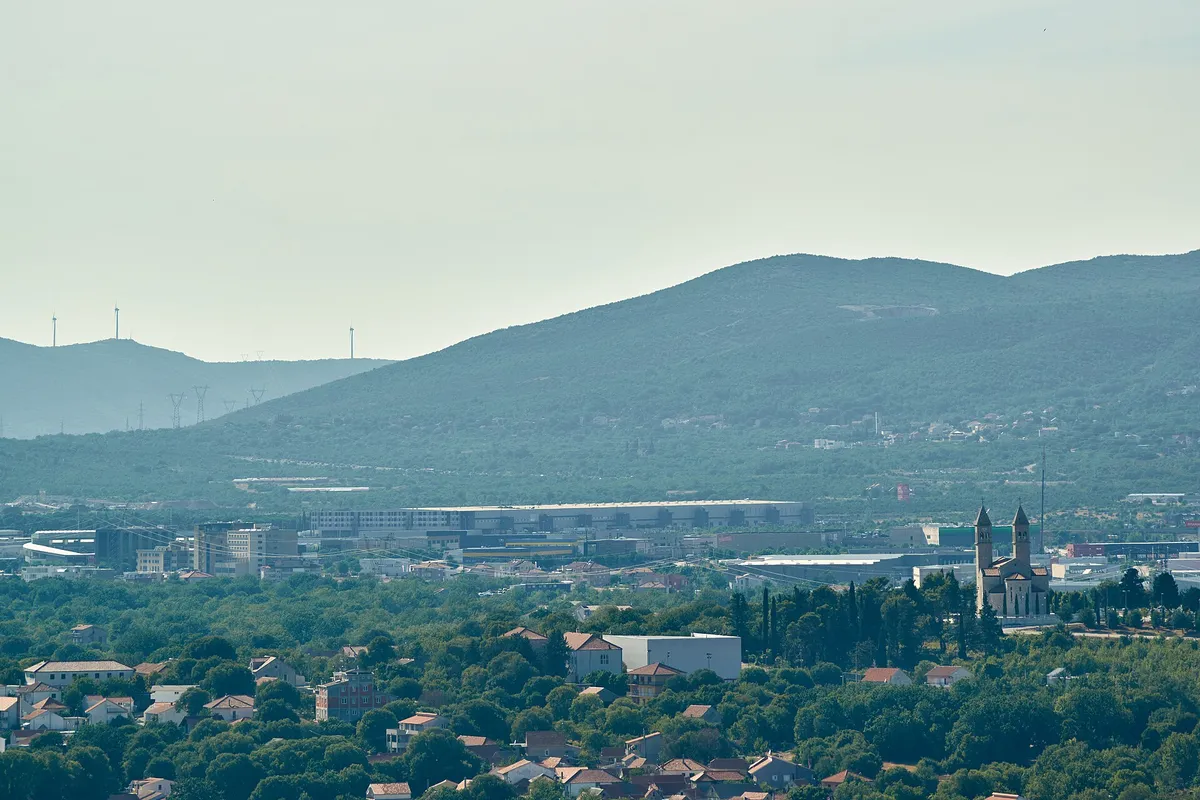
Photo: Anil Öztas / Wikimedia Commons
Where to Stay in Split, Croatia: Neighborhoods & Best Hotels
Inside Diocletian's Palace or beach resort? The best areas to stay in Split, Croatia — with hotel picks for every budget.
Split is one of those cities that confounds first-time visitors. The centrepiece — a Roman emperor’s retirement palace, built around 300 AD and still inhabited — is not a museum. People live inside its walls. Laundry hangs between columns that have stood for 1,700 years. Restaurants and bars occupy what were once imperial ceremonial halls. The palace is the old town, and the old town is the palace; the two are inseparable. Beyond that labyrinth of limestone, Split extends toward pebbly beaches, a palm-lined promenade, and a ferry port connecting the mainland to Hvar, Brač, Korčula, and the rest of the Dalmatian islands. Choosing where to stay shapes your entire experience — and HaveNaGo’s breakdown below should make that decision straightforward.
The city is compact enough to walk end to end in 40 minutes, yet distinct enough in its neighbourhoods to matter considerably where you plant your base.
TL;DR
- Best for atmosphere and location: Old Town / Diocletian’s Palace area — nothing compares for first-timers, despite the noise
- Best for families and beach access: Bacvice and Firule — walkable to the old town, sand and pebble beaches on the doorstep
- Best for resort comfort and quiet: Western suburbs (Meje / Znjan) — beachfront properties, away from the nightlife
- Best for budget travellers: Central hostel zone near the bus terminal — efficient, social, close to ferries
Split Neighborhoods at a Glance
| Area | Best For | Price Range | Notes |
|---|---|---|---|
| Old Town / Palace | Atmosphere, sightseeing, nightlife proximity | €140–€280/night | Noise from bars until late; ancient streets |
| Bacvice / Firule | Families, beach access, local feel | €80–€160/night | 10 min walk to old town; popular in summer |
| Meje / Western Suburbs | Resort comfort, quiet evenings | €150–€260/night | Further from centre; best beachfront hotels |
| Stobrec / East | Budget apartments, longer stays | €50–€90/night | 20 min bus; suits self-caterers |
| Near Bus/Ferry Terminal | Budget hotels, backpackers | €20–€100/night | Convenient for early departures; not scenic |
Diocletian’s Palace and Old Town
Staying inside Diocletian’s Palace means sleeping within walls that predate the medieval period by several centuries. The streets are narrow enough to touch both sides with outstretched arms; cats pick their way over marble worn smooth by millennia of feet; the cathedral — converted from the emperor’s mausoleum — rings its bells through walls that no amount of double glazing fully muffles.
The atmosphere is genuinely extraordinary. In the early morning, before the day-trippers arrive from cruise ships and Hvar, the palace is ghostly and beautiful. The Peristyle (the central colonnaded square) and the Golden Gate are best seen before 8am. At night, the old town buzzes with outdoor bars and restaurants; it is one of the most animated small city centres in the Adriatic.
The trade-off is noise. The palace is not designed for quiet evenings, and many properties directly on the main bar strips (Majstora Jurja, the Vestibule area) can be loud until 1am or later in July and August. Seek accommodations on the northern or western fringes of the palace for better sleep.
Judita Palace (Miloševića Poljana, inside the palace walls) is the benchmark boutique stay within the old town. It occupies a converted baroque palace on a relatively quiet lane, offering 12 rooms styled with Dalmatian stone, exposed beams, and contemporary comfort. The rooftop terrace has views over the palace rooftops to the sea. Prices run €180 to €280 per night in peak season, room only. Book well ahead for July.
Heritage Hotel Life Palace (Trumbićeva obala, on the Riva promenade) sits just outside the Brass Gate of the palace, directly on Split’s famous waterfront promenade. Rooms facing the sea offer unobstructed Adriatic views; rooms facing inward are quieter. The building is a 19th-century former municipal palace, thoughtfully converted. Prices €140 to €220 per night in season.
Bacvice and Firule Beach Area
Ten minutes’ walk southeast of the palace walls, Bacvice is the most popular urban beach in Split and the home of picigin — a uniquely Dalmatian sport involving players slapping a small ball above the water’s surface in the shallows. The beach is sandy-ish by Croatian standards (actually fine gravel and pebble, but comfortable), and the shallow bay makes it ideal for children. The area has a genuinely local feel — this is where Split residents actually swim, not just the tourists.
Firule, immediately adjacent, is slightly less crowded and backed by a park. Both areas have good concentrations of restaurants serving grilled fish and ćevapi at prices notably lower than the old town.
Hotel Globo is the most practical mid-range option in this area. It is a clean, well-managed three-star property roughly 500 metres from the beach and an easy fifteen-minute walk from the Riva. Rooms are comfortable if not atmospheric; the staff are efficient and well-informed about the city. Prices: €90 to €140 per night in season. An honest, solid choice for travellers who want proximity to both beach and old town without overpaying for palace glamour.
Western Suburbs: Meje and Znjan
The western coastal strip — stretching from the residential neighbourhood of Meje outward toward Znjan — is where Split’s resort-style accommodation concentrates. This is the right choice for travellers who want a beachfront pool, morning walks along a maintained coastal promenade, and evenings quiet enough for early sleep. It is also where the better-known international brands operate.
The Radisson Blu Resort Split sits directly on the Znjan waterfront, roughly four kilometres east of the old town by road (though the coastal path is a pleasant 40-minute walk). The property has a proper beach, multiple pools, a spa, and the kind of service infrastructure that large-format beach hotels do well. Rooms in the sea-facing categories have wide balconies and clean Adriatic views. Prices run from €160 to €260 per night in peak season depending on room category. It is a genuinely comfortable base for families or couples who want beach resort days combined with old-town evenings — the shuttle or a short taxi covers the distance easily.
Budget Options
Split offers solid budget accommodation, particularly around the main bus and ferry terminal area near Domovinskog rata. The transport hub location means early morning ferries to the islands are a five-minute walk — a genuine practical advantage.
Hostel Split Central sits a short walk from the Riva and the palace and offers mixed dormitories from €20 to €35 per night depending on season and dorm size. It is well-reviewed for cleanliness and social atmosphere, with a rooftop terrace that fills up in the evenings.
For budget-conscious travellers who want a private room, the apartment rental market in Split is extensive and often excellent value. Apartments in Bacvice and the Meje area frequently offer studio and one-bedroom units from €50 to €80 per night in shoulder season, rising to €80–130 in peak summer. Look for hosts with verified reviews; the standard in Split is generally high because the local hosting culture is developed and competitive. Many apartments come with air conditioning (essential in August), private parking (rare and valuable), and kitchen access that significantly cuts food costs.
Getting Around Split
Split’s compact centre is walkable. From the old town’s Riva promenade, the Bacvice beach is a ten-minute walk; the bus and ferry terminal is three minutes. The western Meje neighbourhood is around 20 minutes on foot along the coastal path. Central Split has no metro; taxis and rideshare apps (Uber is active here) cover anything beyond walking distance efficiently, and fares are low by Western European standards.
Ferry terminal proximity matters if you plan island day trips. The Jadrolinija car ferries and fast catamarans to Hvar Town, Stari Grad (Hvar), Supetar (Brač), and the wider islands all depart from the terminal directly adjacent to the old town. Being based anywhere in central Split means a five-to-fifteen-minute walk to departure — no transfers required.
Parking is Split’s perennial challenge. The old town is pedestrianised; surrounding streets are paid zones with limited availability in peak season. If you are arriving by car and not staying at a hotel with private parking (the Radisson Blu and some western suburbs properties have this), seriously consider parking at Sukoišan garage on the northern edge of the palace area for the duration of your stay and exploring entirely on foot.
When to Visit Split
July and August are peak. Temperatures regularly reach 32–35°C, the sea is warm enough to swim by mid-morning, the Riva is packed until midnight, and prices are at their highest. Ferries to the islands run at maximum frequency. It is lively, crowded, and expensive — and for many visitors, exactly what they want.
May, June, and September offer the most balanced experience: warm enough to swim (especially June onwards and September), crowds notably thinner, prices 20–40% lower than peak, and the city still fully operating. September is arguably the finest month — the sea is at its warmest, having absorbed the entire summer, and the golden evening light on limestone is exceptional.
October to April sees many tourist-facing businesses reduce hours or close. The old town and the Riva remain alive — this is a real city of 170,000 people, not a seasonal resort — but the island ferries run minimal schedules and some hotels offer significant off-season discounts. For those interested in the city itself rather than the beach, November and March visits can be surprisingly rewarding.
FAQ
Is staying inside Diocletian’s Palace worth it? Absolutely, for the atmosphere alone. Waking up inside a structure that housed a Roman emperor and has been continuously inhabited for 1,700 years is an experience no other city in the Adriatic can match. Accept the noise trade-off (particularly on weekends in summer), choose a room on a quieter lane, and bring earplugs as backup. For a first visit to Split, at least one night in the palace area is worth the premium.
How far is Split from Dubrovnik? By direct bus, approximately 3 to 3.5 hours on the modern coastal motorway. By car, around 4 to 4.5 hours including the Neum corridor (where you briefly pass through Bosnia and Herzegovina). Ferry and catamaran combinations — via Hvar or Korčula — are possible and scenic but take considerably longer. Dubrovnik makes a comfortable day trip from Split or vice versa if you start early; an overnight in each city is the more relaxed option.
What is the average hotel price in Split? In peak season (July–August), expect to pay €80–160 for a reliable mid-range hotel or well-located apartment, and €140–280 for boutique and heritage properties in or near the old town. Prices in shoulder season (May–June, September) drop meaningfully. Budget dormitories start around €20–35.
Can you visit Split as a day trip? Yes, easily, from nearby Hvar (fast catamaran: 1 hour), Makarska (bus: 45 min), and Trogir (bus: 30 min). From Dubrovnik (3+ hours) it is technically feasible but tiring — an overnight is more comfortable. If you are coming from further afield specifically for Split, one night is the recommended minimum; two nights lets you do the old town properly and reach one island.