
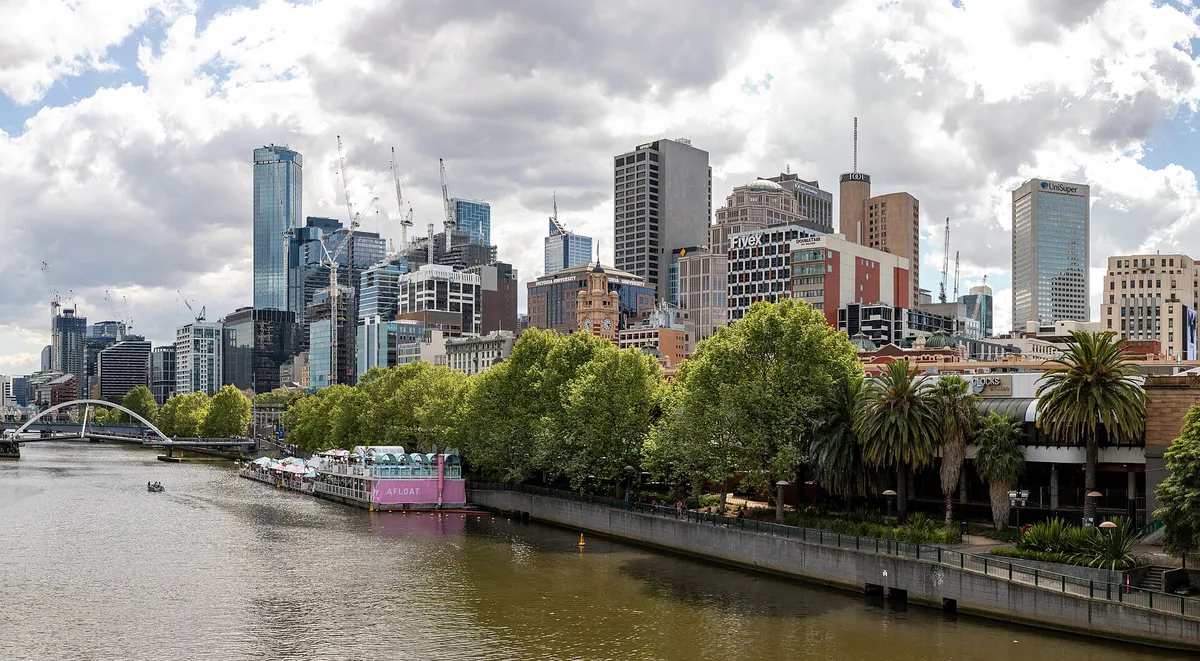
Photo: Dietmar Rabich / Wikimedia Commons
Where to Stay in Melbourne: Best Areas & Hotels for Every Budget
CBD laneways, Fitzroy cafes, or St Kilda beach? The complete guide to Melbourne's best neighborhoods and hotels for 2026.
Melbourne doesn’t have one center — it has half a dozen, each with its own personality. Whether you want to be steps from rooftop bars and hidden laneway coffee shops, waking up to Yarra River views, or cycling to a beach on a Sunday morning, the city delivers. Getting your neighborhood right is the single most important accommodation decision you’ll make for this trip.
TL;DR
- Stay in the CBD if it’s your first visit and you want maximum walkability, the best café culture, and easy access to trams, trains, and day trips.
- Choose Southbank for luxury hotels, waterfront dining, and the arts precinct — ideal if you’re splurging or attending a conference.
- Book Fitzroy or Collingwood if you want a local feel: independent bars, weekend markets, and some of Melbourne’s best restaurants without the tourist bustle.
- Head to St Kilda for beach access, a relaxed Esplanade vibe, and slightly lower prices than the CBD — best if you’re staying more than a few days.
Melbourne Neighborhoods at a Glance
| Area | Best For | Price/Night | Vibe |
|---|---|---|---|
| CBD | First-timers, business travelers | €130–320 | Energetic, walkable, café-dense |
| Southbank | Luxury, waterfront views | €200–400+ | Polished, arts-focused |
| South Yarra | Shopping, upscale dining | €150–280 | Chic, boutique-heavy |
| Fitzroy | Local culture, nightlife | €120–180 | Bohemian, creative |
| Collingwood | Bars, galleries, brunch | €120–160 | Gritty-cool, gentrifying |
| St Kilda | Beach, casual dining | €90–200 | Breezy, eclectic |
| Carlton | University district, Italian food | €100–160 | Low-key, intellectual |
Melbourne CBD
The Central Business District is the obvious starting point for first-time visitors. The free tram zone covers the inner CBD, which means you can hop between Flinders Street Station, Federation Square, the Queen Victoria Market, and Chinatown without spending a cent on transport. The famous laneways — Hosier, Degraves, Centre Place — are all here, packed with street art, espresso bars, and hole-in-the-wall restaurants.
Hotel Lindrum (~€180/night) is one of the CBD’s most characterful stays. Built inside a heritage-listed billiards hall on Flinders Lane, it keeps the original timber panelling and has just 59 rooms — small enough to feel boutique, central enough to walk everywhere. The restaurant is genuinely good, not just a hotel afterthought. It sits squarely in the mid-range bracket and consistently earns its price.
Ovolo Laneways (~€160/night) leans into Melbourne’s creative identity hard. A converted warehouse on Little Bourke Street, it comes with a free minibar stocked on arrival, a rooftop bar that actually draws locals, and interiors that feel more like an art gallery than a chain hotel. Rates include a daily happy hour and a generous breakfast, which makes the per-night number more competitive than it first appears. If you’re traveling with someone who cares about design, this is the pick.
For budget CBD options, there are several well-located apartment hotels along Spencer Street and around Southern Cross Station that offer studio rooms in the €110–140 range — useful if you need a kitchen.
Southbank & South Yarra
Southbank sits directly across the Yarra from the CBD and is home to the Melbourne Arts Centre, the National Gallery of Victoria, and a stretch of waterfront restaurants that gets busy on warm evenings. It’s slightly more polished and quieter than the CBD proper, which makes it appealing for travelers who want luxury without the noise.
The Langham Melbourne (~€280/night) is the standout address in this precinct. It occupies a prime position on the south bank of the Yarra, with an award-winning pool that overlooks the city skyline. Service levels are genuinely five-star — this is not a hotel that has the name without the substance. The Chuan Spa is worth booking in advance. Rates vary significantly by season; shoulder months (April–May and September–October) are the sweet spot for value.
Crown Towers Melbourne (~€320/night) is the flagship tower of the Crown casino and entertainment complex. It’s not for everyone — the casino floor is enormous and the whole precinct has a Las Vegas energy — but if you want absolute top-tier luxury, the suites here are among the largest in Melbourne, and the sheer volume of restaurants, bars, and facilities on-site is unmatched. The rooms themselves are impeccably finished.
South Yarra, a 10-minute tram ride from the CBD, adds boutique hotels along Chapel Street and Toorak Road, mostly in the €150–200 range, with a more residential, upscale feel.
Fitzroy & Collingwood
These adjoining inner-north suburbs are where Melbourne’s creative class actually lives. Brunswick Street in Fitzroy has been a hub for independent bookshops, vintage clothing stores, and vegetarian restaurants since the 1980s; Smith Street in Collingwood is arguably trendier right now. Neither neighborhood has large hotels — accommodation here tends to be boutique guesthouses, converted terrace houses, and small apartment hotels, typically ranging from €120 to €160 per night.
Look for properties on or near Smith Street, Gertrude Street, and the blocks between them. Several restored Victorian terrace conversions offer six to twelve rooms in a genuinely residential setting, which feels very different from a CBD hotel tower. The trade-off is that you’ll need a tram or rideshare to reach the CBD (about 10–15 minutes) and walking to the main train stations isn’t practical. The reward is waking up to some of Australia’s best coffee at your doorstep and having easy access to pubs and bars that don’t appear on any tourist map.
St Kilda
St Kilda sits about 6 km south of the CBD on Port Phillip Bay. It’s famous for the Esplanade, the ornate Luna Park gates, Acland Street’s cake shops, and a Sunday arts market that’s been running for decades. The beach is swimmable in summer (November to March) and the suburb has a pleasantly mixed-age crowd — backpackers, families, and long-term residents all coexist.
Accommodation ranges from beachside apartments and small hotels on Fitzroy Street to mid-range properties a block or two inland. Expect to pay €90–180 for a decent room. The tram connection to the CBD is good (routes 16 and 96 run frequently) but it’s a 25–30 minute ride, so St Kilda works best for visitors who plan to spend significant time in the neighborhood itself rather than using it purely as a sleep base.
Budget Options
YHA Melbourne Central (~€35/night dorm, ~€90 private room) is the benchmark for budget accommodation in the city. It’s located in the heart of the CBD near Melbourne Central shopping center and RMIT, which means the location rivals hotels charging three times the price. The facilities are consistently well-maintained — clean kitchens, reliable lockers, a common room that actually has a social atmosphere. Private rooms book out fast, especially on weekends and during major events like the Australian Open and the Formula 1 Grand Prix; reserve at least three weeks ahead if you want a private ensuite.
Beyond YHA, there are several independent hostels in Fitzroy and St Kilda offering dorm beds in the €28–40 range, with the St Kilda options appealing if beach access matters more than CBD proximity.
HaveNaGo regularly updates availability and current rates for Melbourne properties, so it’s worth checking before you finalize your booking — prices shift significantly around major events.
FAQ
What is the best area to stay in Melbourne for first-time visitors? The CBD. You can walk to the city’s main attractions, the free tram zone covers your basic transport needs, and the concentration of restaurants and coffee shops on every block means you won’t need to plan meals in advance. Hotel Lindrum and Ovolo Laneways are the two most-recommended mid-range picks here.
Is Melbourne’s CBD safe at night? Generally yes. The CBD and Southbank are well-lit, busy, and patrolled. Flinders Lane and Degraves Street remain active late into the evening with diners and bar-goers. The main areas to stay aware in late-night hours are around Southern Cross Station and King Street (the club strip), as with any city center after midnight.
How much does a hotel in Melbourne cost on average? Budget travelers can find clean hostel privates for €70–90 or dorm beds for €30–40. Mid-range hotels run €130–200 per night. Luxury properties like The Langham or Crown Towers start around €250–280 and can climb significantly during peak periods (Australian Open in January, Formula 1 in March, AFL Grand Final in September/October).
Do I need a car in Melbourne? No — and a car is actually a liability in the CBD because parking is expensive and the tram network is excellent. The free tram zone covers the inner city, and paid zones extend well into the suburbs. For day trips to the Dandenong Ranges, the Mornington Peninsula, or the Great Ocean Road, renting a car for a day or two makes sense, but as a base for exploring Melbourne itself, public transport is more than sufficient.
Melbourne rewards travelers who think carefully about where they sleep. The city is large enough that neighborhood choice genuinely changes your daily experience — not just your commute time, but the coffee you drink, the bars you stumble into, and the version of the city you come away remembering. The CBD is the default for good reason, but if you have three or more nights, consider splitting your stay or at least spending a full evening in Fitzroy and St Kilda to get a sense of what Melbourne looks like when it’s being itself, not just performing for visitors.