
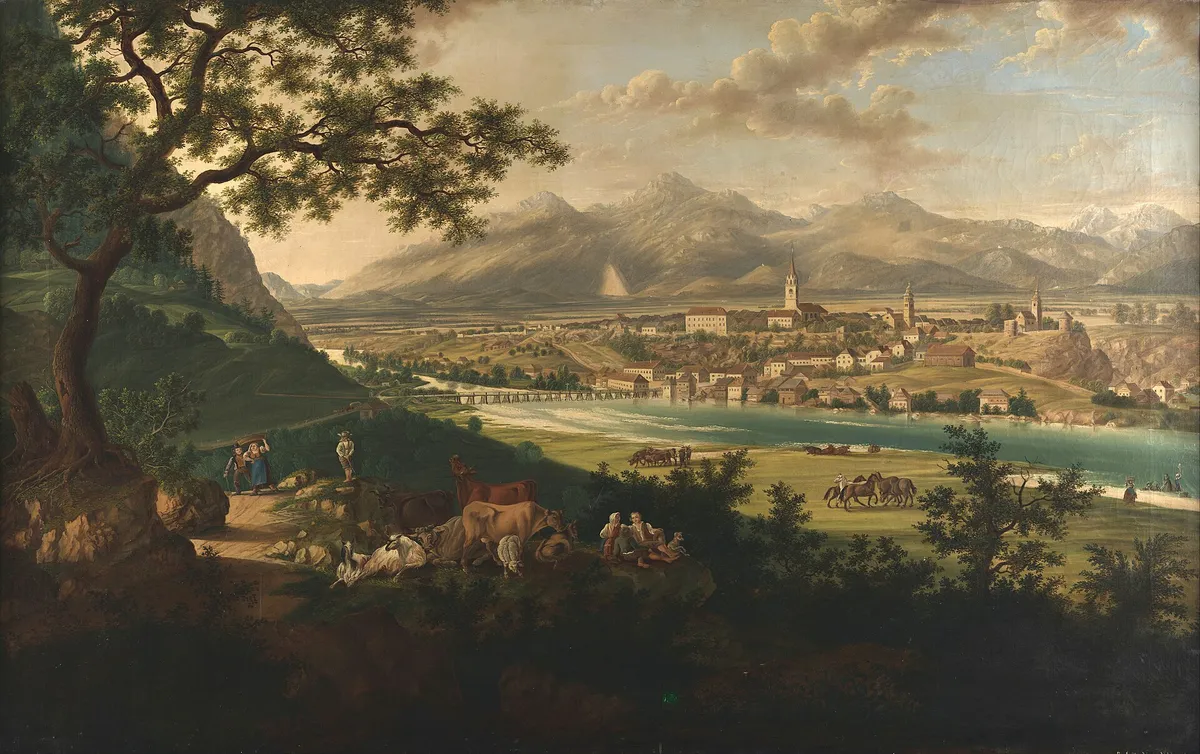
Photo: Anton Hayne / Wikimedia Commons
Where to Stay in Ljubljana: Best Neighborhoods & Hotels (2026)
The Old Town under the castle, Krakovo for local charm, BTC City edge for budget options — this guide covers the best Ljubljana bases for your 2026 trip.
TL;DR
- Best for most travelers: Old Town / Castle Hill area — pedestrianized, café-lined, castle views
- Best boutique stay: Old Town or Krakovo — charming alternatives, local neighborhood feel
- Best budget: Just outside the Old Town or near the train station — affordable, still central
- Best for parks: Tivoli Park area — Ljubljana’s major park, quieter residential surroundings
- When to book: Ljubljana is manageable; 2–3 weeks ahead is usually sufficient year-round
Best Neighborhoods in Ljubljana
Ljubljana is Slovenia’s compact, walkable capital — a city of 300,000 that feels like a large medieval town rather than a modern capital. The triple-bridged Ljubljanica river divides the Baroque Old Town (on the west bank) from the Classicist and Functionalist neighborhoods to the east. Ljubljana Castle sits on a rock directly above the Old Town. Most of what visitors want to see and do is within 20 minutes’ walk of the main square (Prešeren Square).
| Neighborhood | Vibe | Price Range | Best For |
|---|---|---|---|
| Old Town | Historic, lively | €55–300/night | Most travelers, castle proximity |
| Krakovo | Local, café culture | €45–180/night | Residential, artisan spirit |
| Center (Kongresni trg area) | Cultural, walkable | €50–250/night | Museums, Tivoli Park |
| Near Train Station | Practical, budget | €30–140/night | Budget, transit |
Old Town — Ljubljana’s Showcase
Ljubljana’s Old Town is the city’s most visited and most atmospheric area — the Baroque façades along the Ljubljanica river, the outdoor terraces that line both banks, the covered Plečnik Central Market (designed by legendary architect Jože Plečnik), and the Triple Bridge connecting the Old Town to the Prešeren Square. The funicular or walking path leads up to the castle with panoramic views.
Who it’s for: All first-time visitors, couples on romantic city breaks, and travelers on short stays who want maximum experience in minimum time.
Price range: Budget guesthouses from €45/night; mid-range boutique hotels €80–170/night; upscale hotels €150–300/night.
The Grand Hotel Union on Miklošičeva is Ljubljana’s most historic hotel — a 1905 Art Nouveau building with elegant common areas and rates from €130–250/night. The Vander Urbani Resort on the Ljubljanica riverbank is an excellent boutique option at €100–190/night. Several smaller guesthouses in the Old Town streets offer atmospheric rooms from €50–80/night.
Krakovo — Ljubljana’s Garden Quarter
Krakovo is a small historic neighborhood on the south side of the Old Town — a grid of narrow streets, historic cottages, artists’ studios, and kitchen gardens that has been inhabited since Roman times (the Roman walls are still visible on Mirje Street). It’s the most characterful alternative to the Old Town proper, 10 minutes’ walk from the main square.
Who it’s for: Travelers on longer stays, those who want a local neighborhood experience, fans of architectural curiosity, and independent travelers who find tourist-core areas claustrophobic.
Price range: €45–180/night; mostly boutique guesthouses and apartment rentals.
Several boutique guesthouses and design apartment rentals in Krakovo offer genuinely distinctive accommodation at €60–100/night. The neighborhood’s independent cafes (Coffee Knapič, the Cacao chocolate shop) are among Ljubljana’s best.
Center (Kongresni Trg and Tivoli Area) — Culture and Parks
The central area around Congress Square (Kongresni Trg) and the path leading to Tivoli Park — Ljubljana’s main green space — is the cultural heart of the city: the Slovenian Philharmonic, the National Museum, the Museum of Contemporary Art, the Botanical Garden. Hotel concentration here is slightly lower than the Old Town but includes some excellent mid-range properties.
Who it’s for: Museum-goers, families, those who value park access, and travelers who want a calmer base than the Old Town.
Price range: €50–250/night.
The Hotel Cubo Ljubljana near Congress Square is a well-regarded design hotel with good service at €110–180/night. Several mid-range hotels and apartments in the Congress Square area offer solid value from €65–110/night.
How to Book
Ljubljana is a year-round destination — the Christmas markets (December) are one of Central Europe’s most atmospheric, and summer brings outdoor festivals and river-terrace culture. Dragon Carnival (Pust, February–March) and Ljubljana Festival (July–August, open-air classical concerts) create specific demand spikes, but outside these, 2–3 weeks ahead is usually sufficient.
Best season: May to September for outdoor café culture on the Ljubljanica; December for Christmas markets. April and October offer good weather with lower crowds. Summer temperature is around 25–28°C — pleasant rather than hot.
Day trips from Ljubljana: Lake Bled (55 km, 1 hour) is the most popular and genuinely essential; the Postojna Cave System (45 km, 30 min by car — one of the world’s largest cave systems, with a miniature railway inside); Predjama Castle (built into a cliff face, 50 km, extraordinary architecture); the Soča Valley (1.5 hours, the most beautiful river valley in Europe).
FAQ
Is Ljubljana worth visiting, or is it just a gateway to Lake Bled? Ljubljana deserves its own 1–2 days independently of Lake Bled. The Old Town is genuinely beautiful, the café culture on the Ljubljanica is exceptional, and the Plečnik architecture (nearly every significant public structure was designed or redesigned by Jože Plečnik, Ljubljana’s visionary 20th-century architect) is unique in Europe. The combination of Ljubljana + Lake Bled is one of Central Europe’s best short trips.
How big is Ljubljana and is it walkable? Very walkable — the Old Town is entirely pedestrianized, and the core tourist area can be crossed in 20 minutes. The city is small enough that Uber or taxi rides are rarely necessary for the central neighborhoods. Ljubljana’s bicycle sharing system (BicikeLJ) is also excellent for getting around quickly.
How do I get to Ljubljana? By air: Ljubljana Jože Pučnik Airport (Brnik, 26 km north) has direct flights from many European cities; Ryanair flies from London, Dublin, and other hubs. By train: Vienna (6 hours), Venice (3.5 hours, scenic Trieste route), Zagreb (2.5 hours), Budapest (6 hours). By bus: FlixBus and other international coaches serve Ljubljana from all neighboring countries.
What is Plečnik’s Ljubljana? Jože Plečnik (1872–1957) was a Slovenian architect who spent 40 years redesigning Ljubljana’s public spaces — the Triple Bridge, the Central Market, the National and University Library, the cemetery, the stadium, the fountains, the streetlamps. His work is so pervasive and distinctive that Ljubljana has been called a “museum of Plečnik architecture.” The whole is UNESCO World Heritage listed since 2021.