
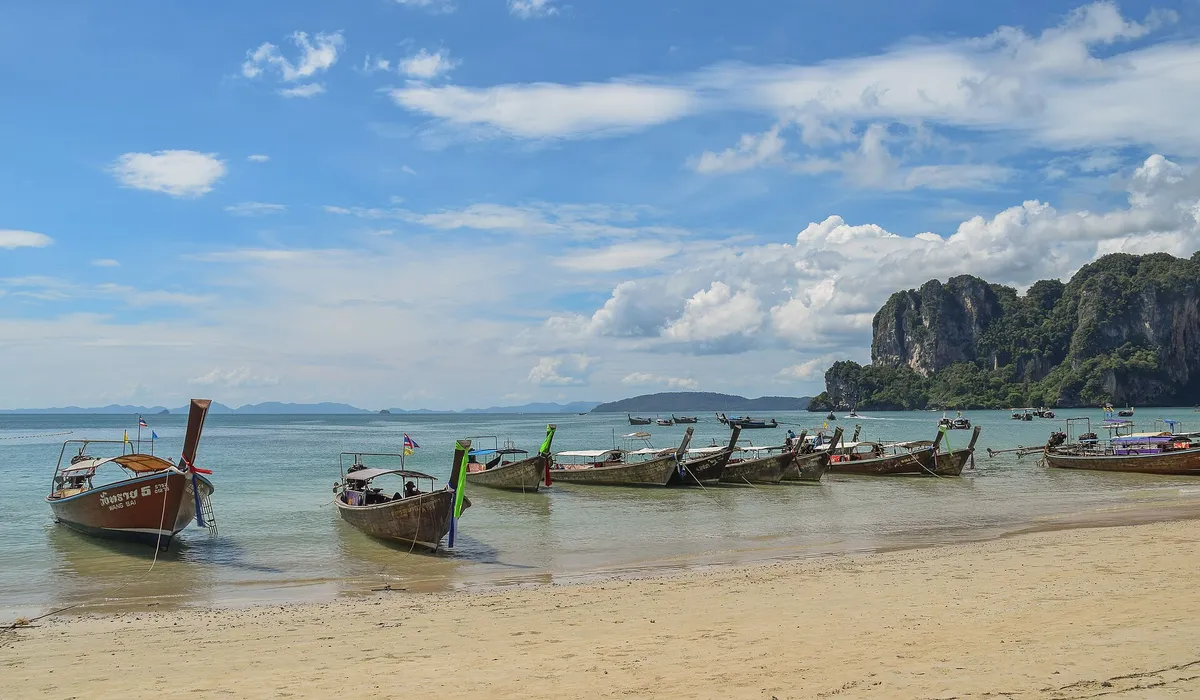
Photo: Krzysztof Golik / Wikimedia Commons
Where to Stay in Krabi: Best Areas & Hotels (2026)
Ao Nang for convenience, Railay for drama, Koh Lanta for escape — this guide covers every Krabi base and who each suits in 2026.
TL;DR
- Best for convenience: Ao Nang — most hotels, restaurants, and boat departure point
- Best for dramatic scenery: Railay Beach — car-free, limestone cliffs, accessible only by boat
- Best for budget: Ao Nang backpacker strip or Krabi Town
- Best for island escape: Koh Lanta — larger island with quieter beaches, 2 hours south
- When to book: November to April high season — book 4–6 weeks ahead for beachfront rooms
Best Areas to Stay in Krabi
Krabi province covers a wide area including the mainland town of Krabi, the Ao Nang beach strip, the car-free peninsula of Railay, and several offshore islands including Koh Lanta and Koh Phi Phi. Most visitors base themselves in Ao Nang for practicality, but the right choice depends heavily on priorities: Railay suits romantics willing to pay extra for the setting, Koh Lanta suits those seeking quieter island life, and Krabi Town suits budget travelers and those catching early morning ferries.
| Area | Vibe | Price Range | Best For |
|---|---|---|---|
| Ao Nang | Beach town, busy | €25–250/night | Most travelers, convenience |
| Railay Beach | Dramatic, car-free | €60–400/night | Romance, scenery, climbing |
| Koh Lanta | Laid-back island | €30–200/night | Escape, diving, longer stays |
| Krabi Town | Local, practical | €20–100/night | Budget, ferry access |
| Klong Muang | Upscale, quiet | €80–350/night | Luxury, uncrowded beach |
Ao Nang — Krabi’s Tourist Hub
Ao Nang is Krabi’s main beach town: a kilometer-long strip of hotels, restaurants, tour agencies, and massage parlors backed by jungle-covered limestone karsts. The beach itself is acceptable rather than exceptional — it’s the launching point that makes Ao Nang valuable. Long-tail boats depart directly from the beach for Railay, Koh Poda, and various snorkeling sites; speedboat tours to Phi Phi Islands and the Four Islands depart from the pier.
Who it’s for: First-time visitors to Krabi, those wanting maximum dining and activity options, families, and anyone using Krabi as a base for day trips.
Price range: Budget guesthouses from €20/night; mid-range hotels €50–130/night; beachfront properties €130–250/night.
The Centara Grand Beach Resort & Villas Krabi at the northern end of Ao Nang is the area’s best five-star option — a clifftop location with private boat access to a quieter beach section, infinity pools, and rates from €180–350/night. The Aonang Cliff Beach Resort commands excellent karst views from its hillside position at around €80–140/night. Budget travelers will find Ao Nang’s backpacker strip (inland from the beach) reliably well-stocked with clean guesthouses under €30/night.
Railay Beach — Accessible Only by Boat
Railay is a peninsula completely cut off from the mainland by sheer limestone cliffs, making it accessible only by long-tail boat from Ao Nang (15 minutes, around €3/person) or Krabi Town pier (45 minutes). No cars, no motorbikes — just beach, jungle, caves, and the most photographed karst scenery in Thailand. Railay has four distinct beaches: the busy west (boats, sunset bar), the quieter east (mangrove-backed), and the remote Phra Nang Cave Beach (world-class snorkeling, spectacular cave temple).
Who it’s for: Couples on a romantic trip, rock climbers (Railay’s overhanging limestone is among Southeast Asia’s finest sport climbing), travelers who want genuine beauty with some infrastructure, and anyone willing to pay a slight premium for an extraordinary setting.
Price range: Budget longhouses from €40/night; mid-range bungalows €80–160/night; luxury properties €200–400/night.
The Rayavadee Resort is Railay’s landmark luxury property — circular pavilion-style villas set in a coconut grove between Railay Beach and Phra Nang Cave Beach, with a private beach access at both. Rates run €400–800/night and represent excellent value for an isolated luxury resort of this quality. The Railay Bay Resort & Spa provides solid mid-range accommodation on Railay West Beach from €100–160/night.
Koh Lanta — Island Life on a Bigger Scale
Koh Lanta Yai is a long, narrow island 2 hours south of Krabi Town by ferry (or 1.5 hours by speedboat). It’s bigger and quieter than the islands closer to Krabi — multiple beaches on the west coast, a small town (Old Town Lanta) with Sino-Portuguese shophouses, and a significant diving and snorkeling scene accessing the Lanta Marine National Park. It’s genuinely slower and less packaged than Ao Nang.
Who it’s for: Divers and snorkelers, families wanting a quiet beach holiday, travelers who’ve done the crowded Thai island circuit and want something calmer, and those staying more than a week.
Price range: Budget bungalows from €25/night; mid-range resorts €60–150/night; boutique properties €100–250/night.
The Pimalai Resort & Spa at the south end of Koh Lanta is the island’s finest property — a hillside resort with private beach access, villas in tropical garden settings, and rates from €200–400/night. The Sri Lanta Resort provides excellent mid-range value with a beachfront position and pool at €70–120/night. Multiple budget bungalow operations on Had Khlong Dao and Had Khlong Khong beaches run €25–50/night.
Krabi Town — The Practical Base
Krabi Town is the provincial capital — a real working city with a night market, riverside restaurants, and none of the beach infrastructure. Its value lies in excellent transport connections (ferry pier for Koh Lanta, boats to Railay, airport transfers) and low prices. It’s not a destination in itself, but staying here makes early-morning ferry logistics significantly easier.
Who it’s for: Budget travelers, those with early ferries or late arrivals, and travelers who want to experience Thai provincial life between beach days.
Price range: Guesthouses from €15/night; mid-range hotels €40–80/night.
The Krabi River Hotel on the Krabi River provides a comfortable base with river views and rates around €55–80/night. Budget guesthouses near the ferry pier and Chao Fah Road come in under €25/night and are adequate for transit nights.
How to Book
Krabi’s high season (November to April) is well-defined — dry northeast monsoon weather, calm seas, and fully operational boat services. The wet season (May to October) sees reduced ferry services, rougher seas, and some resort closures on smaller islands. Ao Nang and Koh Lanta remain largely operational year-round; Railay is accessible in all weather, though wave conditions on the west beach can be rough in monsoon months.
Book beachfront Ao Nang and Railay properties 4–6 weeks ahead for Christmas/New Year and late February (Chinese New Year visitors from Singapore and Malaysia). Shoulder season (October to early November) is excellent — post-monsoon water clarity, pre-peak prices, and virtually no crowds.
FAQ
Is Railay Beach worth staying at instead of Ao Nang? For a romantic trip or specific interest in the scenery and rock climbing, yes — the setting is exceptional and the boat-only access keeps it relatively quiet. For first-time visitors who want maximum flexibility and day-trip options, Ao Nang is more practical.
How do you get from Krabi Airport to Ao Nang? Krabi Airport is 45 minutes from Ao Nang by taxi (€15–25) or minibus (€8–12 per person, requires waiting for a full van). There is no public transport. For Railay, you need to reach the Ao Nang beach or Krabi Town pier first, then take a long-tail boat (€3–5 per person).
Can you visit Koh Phi Phi from Krabi? Yes — speedboat day trips to Phi Phi from Ao Nang take about 45 minutes and cost €35–55/person including snorkeling stops. Alternatively, ferries operate regularly from Krabi Town pier for around €15 each way if you want to stay overnight on Phi Phi.
What is the best time to visit Krabi? November to February is peak season with the most reliable weather. March and April are hotter but still dry. May to October is the monsoon — boats still run but sea conditions are unpredictable, and the Phi Phi Islands experience more crowded conditions.