
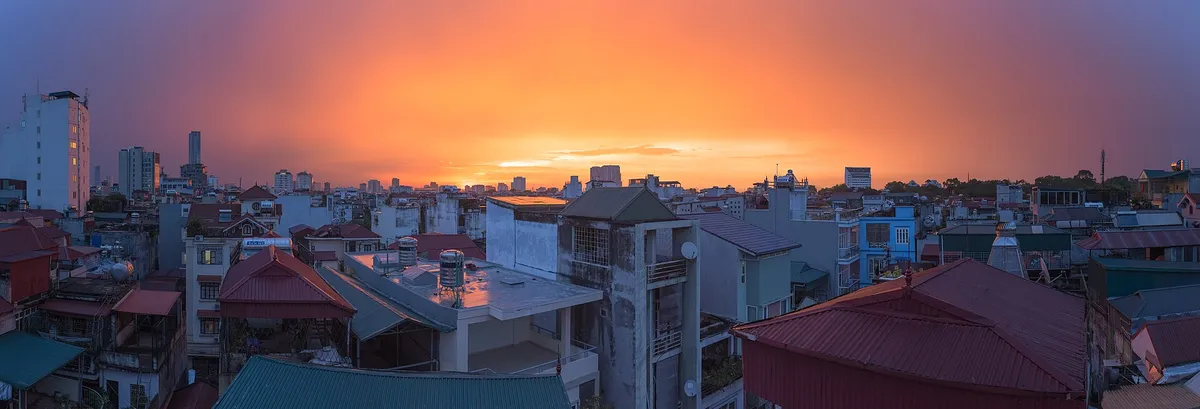
Photo: Christopher Crouzet / Wikimedia Commons
Where to Stay in Hanoi: Old Quarter, Hoan Kiem, or Ba Dinh?
Hanoi's chaotic Old Quarter or tranquil lakeside hotels? Complete guide to Hanoi's best neighborhoods and hotels for 2026.
Hanoi is a city that resists easy categorization. A thousand years of dynastic rule, a century of French colonialism, and decades of reunified Vietnamese ambition have layered the city into distinct neighborhoods that feel almost like separate towns. Where you sleep in Hanoi shapes the entire texture of your visit — the sounds outside your window, how long it takes to reach the sights, and the kind of restaurants you’ll stumble into by accident. Get the neighborhood right and the rest tends to fall into place.
TL;DR
- Old Quarter is the classic pick: maximum walkability, street food on every corner, buzzing nightlife — but noise is real and streets can be disorienting at night.
- French Quarter / Hoan Kiem Lake balances charm and calm, with upscale hotels, easy café access, and proximity to both the Old Quarter and the Museum of History.
- Ba Dinh & West Lake (Tay Ho) suits long-stay travelers and anyone who wants expat-grade amenities, rooftop bars, and a slower pace without sacrificing the city.
- Budget travelers are well catered for across all zones; even a dorm bed near the Old Quarter puts you within walking distance of most major attractions.
Hanoi Areas at a Glance
| Area | Best For | Price/Night | Vibe |
|---|---|---|---|
| Old Quarter | First-timers, nightlife, street food | €8–150 | Chaotic, electric, historic |
| French Quarter / Hoan Kiem | Luxury, culture, mid-range comfort | €50–350+ | Elegant, walkable, leafy |
| Ba Dinh | Museums, embassies, peaceful sightseeing | €40–120 | Quiet, residential, stately |
| West Lake (Tay Ho) | Long stays, expats, boutique retreats | €60–180 | Relaxed, upscale-casual, scenic |
| Dong Da / Hai Ba Trung | Budget-savvy locals-only feel | €8–50 | Authentic, off-tourist-trail |
Old Quarter (Hoan Kiem District)
The 36 guild streets of Hanoi’s Old Quarter have been trading since the 13th century, and they haven’t slowed down. Silk merchants, pho vendors, motorbike repair shops, and rooftop cocktail bars jostle for space across a dense grid of narrow lanes north of Hoan Kiem Lake. Staying here means you’re never more than five minutes from something worth seeing — or eating.
Capella Hanoi (~€350/night) is the area’s most theatrical statement. Housed in a restored building near the Old Quarter’s southern edge, it pitches itself as an art hotel wrapped in a love letter to Vietnamese opera. The rooms are genuinely striking — deep lacquerwork, bespoke furniture, double-height ceilings in the suites — and the service is among the tightest in the city. If you’re splashing out, this is where the money actually shows.
For something more grounded, La Siesta Hotel & Spa (~€65/night) consistently earns its reputation as one of the Old Quarter’s best mid-range boutique options. The rooms are clean and thoughtfully designed, the staff speak excellent English, and the rooftop terrace is a legitimate place to decompress after a day of temple-hopping. The Central and Premium branches both sit within a short walk of the lake. At this price point in Hanoi, you’re getting a standard that would cost two or three times as much in Bangkok or Bali.
Hanoi Hostel (~€10/night dorm, ~€30 private) anchors the budget end without apology. Dorm beds are well-maintained, lockers are solid, and the common room functions as an informal social hub where solo travelers trade itineraries and restaurant tips. Private rooms are compact but entirely serviceable for anyone who just needs a clean, quiet base and plans to spend most of their waking hours on the streets.
The chief drawback of Old Quarter accommodation is noise. Streets like Ta Hien (the “Beer Street”) don’t quiet down before 1 a.m., and motorbike traffic starts again early. If you’re a light sleeper, pay for a room on an upper floor facing an internal courtyard, or budget an extra €10–20 for a property with double-glazed windows.
French Quarter & Hoan Kiem Lake
The French Quarter begins roughly where the Old Quarter’s alley density gives way to broad tree-lined boulevards, neoclassical facades, and the kind of cafés where a Vietnamese iced coffee comes with a small ceramic vessel of condensed milk on the side. The area runs south and east from the lake’s shore toward the railway tracks, taking in the Opera House, the Hanoi Museum of History, and a cluster of embassies.
Sofitel Legend Metropole Hanoi (~€280/night) is not just a hotel — it is a chapter of the city’s history. Opened in 1901 and painstakingly restored, the Metropole has hosted Graham Greene, Somerset Maugham, Charlie Chaplin, and more recently, U.S. presidents. The Legends Wing preserves original corridor layouts and period furnishings; the Opera Wing is larger and slightly more contemporary. The underground bomb shelter, open for tours, is a sobering reminder that this building survived wartime Hanoi intact. Breakfast in the Spices Garden courtyard, with its ceiling fans and terracotta tiles, is one of the city’s reliable pleasures.
For travelers who want French Quarter access without the Metropole’s price tag, several solid mid-range options line the streets within a ten-minute walk of the lake. The area is also home to the city’s best concentration of French-Vietnamese fusion restaurants and some of Hanoi’s most atmospheric coffee shops.
Ba Dinh & West Lake (Tay Ho)
Ba Dinh district sits northwest of the Old Quarter and contains the city’s formal political heart — Ho Chi Minh’s Mausoleum, the One Pillar Pagoda, the Temple of Literature, and the Fine Arts Museum are all here. The streets are wider, the pace is quieter, and the residential character gives the area a different texture entirely from the tourist bustle to the east.
West Lake (Tay Ho), Hanoi’s largest urban lake, draws the expat community and a growing tier of boutique hotels that have no analog in the Old Quarter. Several smaller lakeside properties in the €80–120/night range offer terraces overlooking the water, rooftop pools, and a kind of unhurried hospitality that the Old Quarter can’t really replicate. The Xuan Dieu strip along the lake’s eastern shore has the best selection of international restaurants in the city, including Vietnamese-French bistros, Japanese izakayas, and wine bars.
Tay Ho is the neighborhood HaveNaGo most often recommends to travelers staying five days or more — you still have easy access to the Old Quarter (a short taxi or ride-share ride), but you return each evening to somewhere genuinely calm.
Budget Options
Hanoi remains one of Southeast Asia’s best-value capitals. Budget travelers have options across every district, but the highest concentration of hostels and guesthouses sits in the Old Quarter, particularly along the streets north of Hoan Kiem Lake.
A dorm bed at a reputable hostel (clean sheets, secure lockers, reliable wifi) runs €8–15/night. Private rooms in guesthouses start around €20–30 and are often more spacious than budget counterparts in Ho Chi Minh City or Siem Reap. At €40–50/night, the step up to boutique guesthouse territory is significant — air conditioning that actually works, proper en-suite bathrooms, and breakfast included are standard at this level.
One practical note: Hanoi has a tiered taxi pricing ecosystem. Always use Grab (the regional ride-share app) or established metered taxis (Vinasun, Mai Linh) to avoid tourist-rate surcharges. This matters more if you’re staying somewhere like West Lake and making daily trips to the Old Quarter.
FAQ
Is Hanoi safe for solo travelers?
Yes, for both solo male and female travelers. Street crime is low by regional standards, and tourist areas are well-monitored. The main hazards are traffic (crossing roads in the Old Quarter requires its own learning curve — walk steadily and let motorbikes flow around you) and the occasional overcharging at non-metered taxis. Use Grab for all transport, don’t leave bags unattended at street-side cafés, and Hanoi is an easy city to navigate alone.
What’s the best area for nightlife in Hanoi?
Ta Hien Street in the Old Quarter is ground zero for backpacker nightlife — cheap bia hoi (draft beer for under €0.50), loud music, and crowds spilling onto the pavement every evening from around 7 p.m. For a more upscale evening, the rooftop bars near Hoan Kiem Lake and the cocktail bars along Xuan Dieu in Tay Ho offer a different register entirely. Hanoi’s nightlife shuts down earlier than Ho Chi Minh City — most venues close by midnight or 1 a.m.
How many days do you need in Hanoi?
Three days covers the core — Old Quarter wandering, Hoan Kiem Lake, the Temple of Literature, the Ho Chi Minh complex, and a day trip to either the Perfume Pagoda or the Bat Trang ceramics village. Five days lets you add the Vietnam Museum of Ethnology (one of Southeast Asia’s best), the village of Van Phuc (silk weaving), and proper time in Tay Ho. A week or more is reasonable if Hanoi is your base for northern Vietnam day trips — Ha Long Bay, Ninh Binh, and Sapa are all accessible from here.
When is the best time to visit Hanoi?
October through April is generally the most comfortable period. Winters (December–February) are genuinely cool by Vietnamese standards — bring a light jacket. The summer months (June–August) bring humidity and intermittent typhoon-season rain, but prices drop and crowds thin noticeably.
Hanoi rewards people who take the time to understand it rather than rushing through on a three-city Vietnam sweep. Pick the neighborhood that matches how you actually want to spend your days — Old Quarter chaos, French Quarter grace, or West Lake calm — and the rest of the city opens up from there.