
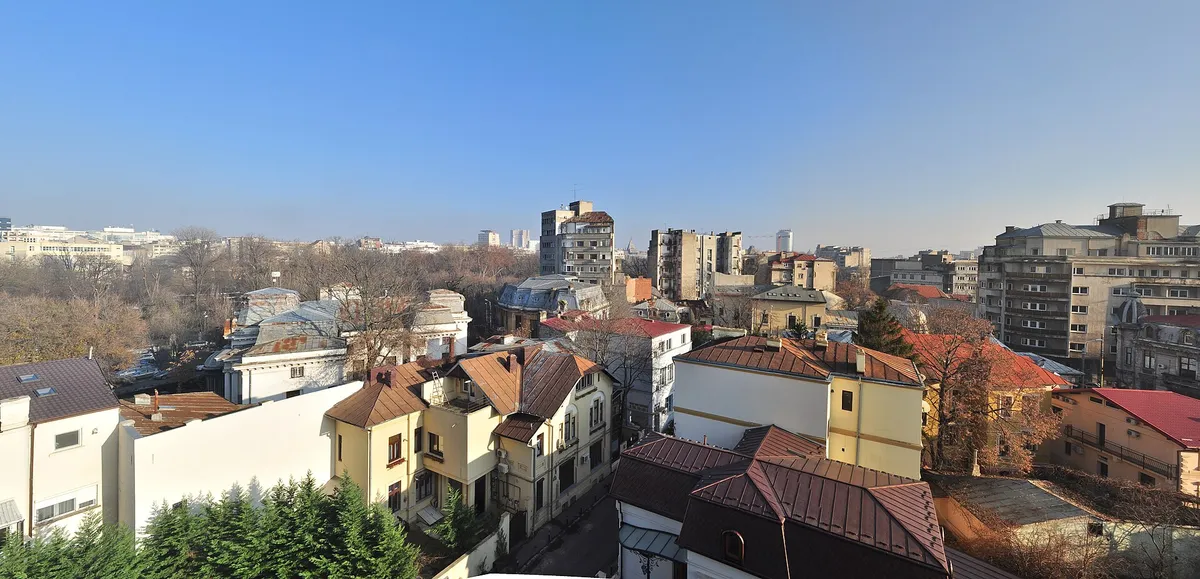
Photo: Joe Mabel / Wikimedia Commons
Where to Stay in Bucharest: Best Neighborhoods & Hotels (2026)
The Old Town for energy, Floreasca for local elegance, Dorobanți for boutiques — this guide breaks down where to stay in Bucharest for every type of traveler in 2026.
TL;DR
- Best for sightseeing: Old Town (Centru Vechi) — nightlife capital, walking distance to major sights
- Best local experience: Floreasca or Dorobanți — upscale residential areas with real Bucharest life
- Best for history: Cotroceni or Herastrau Park area — interwar architecture, park access
- Budget pick: Old Town guesthouses or Piata Unirii area — cheapest options near the center
- When to book: Bucharest is underbooked by Western tourists; 2–3 weeks ahead is usually fine
Best Neighborhoods in Bucharest
Bucharest is Romania’s capital and Southeastern Europe’s largest city — a fascinating, underrated destination with communist-era architecture, Belle Époque boulevards, a raucous Old Town, and some of Europe’s best value dining and nightlife. The city’s layout reflects its communist-era replanning: Ceaușescu’s Palace of the Parliament (second-largest building in the world) anchors the south, while the more organic Old Town and interwar neighborhoods spread north.
| Neighborhood | Vibe | Price Range | Best For |
|---|---|---|---|
| Old Town (Centru Vechi) | Lively, touristy | €30–200/night | Nightlife, first-timers |
| Dorobanți | Upscale, boutique | €60–220/night | Boutique hotels, dining |
| Floreasca | Local, elegant | €55–200/night | Residential experience |
| Herastrau | Green, lake views | €70–250/night | Park access, families |
| Calea Victoriei | Cultural, central | €45–180/night | Museums, historic hotels |
Old Town (Centru Vechi) — Bucharest’s Liveliest Quarter
Bucharest’s Old Town is the city’s party heart: a dense grid of cobblestone streets, medieval cellars converted into bars and restaurants, outdoor terraces, and clubs that run until dawn. It’s simultaneously the most tourist-facing and most energetic part of the city — controversial with locals (too loud, too foreign, too touristy) but undeniably the center of Bucharest’s visitor life.
Who it’s for: First-time visitors, nightlife-oriented travelers, and those who want maximum sightseeing convenience (the Palace of Parliament is a 15-minute walk south; the Stavropoleos Church is steps away).
Price range: Budget guesthouses from €25/night; boutique hotels €60–130/night; luxury options €120–220/night.
The Rembrandt Hotel on Strada Smardan is a charming Old Town property in a restored 19th-century building — intimate, well-managed, and with genuine character at €80–130/night. Budget guesthouses on the streets just north of Lipscani (the Old Town’s main artery) run €25–50/night and represent some of Europe’s best accommodation value.
Dorobanți and Floreasca — The Upscale North
Dorobanți and Floreasca are neighboring upscale residential neighborhoods north of the city center — tree-lined streets, independent restaurants and cafes, boutique fashion shops, and the kind of non-tourist local life that makes a city genuinely interesting to inhabit. It’s where Bucharest’s middle and upper-middle class actually lives.
Who it’s for: Travelers who want to experience Bucharest beyond the tourist circuit, those staying multiple nights, and anyone who prefers a quieter neighborhood with quality dining within walking distance.
Price range: €55–220/night; many excellent boutique options in the €80–140/night range.
The Hotel Epoque Bucharest in Dorobanți is consistently rated among Romania’s best boutique hotels — a beautifully restored villa with individualized rooms, exceptional breakfast, and rates from €120–200/night. Several smaller guesthouses and apartment hotels in the area offer good value from €60–90/night.
Calea Victoriei — Bucharest’s Grand Avenue
Calea Victoriei (Victory Road) is Bucharest’s most important historic boulevard — running north-south through the city with the National History Museum, the Cercul Militar National (Military Circle), multiple Belle Époque palaces, and the CEC Palace at its southern end. It’s the spine of the “little Paris” that 19th-century Bucharest aspired to be.
Who it’s for: History and architecture enthusiasts, museum-goers, and those who want the atmosphere of Bucharest at its most European-feeling.
Price range: €45–200/night.
The Athenee Palace Hilton Bucharest on Episcopiei Square adjacent to Calea Victoriei is Bucharest’s most historically significant hotel — a 1914 property that served as a Cold War spy hub, now an upscale Hilton with rates from €120–200/night. The Intercontinental Bucharest towers over Piata Universitatii on the same corridor at similar rates.
Herastrau Park Area — Families and Green Space
Herastrau is Bucharest’s largest park — a lake ringed by forest with a village museum (one of Europe’s best outdoor museums), restaurants, cycling paths, and one of the city’s most pleasant walking environments. The residential neighborhoods surrounding it are some of Bucharest’s most elegant.
Who it’s for: Families, those traveling with dogs, park-loving travelers, and anyone who values green space proximity.
Price range: €70–250/night; mostly mid-range and upscale options.
The Radisson Blu Hotel Bucharest near Herastrau is one of the city’s best full-service hotels — reliable, well-appointed, and with good transport connections to the center, at €100–200/night.
How to Book
Bucharest is easy to book last-minute outside major events. The George Enescu International Music Festival (September, biennial — next in 2027) and major national holidays create brief demand spikes. Otherwise, 1–2 weeks ahead is sufficient for most purposes.
Best season: May to September for warm weather and outdoor dining culture. October is excellent — golden light, lower crowds, and comfortable temperatures. January and February are cold (around 0°C) but also the lowest hotel prices of the year.
Getting around: Bucharest’s metro is limited but useful for major cross-city trips. Most central neighborhoods are walkable. Bolt and Uber both operate widely and cheaply (€2–5 for most central journeys).
FAQ
Is Bucharest safe for tourists? Generally yes, with standard urban precautions. The Old Town can be rowdy late at night (it’s Bucharest’s main bar district), and pickpocketing in crowded markets requires the usual attention. The city is not dangerous by European standards.
Is Bucharest worth visiting? Yes — it’s one of Europe’s most underrated capitals: excellent value (significantly cheaper than Prague or Warsaw), fascinating communist-era architecture (the Palace of Parliament is genuinely extraordinary), a great food scene, and better nightlife than most capitals. It’s underrated partly because it doesn’t have a single iconic attraction, but the whole is greater than the sum of parts.
How do I get from Bucharest Airport to the city? The express train (Henri Coandă Line) connects the airport to Gara de Nord (main train station) in 15 minutes for €3. From Gara de Nord, metro or taxi to the center. Taxis from the airport cost €15–20 to the city center if booked at the official counter; Bolt/Uber are cheaper (€8–12) but require meeting outside the terminal.
What is the Palace of Parliament and how do I visit? The Palace of Parliament (Casa Poporului) was built by Ceaușescu in the 1980s as his seat of power — at 340,000 square meters, it’s the world’s second-largest building. Guided tours run daily for €5–8/person and take 45–90 minutes depending on the tour format. It’s architecturally extraordinary in a deeply unsettling way.