
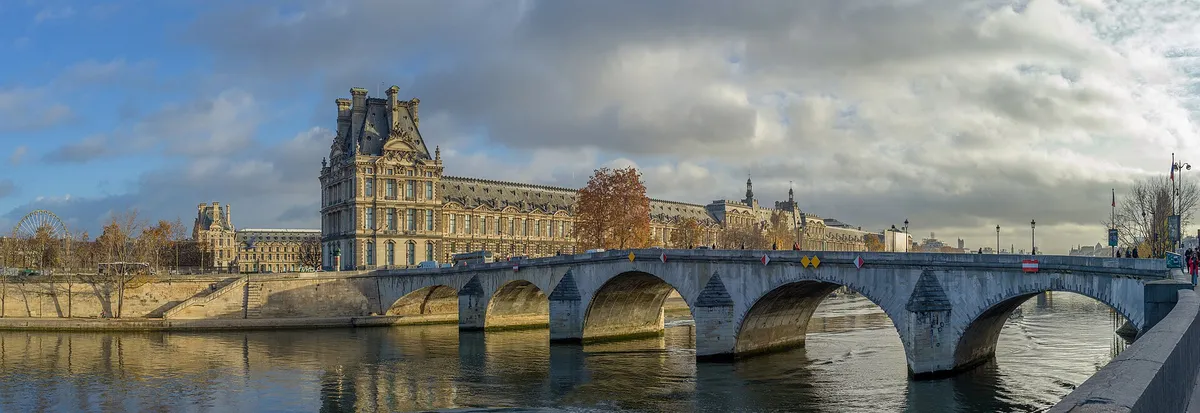
Paris 3-Day Itinerary: Eiffel Tower, Louvre, Montmartre & Best Bistros 2026
The perfect 3 days in Paris — Eiffel Tower and Champ de Mars, Louvre and Tuileries, Montmartre and Sacré-Cœur, Seine river cruise, and the best croissants, steak-frites, and wine bars in 2026.
Paris 3-Day Itinerary: The Perfect First Paris Trip
Three days in Paris is enough to fall in love — but not enough to see everything. This itinerary focuses on the most essential sites and the neighborhoods that feel authentically Parisian rather than just tourist-famous.
Key booking: Eiffel Tower summit (book 2–3 months ahead for preferred time slots), Louvre (book online to save 30+ min of queue), Musée d’Orsay (skip-the-line tickets available).
Day 1: The Icon — Eiffel Tower and Left Bank
Morning: Eiffel Tower
The Eiffel Tower (1889, Gustave Eiffel, 324m) is the world’s most-visited monument — 7 million annual visitors. Pre-book your tickets. Options:
- Stairs to 2nd floor (€12.40): No queue, surprisingly good views, physical challenge
- Lift to 2nd floor (€18.60): Standard; excellent views and exhibits
- Lift to Summit (€28.30): Worth it once for the 360° Paris panorama, especially clear days
Timing tip: The first opening slot (9:30am, or 9am in summer) has the best light and shortest queues. Sunset (around 9pm in summer) is romantic but very crowded.
Champ de Mars: The park in front of the Tower is perfect for a picnic. Buy supplies from the nearby market on Rue Cler (one of Paris’s best food streets). The Tower sparkles with 20,000 LED lights every hour on the hour after dark.
Afternoon: Left Bank and Notre-Dame
Walk along the Seine embankment east toward the Île de la Cité — the island at the heart of Paris.
Notre-Dame Cathedral (reopened after 2019 fire and subsequent restoration — check current access status): The medieval Gothic masterpiece. Even if internal access is limited, the façade and the surrounding Île de la Cité are essential.
Sainte-Chapelle (just behind Notre-Dame, on the same island): Possibly the finest Gothic interior in existence. 15 floor-to-ceiling stained glass windows from 1248, each 15m high. Arrive at opening (9am) to avoid queues. €13.
Evening: Saint-Germain-des-Prés
Saint-Germain-des-Prés — the literary and intellectual heart of Paris’s Left Bank. Café de Flore and Les Deux Magots (where Hemingway, Sartre, and Picasso worked and argued) are worth a coffee. The surrounding streets are Paris at its most elegant.
Dinner: A proper Parisian bistro with zinc bar, checkered tablecloths, and a handwritten ardoise (daily specials). Try Bouillon Racine or walk into any side-street bistro and order: French onion soup, steak-frites, and a carafe of Côtes du Rhône.
Day 2: Museum Paris — Louvre and Musée d’Orsay
Morning: The Louvre
The Musée du Louvre (I.M. Pei’s glass pyramid entrance, 1989; building from 1546) is the world’s largest art museum — 380,000 objects, 35,000 on display. You cannot see everything. Make a shortlist.
The 6 things you should not miss:
- Mona Lisa (Salle des États, room 711) — smaller than you expect, surrounded by glass and crowds; best viewed via the side-entrance corridor
- Winged Victory of Samothrace (195 BC, top of the Daru Staircase) — the most dramatic single object in the Louvre
- Venus de Milo (100 BC, Greek wing) — the ideal of female beauty for 2,000 years
- The Wedding at Cana (Veronese, 1563) — the 7m×10m painting that dwarfs everything in Salle des États
- Vermeer’s The Lacemaker (1670, Dutch Masters room) — tiny, perfect, 20 minutes in front of it
- The Code of Hammurabi (1754 BC, Near Eastern Antiquities) — the world’s oldest legal code on black diorite
Time: 3 hours minimum for a focused visit; 5 hours if you want depth.
Afternoon: Musée d’Orsay
A 15-minute walk along the Seine west from the Louvre.
Musée d’Orsay (converted Beaux-Arts railway station, 1900, became museum 1986): The world’s finest Impressionist collection. Essential viewing:
- Monet’s Water Lilies series and his Rouen Cathedral paintings
- Renoir’s Ball at the Moulin de la Galette (1876) — the most joyful painting in Paris
- Van Gogh’s Bedroom in Arles (1888) and Self-Portrait (1889)
- Manet’s Olympia (1863) — the painting that caused a scandal
Time: 2–2.5 hours.
Evening: Île Saint-Louis and Le Marais
Walk from the Orsay across the Pont de la Concorde, then east along the Right Bank to Île Saint-Louis — the most serene island in Paris, lined with 17th-century mansions. Berthillon ice cream (94 Rue Saint-Louis en l’Île) is Paris’s finest glacier.
Then across to Le Marais — medieval Paris at its most alive, combining the historic Jewish quarter with Paris’s most vibrant restaurant scene. Place des Vosges (the oldest square in Paris, 1612, arcaded brick mansions) is beautiful in the evening.
Day 3: Montmartre and Right Bank
Morning: Montmartre
Take the funiculaire (metro ticket) up to Sacré-Cœur Basilica (1914, Romanesque-Byzantine, gleaming white travertine) — the highest point in Paris. Arrive before 8am for the extraordinary view over the entire city before tourists arrive.
Explore the surrounding Montmartre village: Place du Tertre (artists painting and selling since the 19th century), the vineyard on Rue des Saules (still harvested every October), and the extraordinary window of Salvador Dalí’s studio (now the Espace Dalí museum).
Walk down through the backstreets to the Moulin Rouge (1889, the original cabaret, still performing) and the covered passage of Passage Jouffroy — one of Paris’s 19th-century arcades, now lined with vintage shops.
Afternoon: Champs-Élysées and Arc de Triomphe
Arc de Triomphe (Napoléon, 1836, 50m) — climb to the top (€13, included in Paris Museum Pass) for the spider-web view of 12 avenues radiating from the Étoile. The eternal flame at the Tomb of the Unknown Soldier burns continuously since 1921.
Champs-Élysées (1.9km from Arc to Place de la Concorde): Don’t expect local Parisian life — the Champs is tourist retail. But the grandeur of the avenue at dusk remains extraordinary.
Place de la Concorde: Where Louis XVI and Marie Antoinette were guillotined in 1793. The Egyptian obelisk (3,300 years old, from Luxor) stands in the center. The view toward the Louvre and toward the Eiffel Tower simultaneously is Paris’s most cinematic.
Evening: Seine River Cruise + Departure
Seine river cruise (Bateaux-Mouches, 70 min, €17): The classic way to see Paris from the water at the end of a trip. Departures from Pont de l’Alma every 30 min. The illuminated riverfront — Notre-Dame, the Louvre, the Eiffel Tower — is Paris’s most beautiful view.
Paris Food Guide
Breakfast: Cornetto and café crème at the counter of any neighborhood café — €2–4. Never pay €6 for the same thing at a tourist café terrace.
Boulangerie must-try:
- Croissant: Made with layers of laminated butter dough; should be golden, flaky, buttery
- Pain au chocolat: Croissant dough wrapped around dark chocolate batons
- Éclair: Choux pastry filled with cream, glazed in chocolate or coffee
Lunch:
- Croque-monsieur: Ham and Gruyère toasted sandwich — a perfect lunch for €8
- Salade niçoise: Tuna, egg, olives, green beans — classic French café lunch
- Plat du jour: The daily special at any brasserie — usually €14–18 including a glass of wine
FAQ
Is the Mona Lisa worth seeing? In person: underwhelming by reputation, but the Louvre experience around it is exceptional. The Mona Lisa is smaller than expected (77cm×53cm), behind thick glass, surrounded by 40+ people. The experience of being in the same room as the world’s most famous painting is real, even if the painting itself is less spectacular than expected.
Do I need to book the Eiffel Tower? Yes — always book online in advance. The same-day queue is 1–3 hours and sold out by noon in peak season. Book 2–3 months ahead for July–August.
What is the best Paris neighborhood to stay in?
Le Marais (4th arrondissement): Best for atmosphere, food, Jewish Quarter, galleries. Lively at night.
Saint-Germain-des-Prés (6th): Most elegant, closest to Left Bank museums.
Montmartre (18th): Charming but hilly; a taxi ride from most museums.
Opéra/Grands Boulevards (9th): Central, good transport, mix of locals and tourists.