
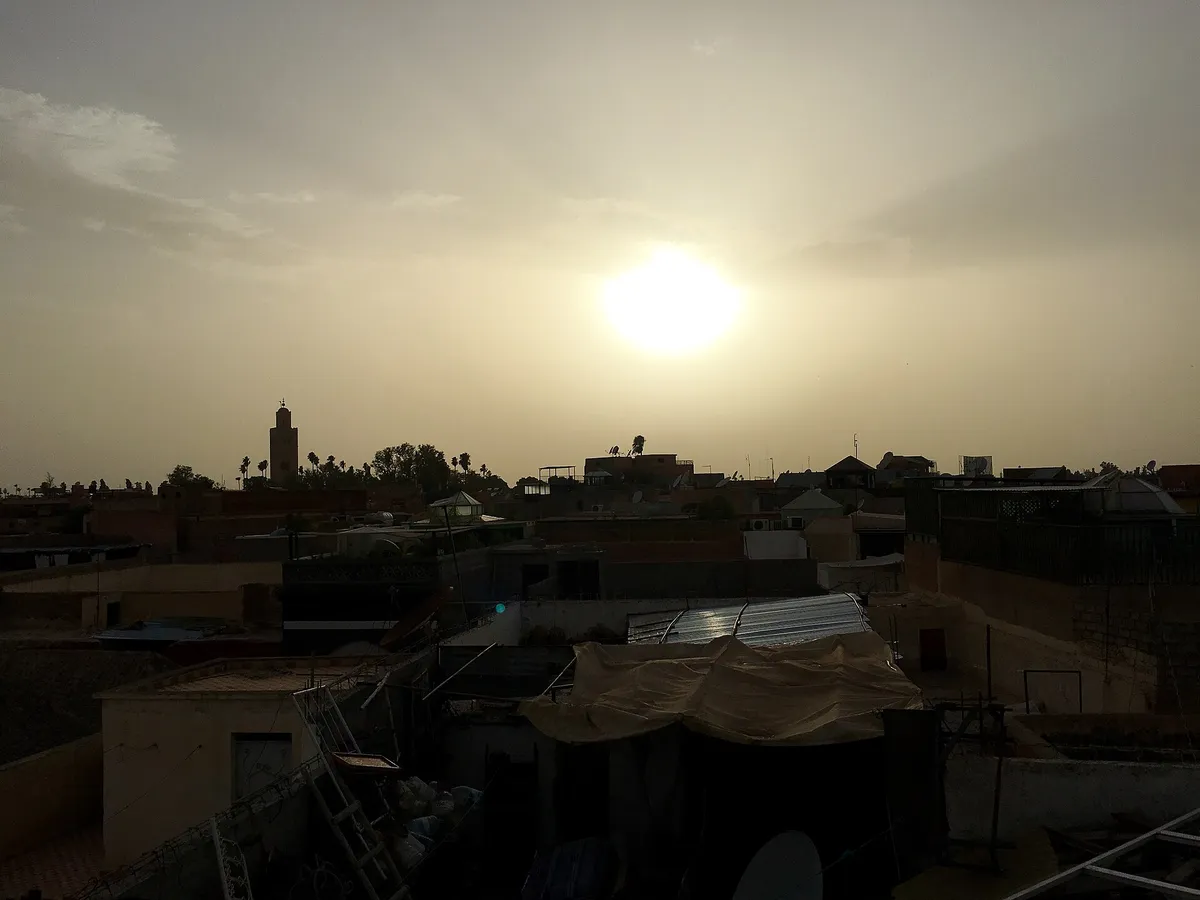
Photo: Thomas Woodtli from Zürich, Switzerland / Wikimedia Commons
Budget Travel in Africa: Morocco, Kenya & Tanzania on a Budget (2026)
Morocco's medinas for €30/day, Kenya's budget safari options, and Tanzania's Zanzibar guesthouses — the complete 2026 guide to exploring Africa without luxury prices.
Africa on a Budget: Is It Possible?
Africa’s reputation for expensive travel is partly justified (a full-service safari in Tanzania or Kenya costs €300–600/person/day) and partly myth (Morocco, Egypt, and the Swahili Coast are among the world’s most affordable destinations for independent travelers). This guide separates the expensive from the accessible.
Morocco — The Budget Benchmark
Morocco is one of the world’s best destinations for budget travel — a combination of genuinely affordable accommodation (riads from €20/night, guesthouses in Fes and Marrakech medinas from €15/night), food that costs €3–8 for excellent meals, and accessible overland transport that makes the entire country explorable on €35–50/day.
Budget Strategy
Accommodation: Riads are the key — the traditional courtyard houses provide authentic atmosphere from €20/night for simple dorm-style rooms and €40–60/night for private rooms. The medinas of Fes, Meknes, and Essaouira have more affordable options than Marrakech (which has gentrified significantly since 2010).
Food: The budget benchmark:
- Tagine and couscous at a local restaurant: €3–5
- Kefta brochettes (meatball skewers) at a market stall: €2–3
- Fresh-squeezed orange juice (Marrakech’s Djemaa el-Fna): €0.80
- Mint tea at a café: €0.50–1.00
- Total food budget possible: €10–15/day eating very well
Transport: CTM buses connect all major cities affordably (Marrakech–Fes: €12, 9 hours), and shared grand taxis provide flexible shorter routes.
Budget total: €30–40/day (accommodation + food + local transport)
Key Itinerary (€35/day budget, 10 days)
Marrakech (3 days: medina, Djemaa el-Fna, Majorelle Garden) → Merzouga/Sahara (3 days: desert camp, €40/night includes dinner) → Fes (3 days: ancient medina, tanneries) → Chefchaouen (1 day: the blue mountain village, the most photographed town in Morocco)
Chefchaouen: The “Blue City” (the entire medina painted in shades of blue, the tradition dating from the 15th-century Jewish population) is Morocco’s most photographed destination — compact, extremely beautiful, and exceptional value (guesthouses from €12/night, café meals from €3).
Kenya — Safari on a Budget
Kenya has the world’s most famous wildlife, with genuinely budget-accessible options alongside the expensive luxury lodges.
The Budget Safari Reality
A luxury Kenya safari (Maasai Mara, Amboseli, or Tsavo camps) costs €300–600/person/day all-inclusive. A budget safari starts at approximately €70–100/person/day through Nairobi-based budget operators — lower standards (camping, simple bandas/huts, group safari vehicles) but the same wildlife.
What budget buys: Group tours in shared 4WDs (typically 6–8 people), camping or budget lodge accommodation (basic but clean), included meals. The animals are identical; the viewing vehicle and the bed at night are simpler.
What luxury provides: Private vehicle (the greatest practical advantage — you stop when you want, stay as long as you want at a sighting), luxury tented camp or lodge, professional guide assigned to your family group.
The honest choice: For a first-time visitor on a genuine budget, the €70–100/person/day option delivers the fundamental experience (the Big Five, the Maasai Mara wildebeest migration if timed correctly) at a fraction of luxury pricing.
Budget Strategy for Kenya
Nairobi: The Nairobi Backpackers (Westlands, €15–25/night dormitory) and the Wildebeest Eco Camp (Karen, €20–35/night, also runs budget safaris) are the best budget bases.
Nairobi National Park: The only national park in the world with a capital city skyline visible behind the wildlife — accessible by matatu (local bus, KES 50 from the city), entry KES 5,285 (€40) for non-residents. Lions with Nairobi’s towers visible in the background.
Lake Nakuru: 2 hours from Nairobi, flamingo concentrations (the lake has 750,000 flamingos in season), rhino sanctuary, and affordable accommodation (KES 2,500–5,000/night = €19–38) makes it the most cost-effective Kenya wildlife experience.
Tanzania — Budget Coast and Budget Safari
Tanzania divides cleanly into two budget profiles: the Zanzibar coast (genuinely affordable) and the mainland safari (less affordable but more negotiable than Kenya’s premium operators).
Zanzibar on €40/Day
Zanzibar (the island off the Tanzanian coast) has stunning beaches (Nungwi in the north, Kendwa, Paje in the southeast) and Stone Town (the UNESCO-listed old Arab-African trading city, the birthplace of Freddie Mercury, with elaborate carved doorways and a labyrinthine medieval street plan).
Accommodation: Zanzibar has a striking range from €10/night (fan room, shared bathroom, near the beach) to €500+/night (luxury beach resort). The sweet spot: €30–60/night for a clean private room with air conditioning near the beach.
Food: Stone Town’s local restaurants and the Forodhani Gardens night market (seafood grilled on open charcoal, Zanzibari pizza — the local specialty of crêpe-like egg and meat pancake cooked on an iron plate) cost €3–7 per meal.
Beach: Free; the Indian Ocean; excellent snorkeling right off the beach in many locations.
Budget total: €35–50/day (accommodation + food + activities)
Tanzania’s Budget Safari Options
The Serengeti (world’s greatest wildlife spectacle, but entry fees of $80/person/day for non-residents) is accessible on a budget through Arusha-based budget operators — a 5-day Serengeti camping safari from Arusha costs approximately €600–800/person total ($120–160/day), significantly below luxury lodge pricing (€400–800/person/day).
Ngorongoro Crater: The world’s largest intact volcanic caldera, a permanent population of 25,000+ large mammals visible from the crater rim (the density of wildlife is remarkable — on a good day, all Big Five in half a day). Entry fee $400/vehicle (split among 6 = €65/person) is the main cost; the viewing requires 4WD and is typically done as part of a safari package.
East Africa: Practical Budget Information
Visas:
- Morocco: Visa-free for most nationalities
- Kenya: e-Visa required ($51 online at evisa.go.ke)
- Tanzania: e-Visa required ($50)
- Zanzibar: Tanzania e-Visa covers Zanzibar
Health:
- Yellow fever vaccination required for Tanzania (also strongly recommended for Kenya) — get vaccinated at least 10 days before travel
- Malaria prophylaxis: Recommended for all sub-Saharan Africa destinations; Malarone (atovaquone/proguanil), available by prescription
- Travel insurance: Essential for Africa travel; medical evacuation from remote safari areas is expensive without coverage
Currency:
- Morocco: Dirham (MAD); ATMs at airports and cities; cards accepted in restaurants and riads
- Kenya: Kenyan Shilling (KES); USD widely accepted; M-Pesa (mobile money) ubiquitous for locals
- Tanzania: Tanzanian Shilling (TZS); USD widely accepted; credit cards at larger establishments
Quick Comparison
| Destination | Budget/Day | Quality of Experience | Difficulty |
|---|---|---|---|
| Morocco (budget) | €30–40 | Excellent | Easy |
| Kenya (budget safari) | €70–100 | Good | Moderate |
| Zanzibar | €35–50 | Excellent | Easy |
| Tanzania mainland safari | €120–160 | Very good | Moderate |
FAQ
Is budget safari as good as luxury safari? For first-time visitors, yes — the wildlife is the same, the game drives are equivalent, and the fundamental experience is identical. The differences (private vehicle, more knowledgeable guide, higher-quality accommodation, better food) matter more on a second or third safari when the novelty of the wildlife has worn off and the quality of the experience becomes more important.
Is Africa safe for solo budget travelers? Morocco and Zanzibar are both generally safe for solo budget travelers; Kenya and mainland Tanzania require more careful risk management (research specific areas and current conditions before traveling). Morocco specifically is very safe for independent budget travel.
What’s the cheapest way to see the Maasai Mara wildebeest migration? The migration (July–September, when 1.5 million wildebeest cross from Tanzania’s Serengeti to Kenya’s Mara and back, with the famous river crossings — predators and crocodiles attacking the crossing herds — being the most dramatic wildlife spectacle on earth) is accessible through Nairobi budget operators for approximately €100–150/day on a 3-day group safari. Book 2–3 months ahead for migration timing.