
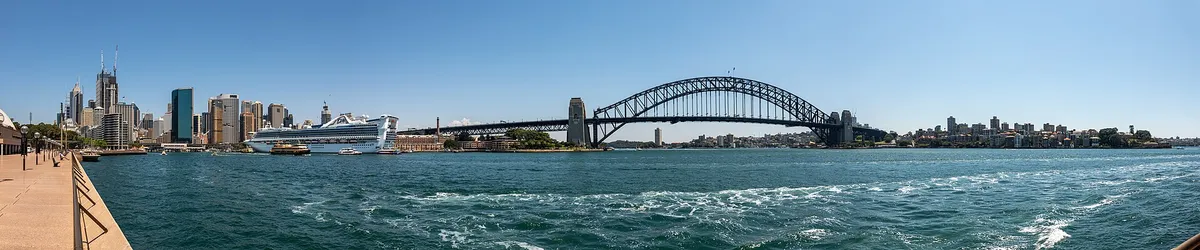
Photo: Dietmar Rabich / Wikimedia Commons
Best Time to Visit Australia 2026: Sydney, Melbourne, Great Barrier Reef & Uluru Season Guide
When to visit Australia for Sydney's beaches and opera house, the Great Barrier Reef, Uluru and the Red Centre, and Melbourne's café culture — complete month-by-month seasonal guide for Australia in 2026.
Best Time to Visit Australia 2026: The Seasonal Guide
Australia is enormous — the sixth-largest country in the world, spanning 35 degrees of latitude from tropical Queensland to temperate Tasmania. There is no single “best time” to visit Australia; the answer depends entirely on which part of the country you’re visiting. The continent’s inverse relationship to northern hemisphere seasons (Australian summer is December–February) adds another layer of complexity for European and North American travelers.
The Key Seasonal Split
The North (Tropical): Dry vs. Wet
The tropical north (Darwin, Cairns, Broome, Kimberley) has two seasons:
Dry Season (May–October): The Recommended Window for the North
- The only time to visit most of northern Australia for outdoor activities
- Kakadu National Park: waterfalls and wetlands accessible; wildlife at water holes
- The Kimberley (WA): roads passable; Gibb River Road accessible to 2WD vehicles
- Great Barrier Reef: ideal visibility (20–40m); calm seas; low jellyfish risk
- Temperatures: 25–32°C, low humidity, clear skies
Wet Season (November–April): Extreme Weather
- Monsoon rains, cyclone risk, flash flooding
- Many roads impassable; some national parks closed
- Humidity 80–95%; temperatures 32–38°C
- However: the waterfalls and flooded wetlands are spectacular in a different way, and this is the only season when northern birds breed in vast numbers (Kakadu’s bird life in the wet season is extraordinary)
The South (Temperate): Best in Spring and Autumn
Sydney, Melbourne, Adelaide, the Great Ocean Road, and Tasmania have a four-season European-style climate:
- Best months: March–May (autumn) and September–November (spring)
- Summer (December–February): Hot (30–40°C), bushfire risk in Victoria and NSW; Sydney beaches at their peak (warm sea temperatures)
- Winter (June–August): Mild in Sydney (15–20°C); cooler in Melbourne (10–17°C); cold in Tasmania (5–12°C)
By Destination
Sydney
Best time: October–April for beach season; September–November for spring without summer crowds.
Sydney’s beaches (Bondi, Manly, Coogee, Bronte) are best from October to April when sea temperatures reach 22–24°C. The Sydney Mardi Gras (late February–early March) is the largest LGBTQ+ event in the Asia-Pacific. The Sydney Opera House and Harbour Bridge are year-round; the New Year’s Eve fireworks over the harbour (Sydney has the largest paid-audience fireworks display in the world) peak on December 31.
January warning: Australia Day (January 26) is Sydney’s busiest day; hotels are expensive and booked far ahead.
Melbourne
Best time: March–May (the golden autumn) and September–November (spring racing carnival).
Melbourne has the most unpredictable weather in Australia (“four seasons in one day” is genuinely true) but the most consistent cultural calendar:
- Australian Open (January): The Grand Slam tennis tournament — best seats available online months ahead
- Formula 1 Australian Grand Prix (March): Albert Park circuit; one of the world’s best F1 venues
- Melbourne Cup (first Tuesday in November): “The race that stops a nation” — the Spring Racing Carnival at Flemington is the most glamorous event in Australian sport
The Great Barrier Reef (Cairns / Whitsundays)
Best time: June–October (the dry season): Water clarity 20–40m; comfortable temperatures 24–28°C; low rain; minimal stinger (jellyfish) risk.
Worst time: November–April: cyclone risk; stinger season (Irukandji jellyfish); lower visibility due to rain runoff.
What to know: The Great Barrier Reef is experiencing severe bleaching events due to ocean warming. The best coral is in the northern areas of the reef (Ribbon Reefs accessible from Cairns, Coral Sea) and the outer reef (further from land = less runoff damage). Ask operators specifically about current coral health; responsible operators will be honest.
Uluru and the Red Centre
Best time: April–October (the cooler months).
Uluru (Ayers Rock) in summer (November–March) has temperatures regularly exceeding 45°C — dangerously hot for outdoor activities. The walk around the base of Uluru (10.6km, 3–4 hours) and the Field of Light (400,000 lit glass spheres covering 50,000 sqm, Bruce Munro installation — sunset viewing) require comfortable temperatures.
Note: Climbing Uluru was permanently banned in October 2019 at the request of the Anangu traditional owners. The walk around the base is the appropriate and respectful way to experience it.
Sunrise and sunset at Uluru: The rock changes colour through the spectrum from ochre to deep red to purple at dawn and dusk — the dedicated viewing areas are 15 minutes drive from the main car park.
Tasmania
Best time: December–February (Tasmanian summer): The only reliable warm season; the time for the Overland Track (the most celebrated multi-day walk in Australia) and the Bay of Fires coastal walk.
Tasmania in winter (June–August): 5–12°C, frequent rain, but the Aurora Australis (Southern Lights) is occasionally visible from the south coast.
Month-by-Month Summary
| Month | Sydney/Melbourne | Great Barrier Reef | Uluru/NT | Tasmania |
|---|---|---|---|---|
| Jan | Hot, 28–35°C | Stinger risk | 40–47°C ⚠️ | Excellent |
| Feb | Hot; Mardi Gras | Stinger risk | 40–47°C ⚠️ | Excellent |
| Mar | Autumn; F1 GP | Improving | Cooling | Very good |
| Apr | Best autumn | Good | Excellent | Good |
| May | Cool, pleasant | Excellent | Excellent | Cool |
| Jun | Winter; AO tennis | Peak season | Cool, great | Cold |
| Jul | Cool, cultural | Peak season | Cool, great | Cold |
| Aug | Winter warming | Peak season | Excellent | Cold |
| Sep | Spring | Very good | Excellent | Warming |
| Oct | Beach beginning | Very good | Good | Warming |
| Nov | Summer crowds | Stinger starting | Hot | Summer beginning |
| Dec | Beach season | Stinger risk | 40–44°C | Best |
FAQ
Do I need a visa for Australia? Yes — most nationalities require an Electronic Travel Authority (ETA, subclass 601) or eVisitor (651) — both available online and most are processed within minutes. US, UK, EU citizens are eligible. Australian visa requirements are strict: declare all food items on arrival; biosecurity fines are AUD $630+.
Is Australia expensive? Very — among the most expensive countries in the world for travelers. Sydney and Melbourne are significantly more expensive than European capitals for accommodation. Budget travel is difficult; hostels charge AUD $40–60 per night. However, many of Australia’s greatest experiences (the beaches, national parks, hiking, wildlife) are free or low-cost.
Should I rent a car? Yes — outside of Sydney and Melbourne city centers, public transport is inadequate for travel between regions. A rental car (or campervan for longer trips) is essential for the Great Ocean Road, the Kimberley, Tasmania, and the national parks.