
Photo: Unknown (prototype asset) / project prototype
Best Hotels in Singapore: Marina Bay, Sentosa & Boutique Shophouses (2026)
Marina Bay Sands' iconic infinity pool above Singapore, Capella's colonial Sentosa estate, and Wanderlust's playful Shophouse rooms — Singapore's best hotels in 2026 from every angle.
Singapore’s Hotel Landscape
Singapore has one of the world’s most competitive luxury hotel markets — 5.6 million people on a 728 km² island, the third highest per-capita GDP in the world, and a tourism infrastructure that accommodates 15–20 million international visitors annually. The result: genuinely excellent hotels at prices 10–20% below equivalent Hong Kong or Tokyo properties, with the added advantage of Singapore’s culinary diversity, safety, and efficiency.
Marina Bay Area
Marina Bay Sands — The Iconic
Price: SGD 500–3,000/night (~€345–2,072) | Location: 10 Bayfront Avenue, Marina Bay
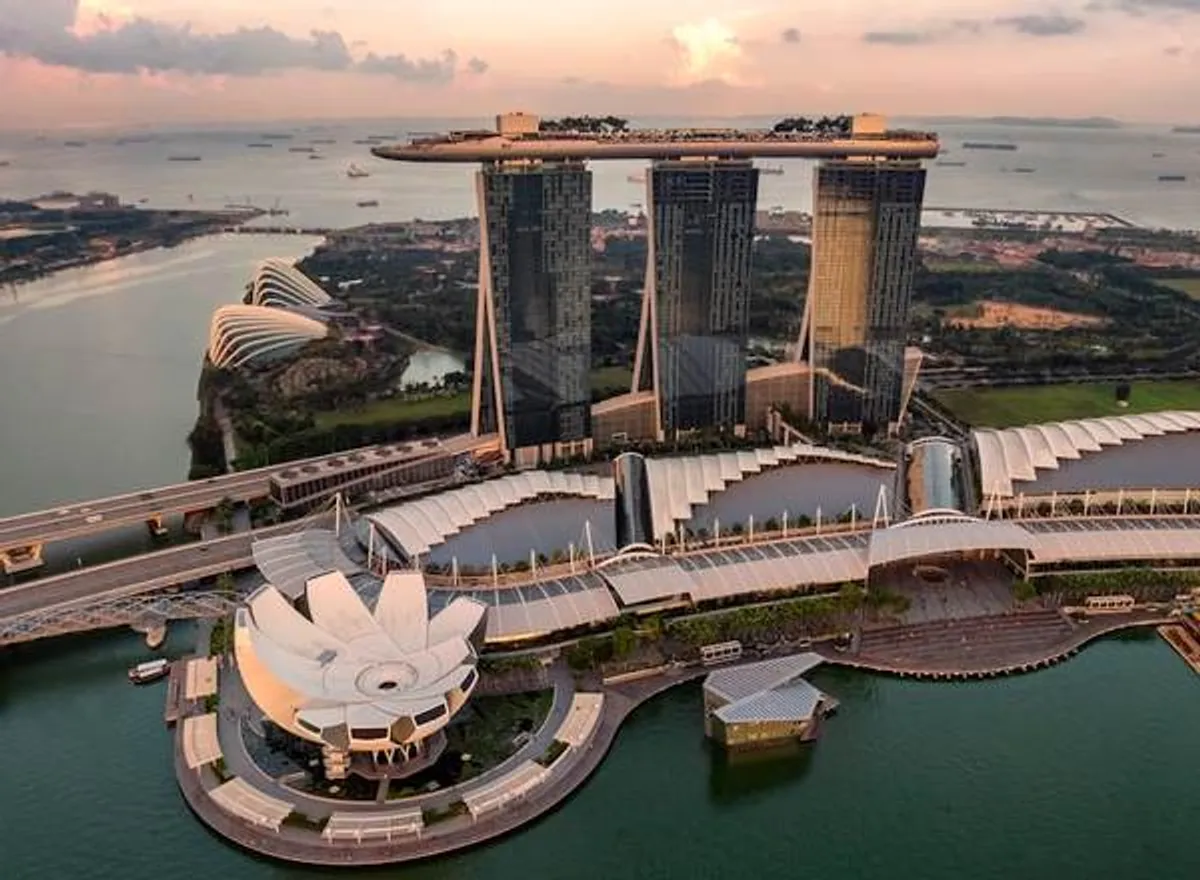
Marina Bay Sands (2010, designed by Moshe Safdie) is the most recognizable hotel in Asia — three 55-story towers connected by the SkyPark (the 200-meter elevated platform connecting all three towers, with a 150-meter infinity pool at the edge — the most photographed infinity pool in the world). The infinity pool faces the Singapore skyline and the Gardens by the Bay — the view is genuinely remarkable and is the single most iconic hotel position in Southeast Asia.
The SkyPark Pool reality: The infinity pool is exclusive to hotel guests — visiting to photograph it without staying is not possible (the SkyPark observation deck adjacent to the pool is ticketed for non-guests, but the pool itself requires a room reservation). The pool is 150 meters long, at the edge of the 55th floor, with the Singapore skyline visible in all directions. It is genuinely one of the most memorable hotel experiences in the world.
Beyond the pool: Marina Bay Sands has the largest casino in Asia (the gambling license in Singapore is restricted to 2 casinos, creating extreme focus and investment), the largest convention center in Asia, and the Sands SkyPark Observation Deck (the restaurant Ku De Ta / Ce La Vi at the top level is the best rooftop restaurant in Singapore).
The Fullerton Hotel — Colonial River Heritage
Price: SGD 400–2,000/night (~€276–1,381) | Location: 1 Fullerton Square, Marina Bay
The Fullerton Hotel occupies the 1928 General Post Office (the most architecturally significant building in Singapore’s colonial heritage — the Palladian colonnaded façade, a banking hall converted to the hotel’s main lobby). The hotel’s position at the confluence of the Singapore River and Marina Bay (views from the bay-facing rooms take in the Marina Bay Sands across the water and the Singapore cityscape in all directions) makes it the most historically positioned luxury hotel in the city.
Sentosa Island
Capella Singapore — Colonial Estate
Price: SGD 700–5,000/night (~€483–3,453) | Location: 1 The Knolls, Sentosa Island
Capella Singapore is consistently ranked Southeast Asia’s best resort hotel — a 30-acre estate (former British colonial bungalows from the 1880s, the officers’ quarters preserved and integrated with a contemporary wing by Foster + Partners), a private beach, multiple pools (the Auriga Spa pool is one of the finest hotel pools in Southeast Asia), and Bob’s Bar (a colonial-era bar, the best hotel bar in Singapore).
Amanjiwo Singapore — Resort Intimate
Price: SGD 1,000–6,000/night (~€691–4,144) | Location: Sentosa
The Aman group’s Singapore property provides the most intimate luxury experience on Sentosa — well-appointed rooms, a serene spa, and the Aman service philosophy (complete personalization, a no-request-too-small approach) in a Singapore setting.
The Historic District and Shophouses
Six Senses Duxton — Heritage Shophouses
Price: SGD 500–2,500/night (~€345–1,727) | Location: 83 Duxton Road, Tanjong Pagar
Six Senses Duxton is the most distinctive hotel concept in Singapore — the conversion of 10 shophouses (the traditional Chinese merchant houses of Singapore’s colonial era, with terracotta-tiled roofs, narrow façades, and “five-foot way” covered walkways) into the first Six Senses property in Singapore. The interiors (contemporary Chinese art, antique furnishings, and the Six Senses wellness philosophy applied to a historic building), a well-stocked bar, and an exceptional Chinese restaurant complete the picture.
The Warehouse Hotel — Robertson Quay
Price: SGD 300–800/night (~€207–553) | Location: 320 Havelock Road, Robertson Quay
The Warehouse Hotel occupies a striking 1895 former spice warehouse on the Singapore River — exposed brick walls, a pool (one of the most beautiful hotel pools in central Singapore, the river visible beyond the pool edge), and the excellent Po restaurant (the best Singapore-heritage restaurant in any boutique hotel). The most atmospheric heritage conversion in Singapore’s boutique hotel scene.
Wanderlust Hotel — Little India Creativity
Price: SGD 150–400/night (~€104–276) | Location: 2 Dickson Road, Little India
Wanderlust is Singapore’s most creative independent boutique — a four-room-type design concept (each of the 4 floor types has a completely different design identity: Eclectic, Whimsical, Industrial, Monochrome), a café on the ground floor, and exceptional value for a Singapore boutique. The Little India location (a lively street food neighborhood — tarka dhal, mutton biryani, and fresh coconut) provides the most authentic Singapore food access of any boutique hotel.
Food: Singapore’s Hawker Culture
Singapore’s hawker center culture (the government-mandated collective food markets, where hundreds of individual hawker stalls share communal seating and facilities) is UNESCO Intangible Cultural Heritage — one of the best value-quality combinations in the world’s food culture:
The best hawker centers:
- Maxwell Food Centre (Chinatown): The most famous — the Tian Tian Chicken Rice (Hainanese chicken rice, Singapore’s national dish, the stall that Barack Obama visited in 2015), the Zhen Zhen Porridge
- Lau Pa Sat (Central Business District): A Victorian-era iron market building, open until midnight, with the famous Satay by the Bay after 19:00
- Old Airport Road Food Centre (Geylang): The most locals-oriented of the major hawker centers — high quality, lower tourist prices
The $1–3 plate: The hawker center meal ($3–6 for a full plate including a drink) is among the best food values in any developed country — the quality of the Hainanese chicken rice ($4), the char kway teow ($4–5), and the laksa ($5–6) is genuinely exceptional by any standard.
Practical Notes
Singapore’s efficiency: Singapore’s MRT (mass rapid transit) is the best public transport system in Southeast Asia — cleanliness, 100% coverage of tourist areas, and high reliability (the Singapore MRT is rarely delayed). The EZ-Link card (SGD 10 + SGD 5 credit from any MRT station) is the most convenient payment method.
The Singapore sling at the Raffles Long Bar: The Singapore Sling (the gin, cherry brandy, Bénédictine, lime juice, and soda cocktail, created at the Long Bar at Raffles Hotel in 1915) is one of the world’s most famous cocktails at one of the world’s most famous hotel bars. The reality: the Long Bar charges SGD 35–38 for the cocktail; the atmosphere is lively; the peanuts thrown on the floor (the tradition) make for an unusual bar experience. Worth visiting once — not worth abandoning other Singapore experiences for.
FAQ
Is Marina Bay Sands worth staying at? For the pool experience and the iconic position: yes, once. The rooms themselves are standard modern hotel rooms with no distinctive character; the value proposition is entirely the pool access and the views. Book a room with the bay view (Marina Bay facing) rather than the city-facing rooms. The most impactful night is when a pool sunset (the Singapore skyline visible in all directions from the pool edge at sunset) coincides with clear weather.
What is the best area to stay in Singapore? For first-time visitors: the Marina Bay and River Valley area (walking distance to Gardens by the Bay, the Marina Bay Sands, Clarke Quay, and Chinatown). For longer stays or return visitors: the Tanjong Pagar shophouse area (the most atmospheric neighborhood, excellent food, the Six Senses Duxton) or Robertson Quay (the Warehouse Hotel, river-facing restaurants).
When is the best time to visit Singapore? February–April and July–August — the least rainy periods (Singapore’s equatorial climate means rain is possible year-round, typically in short afternoon downpours; the monsoon seasons — November–January and May–June — have heavier and more consistent rain). December (Singapore’s Christmas lights on Orchard Road are among the most spectacular in Asia) and June (the Great Singapore Sale) are specific seasonal draws.