
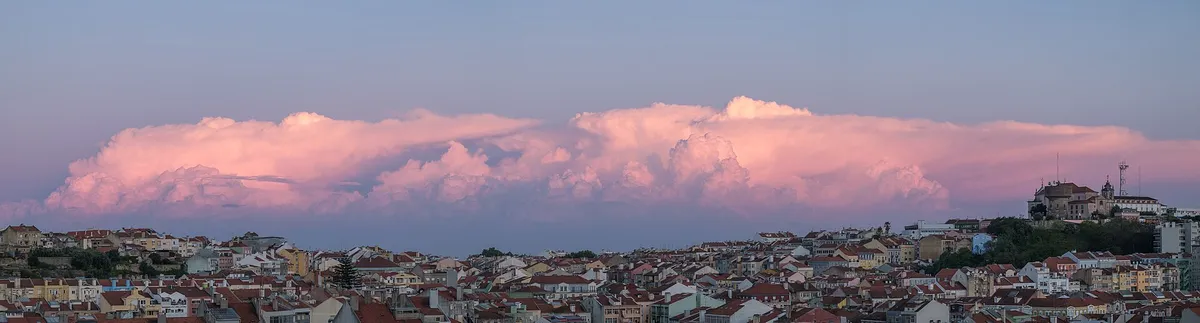
Photo: Jules Verne Times Two / Wikimedia Commons
Where to Stay in Lisbon by Neighborhood: Alfama, Chiado & Baixa (2026)
Bairro Alto Hotel's Chiado 5-star terrace, the Memmo Alfama's São Pedro de Alcântara hillside views, and why staying in Príncipe Real versus Baixa changes your entire Lisbon experience — the 2026 neighborhood hotel guide.
Lisbon’s Neighborhoods: The Hotel Decision
Lisbon’s hotel decision starts with topography. The city is built across seven hills (colinas) rising from the River Tagus, connected by a handful of funicular elevators (elevadores) — the Elevador da Glória, the Elevador da Bica, and the wrought-iron Elevador de Santa Justa, designed by Raoul Mesnier de Ponsard in 1902 and one of the most photographed pieces of industrial heritage in the city. A hotel in Chiado and a hotel in Alfama can sit less than 1km apart on a map yet feel like different cities, separated by the São Jorge Castle hill; the famous tram 28 takes a full 20 minutes to connect them.
Chiado — The Cultural Heart
Character: Chiado is Lisbon’s upscale shopping and café district — home to Livraria Bertrand, the oldest operating bookshop in the world (opened 1732), and A Brasileira, the city’s most famous café, with its 1905 Art Nouveau interior and the bronze statue of poet Fernando Pessoa seated at an outdoor table. Fashion and design boutiques fill the surrounding streets.
Bairro Alto Hotel — The Most Prestigious Lisbon Address
Price: €400–3,000/night | Location: Praça Luís de Camões 2, Chiado
Bairro Alto Hotel, which opened in 2005 on Praça Luís de Camões, is generally considered Lisbon’s top luxury address. The square is named for Luís de Camões, Portugal’s most celebrated poet, whose statue stands there; his 16th-century epic Os Lusíadas recounts Vasco da Gama’s voyage to India. The rooftop Bar & Terrace looks out over the Lisbon skyline, the River Tagus, and the Cristo Rei statue across the water.
Downstairs, the Alexandre Silva restaurant pairs contemporary Portuguese cooking with an Alentejo-focused wine list, and the 87 rooms and suites carry an understated design by João Maria Teixeira.
Alfama — The Ancient Quarter
Character: Alfama is Lisbon’s oldest quarter, its history running from Visigothic through Moorish to Crusader rule, its narrow streets (ruas) climbing the hill to São Jorge Castle, next to the equally historic Mouraria quarter. It’s also the birthplace of fado, the melancholic music built around saudade — the distinctly Portuguese sense of nostalgic longing that resists translation into other languages. Amália Rodrigues, known as “the Queen of Fado,” remains its defining historical singer, with Mariza and Ana Moura carrying the tradition today.
Memmo Alfama — Hillside Views
Price: €150–600/night | Location: Travessa das Merceeiras 27, Alfama
Memmo Alfama sits on the São Pedro de Alcântara hillside, with Alfama’s rooftops spread below the terrace, the Tagus beyond, and São Jorge Castle on the neighboring hill. Its rooftop pool, framed by that same panorama, is one of the most photographed hotel pools in Portugal, and every miradouro (viewpoint), fado restaurant, and historic site in Alfama is within five minutes on foot.
Príncipe Real — The Sophisticated Choice
Character: Príncipe Real is Lisbon’s most elegant residential neighborhood — 19th-century palaces, a concentrated antiques scene (the Príncipe Real Market runs on Saturdays), boutique restaurants, and the Jardim do Príncipe Real, centered on a century-old plane tree said to be one of the loveliest in the city.
As Janelas Verdes — Literary Boutique
Price: €120–400/night | Location: Rua das Janelas Verdes 47, Santos
As Janelas Verdes occupies an 18th-century townhouse on Rua das Janelas Verdes (“Street of the Green Windows”) — one of Lisbon’s more evocative street names — in the Santos-Príncipe Real area. Nobel laureate José Saramago once lived on this street, and the hotel’s 18 rooms give it an intimate, almost private-house feel. Its library, devoted to Portuguese literature, has a reading room overlooking the Tagus, and the terrace garden shares that same river view.
Baixa-Chiado — The Central Option
Blessings Townhouse — Chiado Boutique
Price: €100–300/night | Location: Rua do Alecrim 70, Chiado
Blessings Townhouse, a 15-room restored 18th-century building on Rua do Alecrim, sits in the transition zone between Baixa and Chiado, its exterior covered in 18th-century blue-and-white azulejo tiles. It’s within easy walking distance of the Time Out Market Lisbon inside the Mercado da Ribeira — one of the city’s most visited attractions, with 35 restaurants and 8 bars under an 1892 iron roof — and the Tram 28 stop is two minutes away. The Museu do Azulejo (National Tile Museum), home to one of the world’s most important azulejo collections, including a panoramic tile depiction of pre-1755-earthquake Lisbon, is also close by.
Belém — The Monuments District
Altis Belém Hotel & Spa — Tagus River Front
Price: €200–800/night | Location: Doca do Bom Sucesso, Belém
Altis Belém Hotel & Spa sits on the Tagus waterfront at the Belém dockside, within reach of the district’s major monuments: the Torre de Belém, a 1516 Manueline tower standing directly in the river; the Mosteiro dos Jerónimos, the 1502 monastery built under Manuel I’s building program and home to the tomb of Vasco da Gama, the first European to reach India by sea; and the 52-metre Padrão dos Descobrimentos (Monument to the Discoveries) on the riverbank.
Neighborhood Comparison Table
| Neighborhood | Best For | Price Range | Transport |
|---|---|---|---|
| Chiado | Shopping, dining, culture | €150–3,000 | Metro (Green line) |
| Alfama | Fado, atmosphere, views | €80–600 | Tram 28 |
| Príncipe Real | Romance, antiques, restaurants | €100–400 | Walk from Chiado (15 min) |
| Baixa | Budget, convenience, central | €60–200 | Metro (Blue/Green) |
| Belém | Monuments, museums | €150–800 | Tram 15E or bus |
| Intendente | Local, creative, authentic | €50–150 | Metro (Green line) |
FAQ
Is it better to stay in Alfama or Chiado? Chiado has the better restaurants, shopping, and transport links — metro-accessible, and walkable to most other neighborhoods. Alfama has the more authentic atmosphere, the deepest fado culture, and the best viewpoint access: Portas do Sol, Santa Luzia, and Graça are among the finest sunset spots in the city. But Alfama’s steep hills wear down tired legs, so a tram or taxi helps. For a first Lisbon visit, choose Chiado; for a return trip chasing local texture, choose Alfama.
Where is the best place to stay in Lisbon near the pastéis de Belém? The original pastel de nata recipe has been made at Fábrica de Pastéis de Belém, on Rua de Belém 84-92, since 1837 — a warm egg-custard tart with a caramelized top, dusted with cinnamon and powdered sugar. Altis Belém is the obvious base if this is the priority: it’s a two-minute walk from the hotel lobby to the pastry counter.
How many nights should you stay in Lisbon? Plan on 4–5 nights: Chiado and Alfama (days 1–2), Belém on day 3 (the Jerónimos Monastery plus the MAAT — the Museum of Art, Architecture and Technology, Amanda Levete’s undulating white building on the Tagus riverfront), LX Factory on day 4 (the old industrial complex, best visited for its Sunday market), and a Sintra day trip on day 5 — 40 minutes by train from Rossio station to the UNESCO World Heritage town, with its eccentric, polychrome Palácio Nacional da Pena set in the cloud forest of the Serra de Sintra, and the Quinta da Regaleira, whose Initiation Well descends 27 metres via a spiral staircase.