
Photo: Martin Falbisoner / Wikimedia Commons
Best Hotels on Croatia's Islands: Hvar, Korčula & Brač (2026)
Hvar's Carpe Diem beach club and Aman Sveti Stefan in Montenegro, Korčula's Marco Polo birthplace boutiques, and Brač's Zlatni Rat beach — the best Adriatic island hotels for 2026.
Croatia’s Adriatic Islands
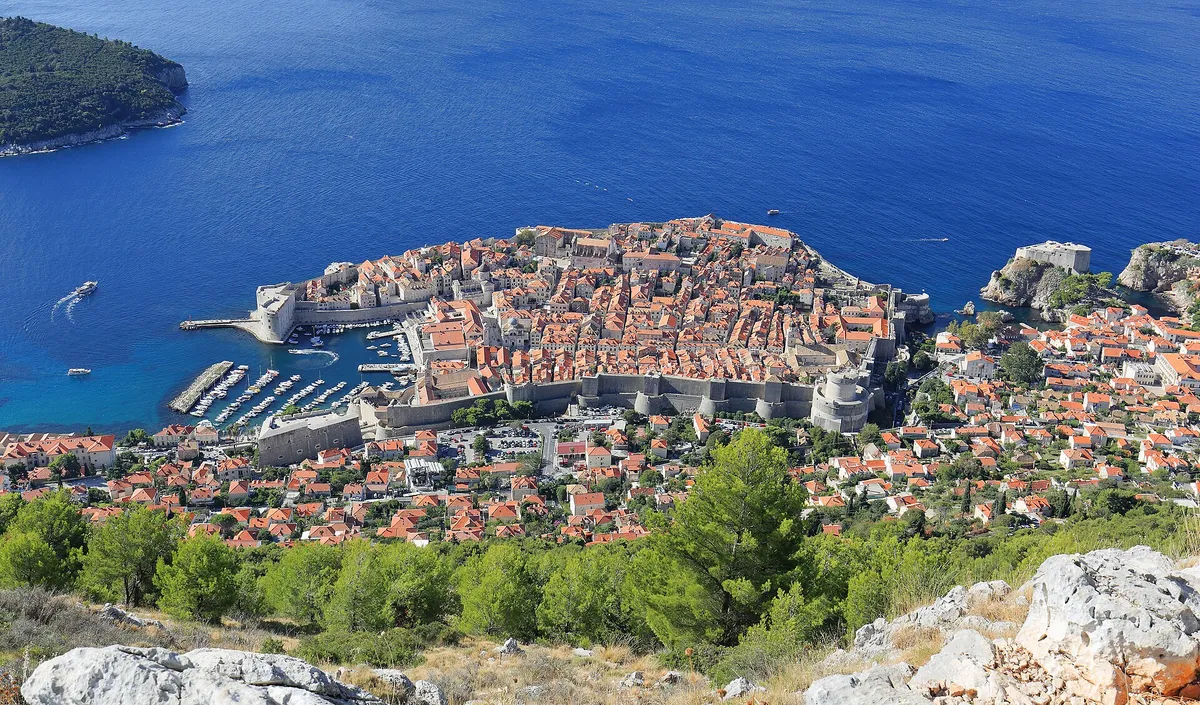
The Croatian Adriatic coast has 1,246 islands (the most islands of any European coastline) — one of the best island-hopping destinations in Europe, with remarkably clear Adriatic waters (among the most transparent seas in the Mediterranean, with visibility of 30–40m in the clearest inshore areas and a blue-green color created by the limestone seabed), and a distinctive Dalmatian cultural character: Roman heritage (Diocletian’s Palace in Split, the most completely preserved Roman imperial palace in the world), Venetian heritage (the campaniles, the loggia, and the stone towns of Hvar and Korčula — among the most beautifully preserved Venetian towns outside Venice), and a strong Mediterranean food culture (grilled fish, Peka — octopus or lamb slow-cooked under an iron dome in wood ash, the most distinctive cooking method in Dalmatia — and Plavac Mali wine, among the most intense reds in Croatia).
Hvar — The Glamour Island
Character: Hvar is the most glamorous Croatian island — Hvar Town (the most beautiful town in Croatia — the 13th-century Cathedral of St Stephen, the loggia, the Venetian arsenal, among the most complete in the Adriatic, and the Fortica fortress above), a lively social scene (the most international and fashionable night and beach scene in Croatia — catamaran day trips to the Pakleni Islands, a 20-island archipelago west of Hvar with pristine beaches, and the Carpe Diem beach club, the most famous beach club in Croatia).
Best Hvar Hotels
Heritage Hotel Hvar: Price: €200–800/night | Location: Hvar Town
Heritage Hotel Hvar (housed in a Venetian-era palace in the heart of Hvar Town — among the most beautiful hotel buildings in Croatia) is the finest traditional luxury hotel in Hvar — 16th-century Venetian stone walls (among the most beautiful urban architecture in the Dalmatian islands), a central Hvar Town location (100m from the Cathedral and 50m from the Venetian Arsenal), and an excellent restaurant (the finest hotel restaurant in Hvar Town — Dalmatian cuisine paired with local Plavac Mali wine).
AMAN Sveti Stefan (Montenegro, 3 hours from Dubrovnik): While technically Montenegro, Aman Sveti Stefan (one of the most remarkable island hotels in the Adriatic — a 15th-century fishing village converted into 50 suites, a causeway connecting the island to the mainland, and the Aman private beach) provides an unmatched Adriatic island hotel experience. Visiting requires a separate trip from the Croatian itinerary.
Korčula — Marco Polo’s Island
Character: Korčula (an island claimed as the birthplace of Marco Polo — one of the most historically contested claims in the Adriatic: Korčula, Venice, and China each claim Marco Polo, but the 15th-century de Polo family house in Korčula town, now the Marco Polo Museum, provides the most compelling Adriatic case) is the most beautifully preserved medieval town in the Dalmatian islands — its herringbone street plan (a fish-scale urban layout, among the most sophisticated medieval designs in the Adriatic, with streets angled to channel the sea breeze in summer and block the Bora wind in winter), and the Moreška sword dance (a striking traditional performance — a Moorish-Crusader battle dance performed in Korčula since the 15th century, with elaborate sword-clashing choreography).
Best Korčula Hotels
Lesic Dimitri Palace: Price: €400–2,000/night | Location: Don Pavla Poše 1-6, Korčula Town
Lesic Dimitri Palace (a 5-residence boutique in Korčula Old Town — one of the most beautiful luxury hotels in the Dalmatian islands, a 15th-century bishop’s palace and connected residences converted into one of the most intimate luxury properties in Croatia) is among the best hotels in the Dalmatian islands — individual residences (each of the 5 properties is a separate apartment-style suite with stone walls, distinct character, and a private terrace), the excellent LD Restaurant (the top restaurant on the island of Korčula — a Dalmatian-international menu, and local prstaci, date mussels among the most prized shellfish in the Adriatic, legally protected but still available from artisanal harvesters), and attentive personal service.
Brač — The Beach and the Stone
Character: Brač is a practical, accessible island — the most accessible from Split (45 minutes by car ferry) — home to Zlatni Rat, the most famous beach in Croatia (a horn-shaped sand spit that changes direction with the wind, turquoise water, and the most photographed natural feature in Croatia), and Brač stone, among the most widely used building materials in the world: Brač limestone was used in the construction of Diocletian’s Palace in Split, the White House in Washington DC, and the UN building in New York — one of the most globally distributed building stones anywhere.
Best Brač Hotels
Bluesun Hotel Elaphusa: Price: €80–300/night | Location: Bol, Brač (adjacent to Zlatni Rat)
Bluesun Hotel Elaphusa (the most convenient hotel for Zlatni Rat beach — a 300m walk through pine forest to the beach) is the best practical Brač hotel — an excellent pine forest setting (the most atmospheric hotel grounds in Brač — the stone pine forests of the Bol peninsula, natural shade, and Mediterranean fragrance), an excellent pool, and direct beach access.
Croatia Island Hopping Practicalities
The Ferry System
The Croatian car ferry system (the most comprehensive island ferry network in the Mediterranean — Jadrolinija, the Croatian national ferry operator, among the most reliable Adriatic ferry services) connects all the major islands:
| Route | Journey Time | Frequency |
|---|---|---|
| Split–Hvar | 50 min (catamaran) / 2h (car ferry) | 6–8 daily |
| Split–Brač | 50 min | 10+ daily |
| Dubrovnik–Korčula | 3h (catamaran) | 2 daily |
| Hvar–Korčula | 2h (catamaran) | 2 daily |
The sailing charter alternative: Croatia’s bareboat sailing charter scene (the most popular sailing charter destination in Europe, with some of the most charter-friendly waters in the Mediterranean: a protected Dalmatian coast, marinas in every harbor, and a consistent sailing wind — the Maestral northwesterly in summer, among the most reliable sailing winds in the Adriatic) offers a wonderful way to island-hop between Hvar, Korčula, and Brač — the freedom of anchoring in bays like Luka Gradina on Korčula or Stari Grad Bay on Hvar, independence from ferry timetables, and genuine privacy.
FAQ
When is the best time to visit the Croatian islands? June and September are the ideal months to visit — June (the Adriatic at 22–23°C, warm enough for comfortable swimming, with lower crowds before the July–August peak, and prices 20–30% below August) and September (the Adriatic at 25–27°C, the warmest sea of the year, with lower crowds and good late-summer light). July–August bring maximum crowds (Italian and German school holidays create the most intense European summer tourism on the Croatian coast — Zlatni Rat and the Hvar Town Cathedral Square are genuinely very crowded in peak season) and peak prices.
Is it possible to visit the Croatian islands without a car? Yes — the catamaran network from Split to Hvar Town (50 minutes) and from Dubrovnik to the Elafiti Islands makes car-free island hopping entirely practical. Cars are actually unnecessary on Hvar Town (a walking city), Korčula Town (a walking city), and the Brač beach resort of Bol (walkable in 10 minutes). A car is only necessary for extensive exploration of the interior or larger islands.
What is the best Croatian island for sailing beginners? Šolta (an island 30 minutes from Split — one of the most underrated Croatian islands, with fig orchards, a quiet character, and Maslinica Bay, the top small marina in central Dalmatia, with a scenic cove, a good restaurant, and a sheltered anchorage) and the Elafiti Islands (Lopud, Koločep, and Šipan — a car-free archipelago west of Dubrovnik, the most beginner-friendly charter area in Croatia: close to the Dubrovnik charter base, with protected waters and 1–3 hour passages between each island).