
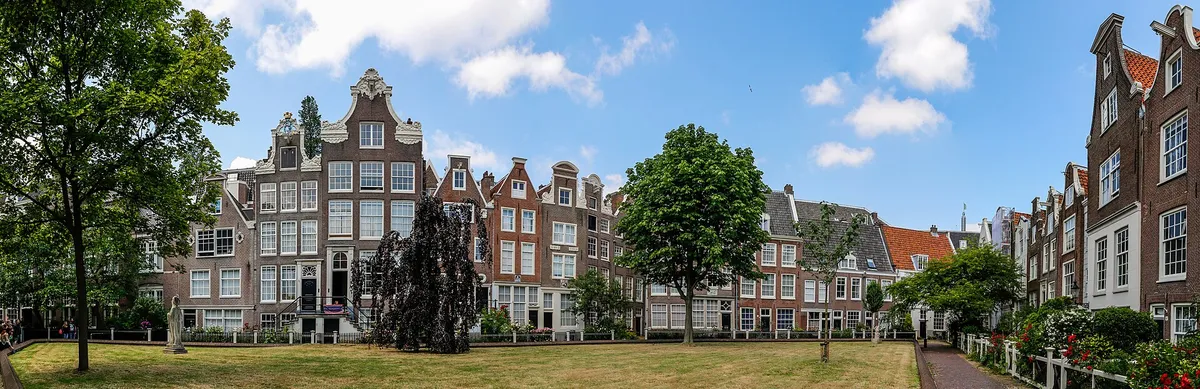
Photo: Dietmar Rabich / Wikimedia Commons
Amsterdam 3-Day Itinerary: Rijksmuseum, Anne Frank House, Jordaan & Canal Boats 2026
The perfect 3 days in Amsterdam — Rijksmuseum and Rembrandt, Anne Frank House, Jordaan neighborhood, canal boat tour, Van Gogh Museum, and the best Dutch food and beer in 2026.
Amsterdam 3-Day Itinerary: The City on the Water
Amsterdam is small enough to walk almost entirely (the historic center is 5km across) but dense enough in culture, history, and beautiful scenery to fill a week. Three focused days lets you cover the essential history, the world-class museums, and the experience of living in one of the world’s most beautiful canal cities.
Pre-booking essential: Anne Frank House (sells out days to weeks ahead — always book online), Rijksmuseum (book to avoid 30+ min queues), Van Gogh Museum (especially summer).
Day 1: The Jordaan and Canal History
Morning: Canal Walk and Jordaan
Start at Centraal Station and walk west along the Brouwersgracht — consistently voted the most beautiful canal in Amsterdam. The combination of drawbridges, houseboats, and 17th-century warehouses feels authentic because it still is: the Jordaan was Amsterdam’s artisan quarter, built simultaneously with the canal ring expansion (1612–1630).
Jordaan neighborhood: Walk south through the Jordaan’s small streets and courtyards (hofjes):
- Begijnhof (1346): A hidden courtyard of almshouses, still inhabited, accessible from Spui Square — one of Amsterdam’s most beautiful hidden spaces
- Westerkerk (1631, highest Protestant tower in Amsterdam): Anne Frank heard the Westerkerk bells from her hiding place 200m away; she mentions them in her diary
- Noordermarkt (Monday morning: organic food market; Saturday: farmers’ and flea market): The best of Amsterdam’s local markets
Afternoon: Anne Frank House
Anne Frank House (Prinsengracht 263): The most significant historical site in Amsterdam and one of the most moving in Europe. Pre-book (€16, mandatory — it sells out).
The house where Anne Frank, her family, and four others hid for 761 days (July 1942–August 1944) is now a museum. The Secret Annex (the hidden rooms behind the pivoting bookcase) is preserved as it was when the Gestapo raided it on August 4, 1944. The original diary (on rotating display) and Anne’s map-covered wall make this deeply personal.
Allow 90 minutes — the experience is immersive and contemplative.
Evening: Canal Boat Tour
Canal boat tour (many operators depart from near Centraal Station and the Leidseplein; €20–28 for 1–1.5 hours): Seeing Amsterdam from the water is the best way to understand its geography — the concentric canal rings, the building techniques (houses built on wooden piles, deliberately leaning forward to use crane hooks for hoisting goods), and the scale of the historic center.
Evening drinks: The Jordaan pub scene around Lindengracht and Westerstraat — bruine kroegen (brown cafés, Amsterdam’s traditional pubs, named for the nicotine-stained walls) serve Dutch gin (jenever) and local Heineken on tap. The best bruine kroeg is Café ‘t Smalle (Egelantiersgracht, 1786).
Day 2: The Museum Quarter
Morning: Rijksmuseum
Rijksmuseum (Museumstraat 1, €22.50): The Netherlands’ national museum and the world’s finest collection of 17th-century Dutch art — the Dutch Golden Age of Rembrandt, Vermeer, and Frans Hals.
Must-see rooms:
- Gallery of Honor, Room 2.22: Rembrandt’s Night Watch (1642) — the most famous painting in the Netherlands, 3.6m×4.4m, dominates the room it was built for
- Vermeer rooms: 4 Vermeer originals including The Milkmaid (1657–1658) — one of the finest paintings in European art
- Room 0.4: Jan Steen’s The Merry Family (1668) and household scene paintings
- Asian Pavilion: Delftware, Japanese and Chinese porcelain, the Dutch East India Company’s global trade evidence
The building itself: Pierre Cuypers’ 1885 neo-Gothic/Renaissance palace, with 25-meter-long Gallery of Honor as the central nave.
Time: 2.5–3 hours.
Afternoon: Van Gogh Museum
Van Gogh Museum (Paulus Potterstraat 7, €22): The world’s largest collection of Van Gogh — 200 paintings, 500 drawings, 750 letters. The chronological hang traces his evolution from dark Dutch realism to explosive Provençal color.
Don’t miss:
- Sunflowers (1889) — the most reproduced version of the Sunflowers series
- Bedroom in Arles (1888)
- Wheatfield with Crows (1890) — his last major landscape, painted weeks before his death
- The letters to his brother Theo — extraordinarily moving
Time: 2 hours.
Evening: Leidseplein
Leidseplein — Amsterdam’s entertainment square: the Paradiso (the former church that became Amsterdam’s most important rock venue), the Melkweg, and dozens of bars. The Heineken Experience (Stadhouderskade, €25, 2h) is the original Heineken brewery converted to a brand experience — interesting as industrial heritage.
Day 3: Hidden Amsterdam and De Pijp
Morning: The Botanical Garden and the Tropenmuseum
Hortus Botanicus (Plantage Middenlaan, €12.50): Amsterdam’s botanical garden, founded in 1638 for the VOC’s medical herbs — now containing 6,000 plant species. The Victorian palm house is extraordinary. The butterfly greenhouse is one of Amsterdam’s most charming small experiences.
Tropenmuseum (Linnaeusstraat, €15): The Royal Tropical Institute’s ethnographic museum — one of Europe’s finest museums of world cultures, with extraordinary collections from the former Dutch colonies (Indonesia, Suriname). Often overlooked by tourists; genuinely excellent.
Afternoon: De Pijp and the Albert Cuyp Market
Albert Cuyp Market (Wednesday–Saturday, 9am–5pm): Amsterdam’s largest outdoor market — 260 stalls selling Dutch cheese, stroopwafels, herring, tropical produce, and cheap clothing. The stroopwafel (warm, from the stall selling them fresh) is essential.
De Pijp neighborhood: Amsterdam’s most cosmopolitan neighborhood — Indonesian, Surinamese, Turkish, and Moroccan communities alongside a growing coffee and restaurant scene. The best Dutch pancake restaurant: Pancakes Amsterdam (multiple locations); the best Dutch herring: Albert Cuyp herring cart (eat it the traditional way — tip your head back, hold by the tail).
Amsterdam Food Guide
Must-eat in Amsterdam:
- Haring (raw herring): A raw, salt-cured herring with raw onion and pickle, eaten traditional-style (tip your head back). Best at Frens Haringhandel near Vondelpark or any Albert Cuyp stall.
- Stroopwafel: Two thin waffle layers with caramel syrup between them; always buy fresh at the market, never prepackaged
- Bitterballen: Crispy fried meatballs, served with mustard — the essential pub snack
- Dutch pancakes: Larger and thinner than French crêpes but thicker than German ones; traditional toppings include bacon, cheese, apple, or powdered sugar with lemon
FAQ
Why does the Anne Frank House sell out? The museum limits daily visitors to preserve the experience — it’s not a large space and the impact requires quiet contemplation. Book online 1–3 weeks ahead (July–August may require longer). If sold out, check for newly released time slots early morning.
Is Amsterdam walkable? Yes — but better by bicycle. Amsterdam has 880km of cycle paths and 63% of residents cycle daily. Bike rental: €12–18/day (many rental shops near Centraal Station). The cycling infrastructure means you can reach almost any destination faster by bike than by tram.
What is the best day trip from Amsterdam? Keukenhof Gardens (April–May: world’s largest tulip garden, 7 million bulbs) is the most spectacular when in season. Haarlem (20 min by train) is the most beautiful Dutch city outside Amsterdam — the Grote Markt, the Frans Hals Museum, and the medieval almshouses. Leiden (35 min) for the Rijksmuseum van Oudheden (Egyptian collection) and the oldest university in the Netherlands (1575).